If you are researching a bluetooth audio codec before pairing wireless headphones or earbuds, SoundGuys’ Bluetooth codec guide explains that a codec encodes and decodes digital audio data into a specific format for transmission from your source device to your headphones, and both your phone and your headphones must support the same codec to use it. In everyday playback, Soundcore’s Android Bluetooth codec guide states that your phone compresses the audio, sends it over Bluetooth, and your earbuds decode it before you hear the sound.
Key Takeaways
- Universal baseline vs Apple standard: According to SoundGuys, SBC is mandatory across all A2DP-enabled Bluetooth devices (up to 320 kbps at 16-bit/48 kHz), while AAC caps at 264 kbps (16-bit/44.1 kHz) and serves as the standard for Apple devices and YouTube.
- Higher-bitrate Android codecs: According to SoundGuys, Qualcomm’s aptX supports 352 kbps (16-bit/48 kHz), aptX HD supports 576 kbps (24-bit/48 kHz), and Sony’s LDAC reaches up to 990 kbps (24-bit/96 kHz) and has been part of the Android Open Source Project since Android 8.0 Oreo.
- Real-world battery and stability trade-offs: According to Soundcore, Android users usually get more codec options than iPhone users (including SBC, AAC, aptX variants, and LDAC on compatible devices), and while LDAC can deliver more detail when the full setup supports it, it may use more battery and require a cleaner Bluetooth connection.
- A2DP host selection: According to a technical discussion on Reddit’s r/headphones, the Bluetooth A2DP standard does not define a fixed codec priority; instead, the host device chooses the transmission codec and may prioritize connection stability, lower latency, or native file transfer over peak bitrate.
What a Bluetooth Audio Codec Does Between Your Phone and Earbuds
Every wireless stream relies on a shared bluetooth codec to package digital audio before it crosses the airwaves. According to Soundcore, a Bluetooth codec is the audio format your phone and earbuds agree to use for wireless playback: your phone compresses the audio, sends it over Bluetooth, and your earbuds decode it before playback, which can influence audio detail, video delay, connection dropouts, and battery life.
According to Soundcore, supporting a codec on paper does not automatically mean it is active every time you press play, because availability on Android depends on your phone, earbuds, Android version, firmware, music app, audio source, and Bluetooth settings—and if your phone and earbuds do not share an advanced codec, Android falls back to a shared option such as AAC or SBC. If you are troubleshooting lip-sync lag when watching videos or gaming over wireless audio, see our companion guide on diagnosing earbud audio delay across video apps and codecs.
Bluetooth Codec Comparison: SBC, AAC, aptX, aptX HD, and LDAC
According to SoundGuys, sample rate (measured in kHz) represents the number of audio data points per second, bit depth (such as 16-bit or 24-bit) records each sample’s accuracy, and bit rate (kbps) measures the amount of audio data transferred per second. Because Bluetooth bandwidth is limited, SoundGuys notes that high transfer rates can overload available bandwidth as distance, physical barriers, or overlapping radio frequencies increase.
| Bluetooth Codec or Earbud Model | Maximum Bitrate, Bit Depth & Sample Rate | Platform & Practical Characteristics | Source Attribution |
|---|---|---|---|
| SBC (Low-Complexity Sub-Band Codec) | Up to 320 kbps (192–320 kbps typical), 16-bit, 48 kHz | Mandatory across all A2DP-enabled devices; universal fallback codec | SoundGuys codec guide |
| AAC (Advanced Audio Coding) | Up to 264 kbps (250 kbps transfer cap noted in text), 16-bit, 44.1 kHz | License-free standard for Apple devices and YouTube; Android performance varies by phone | SoundGuys codec guide |
| Qualcomm aptX & aptX HD | aptX: 352 kbps, 16-bit, 48 kHz; aptX HD: 576 kbps, 24-bit, 48 kHz | Proprietary Qualcomm lossy codecs that preserve more data than SBC when both devices support them | SoundGuys codec guide |
| Sony LDAC | Up to 990 kbps (also streams at 660 kbps or 330 kbps default), 24-bit, 96 kHz | Variable-bitrate codec included in Android Open Source Project since Android 8.0 Oreo | SoundGuys codec guide |
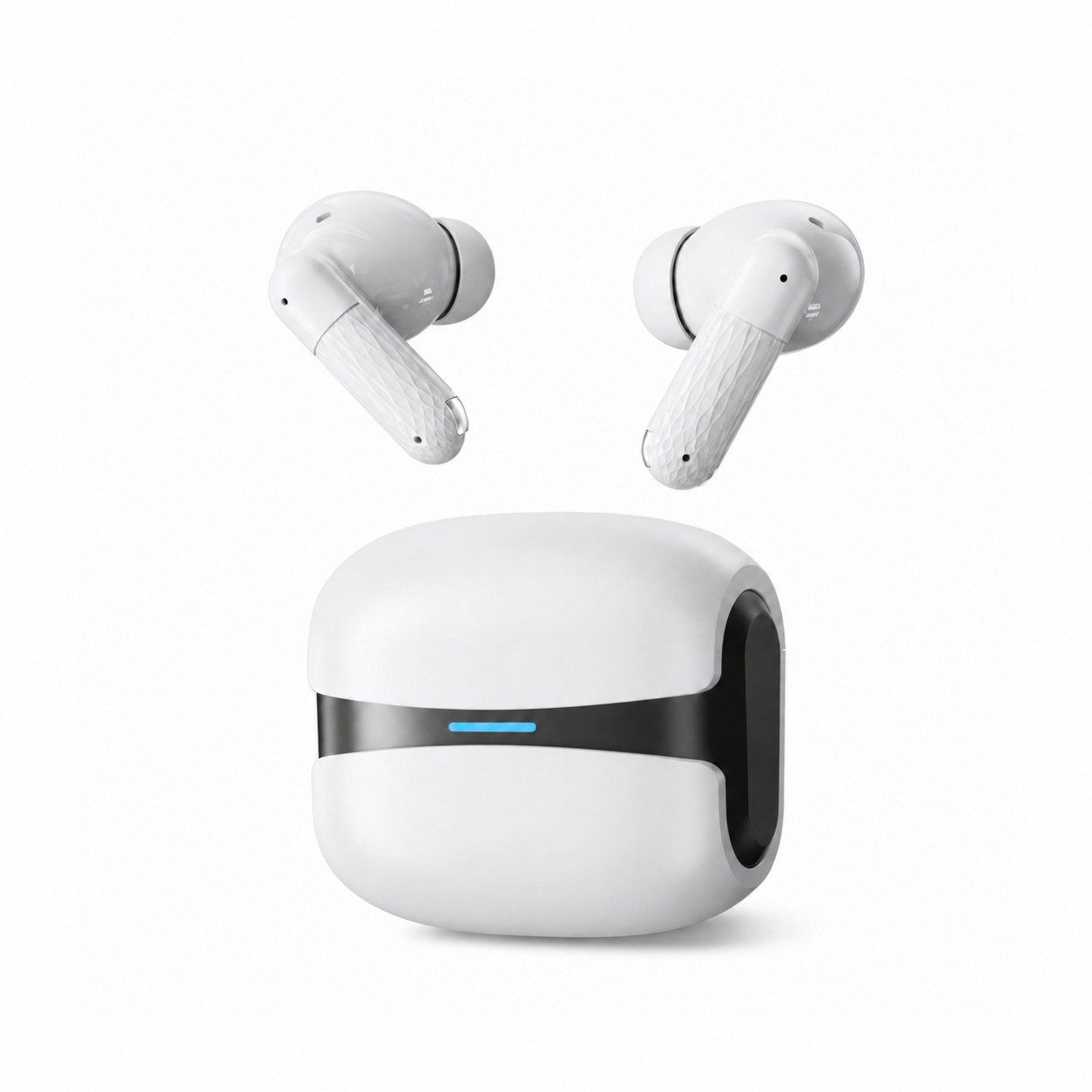
| EARSOLE Cloud White Bluetooth 5.4 Wireless Earbuds | Bluetooth 5.4 radio version stated; specific audio codec not listed | Composite polymer diaphragm, touch controls, low-latency gaming mode, IPX5 water resistance, and ENC + CVC microphone noise reduction | EARSOLE Cloud White merchant listing |
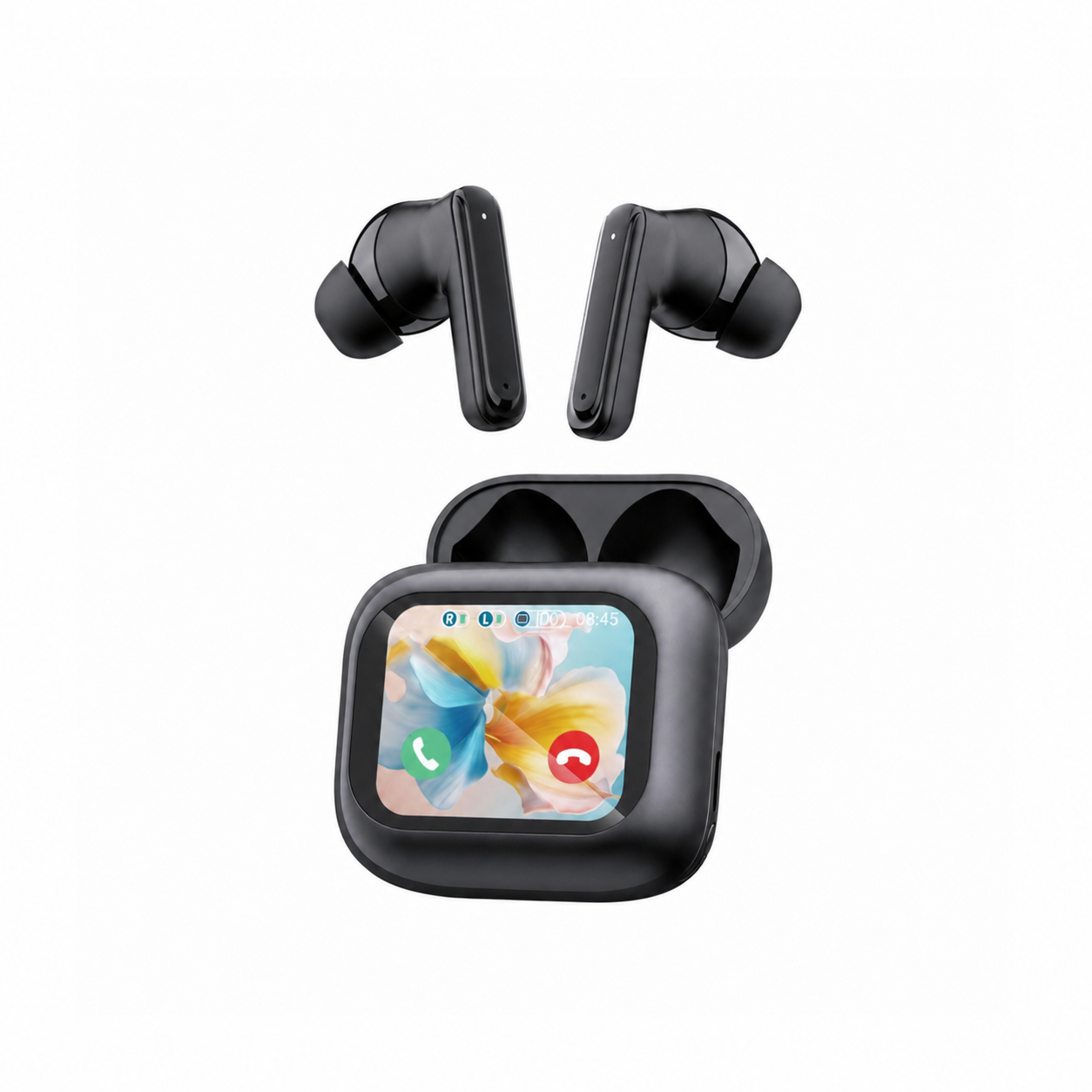
| EARSOLE Smart Wireless Earbuds with LCD Touchscreen Case | Bluetooth 5.4 radio version stated; specific audio codec not listed | Full-color LCD touchscreen case (Chinese/English menus), ANC + ENC noise reduction, soft silicone tips; no water-resistance rating listed | EARSOLE LCD Touchscreen merchant listing |
According to SoundGuys, although Sony’s LDAC can reach up to 990 kbps, many phones default LDAC to 330 kbps—where both aptX and SBC outperform it—unless you open Android Developer Settings and select the “Best effort” or higher-bitrate option. Similarly, Soundcore points out that aptX, aptX HD, aptX Adaptive, and aptX Lossless are not interchangeable, so your phone and earbuds must support the exact same aptX version, while iPhones do not support LDAC for Bluetooth audio.
How Phones Pick a Codec—and How to Read Bluetooth 5.4 Earbud Listings
Many listeners assume a phone will automatically lock onto the highest-bitrate codec printed on a headphone box, but Bluetooth negotiation gives the host device the final say. According to a technical comment in Reddit’s r/headphones codec thread, codec priority for A2DP is not explicitly defined in the Bluetooth standard: linked headphones report their supported codecs as octet values, and the host device selects which encoding to transmit—meaning a host could be told all codecs are supported and still choose SBC, or pick a codec that optimizes connection stability, lower latency, or native bit-for-bit file transfer rather than peak bitrate.
When you want to verify or switch the active codec on an Android phone, Soundcore notes that you can open Settings, go to Connected devices or Bluetooth, tap the gear icon beside your paired earbuds to check for HD audio, LDAC, or Audio codec toggles, or unlock Developer Options (by tapping Build number in About phone) to inspect the Bluetooth Audio Codec menu directly.
When reading wireless earbud product pages, it is equally important not to confuse a Bluetooth radio version number (such as Bluetooth 5.4) with an audio codec name—a distinction we explore further in our guide on what Bluetooth 5.4 means on budget wireless earbuds. According to the EARSOLE listing for the EARSOLE Cloud White Bluetooth 5.4 Wireless Earbuds, the earbuds specify Bluetooth 5.4 with fast pairing, a composite polymer diaphragm, touch controls, a low-latency gaming mode, IPX5 water resistance against sweat and light splashes, a USB-C charging case, and ENC with CVC voice processing that cleans up your voice on the microphone side rather than cancelling noise in your ears, without naming a specific Bluetooth audio codec.
According to the EARSOLE listing for the EARSOLE Smart Wireless Earbuds with LCD Touchscreen Case, the model specifies a Bluetooth 5.4 connection, a full-color LCD touchscreen charging case (with Chinese and English menus to manage music, volume, calls, and settings), soft silicone in-ear sports tips, and both ANC (to reduce steady background noise while listening) and ENC (for call pickup), while noting that no water-resistance rating is listed and without publishing a specific Bluetooth audio codec list.
What We Checked and Limitations
To compile this guide, we reviewed the Bluetooth audio codec specification tables and latency notes from SoundGuys, the Android-versus-iPhone compatibility and battery trade-off guidance from Soundcore, the A2DP/AVDTP host-selection explanation from Reddit’s r/headphones community, Google US People Also Ask queries for bluetooth audio codec, and the merchant catalog listings for EARSOLE’s Bluetooth 5.4 wireless earbuds. We did not run independent Bluetooth packet-sniffer captures, acoustic frequency-response sweeps, or battery-drain bench tests across phones or earbuds. In addition, the maximum bitrates and sample rates cited from SoundGuys and Soundcore (such as 320 kbps for SBC, 264 kbps for AAC, 352/576 kbps for aptX/aptX HD, and 990 kbps for LDAC) represent specification ceilings whose real-world throughput depends on radio interference and host OS settings, and EARSOLE’s Cloud White and LCD Touchscreen listings state Bluetooth 5.4 and merchant feature descriptions without publishing a supported codec list.
What’s the best Bluetooth audio codec?
According to Soundcore, the best Bluetooth codec is not always the one with the highest bitrate because connection stability, battery life, latency, and device compatibility matter in everyday use. According to SoundGuys, SBC (up to 320 kbps, 16-bit/48 kHz) is mandatory across all A2DP devices, AAC (up to 264 kbps, 16-bit/44.1 kHz) is the standard on Apple devices, and aptX (352 kbps), aptX HD (576 kbps), and LDAC (up to 990 kbps, 24-bit/96 kHz) offer higher bitrates when both your phone and headphones support the same codec.
Which is better, SBC or AAC?
According to SoundGuys, AAC is a more complex psychoacoustic codec that offers better audio quality than SBC despite a lower maximum bitrate and sample rate (up to 264 kbps at 16-bit/44.1 kHz for AAC versus up to 320 kbps at 16-bit/48 kHz for SBC), making AAC the natural choice on Apple devices. According to Soundcore, SBC works on almost every Bluetooth headset as the universal fallback, while AAC performance on Android can vary by phone brand.
Which is better, LDAC or aptX?
According to SoundGuys, Sony’s LDAC supports a higher maximum bitrate and sample rate (up to 990 kbps at 24-bit/96 kHz) than Qualcomm’s aptX (352 kbps at 16-bit/48 kHz) or aptX HD (576 kbps at 24-bit/48 kHz), though LDAC defaults to 330 kbps on many phones unless adjusted in Developer Settings. According to Soundcore, LDAC is suited for high-bitrate music listening on compatible Android devices in calm environments but uses more battery and needs a cleaner connection, whereas aptX can offer consistent playback or lower latency when both devices support the same aptX version.