

Custom Molds for In-Ear Monitors vs Universal Resin Concha Shells
For musicians, sound engineers, and critical audiophiles, listening fidelity begins with an uncompromising physical acoustic seal. The debate between investing in bespoke custom earmolds—cast directly from two-part medical vinyl polysiloxane impressions of your auditory canal—and purchasing precision 3D-scanned universal ergonomic resin shells revolves around three core compromises: passive noise isolation, dynamic jaw stability, and long-term daily wear comfort.
While universal monitors use interchangeable soft silicone or viscoelastic memory foam tips to compress against canal tissue, custom in-ear monitors (CIEMs) reproduce every unique anatomical crest, helix curve, and concha valley of the individual ear. Understanding how these mechanical differences affect frequency response and acoustic seal integrity reveals which shell architecture suits demanding stage performance versus portable everyday listening.
The Acoustic Seal Breakdown: Dynamic Jaw Articulation and Concha Anchor
An ear canal is not a rigid static tube; its cross-sectional geometry shifts dramatically whenever you sing, speak, swallow, or chew. When an artist opens their jaw wide on stage, the condyle of the mandible translates forward and downward, causing the second bend of the ear canal to expand and deform.
With universal in-ear monitors, this jaw expansion frequently causes standard flange tips to slip, unseating the acoustic barrier and immediately venting sub-bass frequencies below 100 Hz. Audiologists counter this by taking deep open-mouth impressions using a two-inch bite block, ensuring the resulting hard acrylic or soft silicone custom shell maintains unbroken skin contact throughout rigorous vocal performances.
| Shell Architecture | Acoustic Seal Retention | Isolation Depth (dB) | Resale / Re-shell Feasibility | Continuous Stage Comfort |
|---|---|---|---|---|
| Custom Hard Acrylic | 98% (zero slippage on jaw drop) | 26 to 28 dB attenuation | Requires complete remold ($150+) | 4 to 6 hours (rigid contact) |
| Custom Medical Silicone | 99% (flexes with canal tissue) | 28 to 32 dB attenuation | Non-resellable / cannot re-shell | 6 to 8 hours (soft damping) |
| Universal Resin Shell | 80% to 85% (tip-dependent) | 20 to 24 dB attenuation | Immediate universal resale | 3 to 5 hours (nozzle pressure) |
| Custom Sleeves on Universal | 92% to 95% (hybrid adapter) | 24 to 27 dB attenuation | Removable tips preserve IEM | 4 to 6 hours (extended stem) |
Frequency Response Integrity and the Occlusion Effect
The physical distance between the balanced armature acoustic dampers and your tympanic membrane dictates high-frequency phase coherence and standing wave reflections. Because custom earmolds terminate precisely at the canal’s second bend, they minimize the residual enclosed air volume, pushing ear canal quarter-wave resonance peaks past 10 kHz for smoother upper treble extension.
However, deep canal occlusion amplifies the bone-conducted resonance of your own voice and jaw movements—a phenomenon known as the occlusion effect. Hard acrylic custom shells require precision acoustic venting bores with micro-mesh acoustic filters to equalize low-frequency internal cavity pressure without compromising ambient isolation, whereas universal monitors bleed this pressure naturally across softer compliant tip walls.
Audiologist Impressions, Shell Durability, and Maintenance Realities
Commissioning custom in-ear monitors demands an initial clinical appointment where an audiologist inspects the ear with an otoscope, positions a protective foam dam adjacent to the eardrum, and injects setting compound. This bespoke process yields unmatched isolation but permanently pairs the physical shell to a single human being, completely eliminating aftermarket resale value.
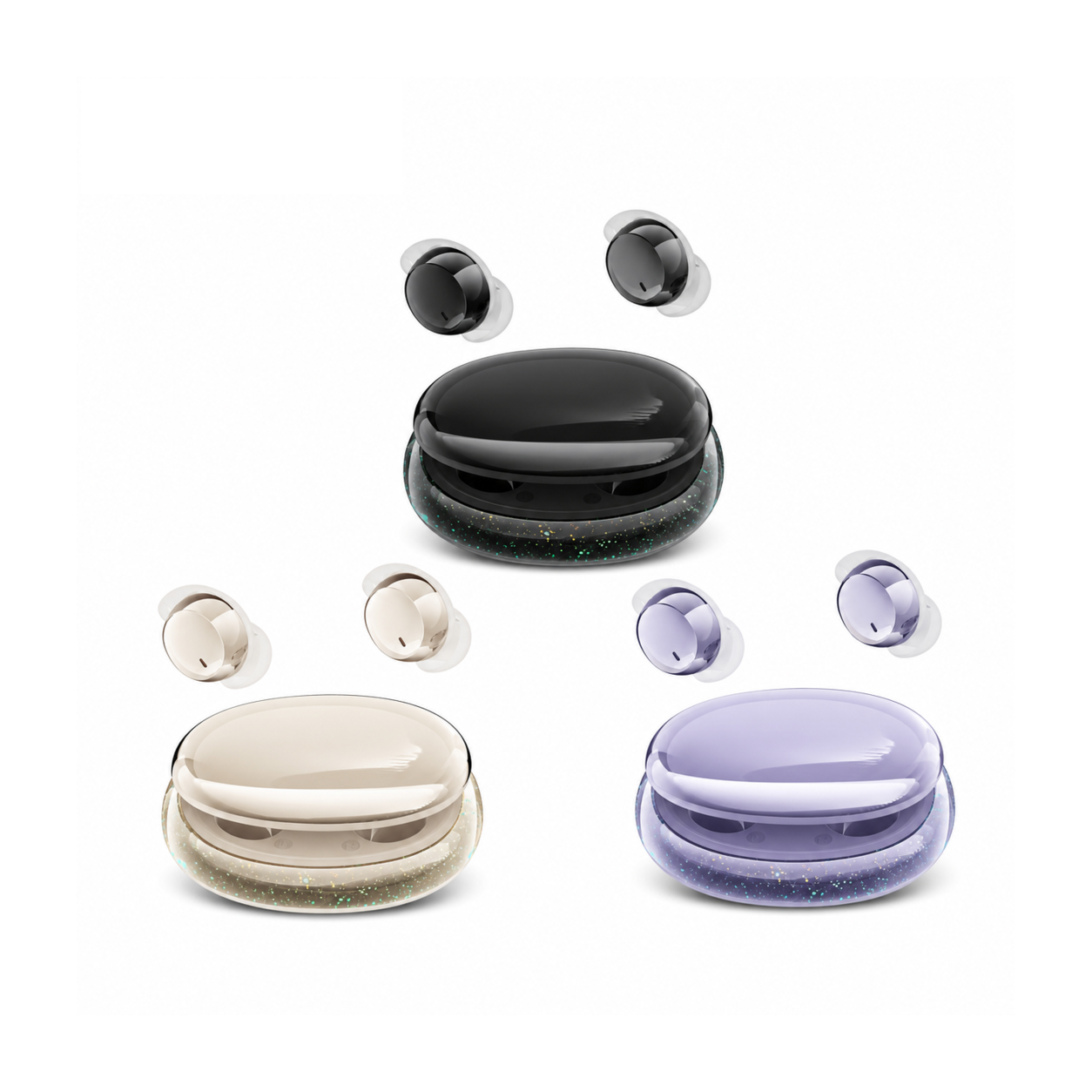
Flat, stemless earbuds for sleeping on your side, with a dynamic sleep-support mode and a starlight glow charging case. See the three colors at EARSOLE.
Furthermore, the human ear cartilage continues to subtly remodel throughout adulthood, often necessitating shell adjustments or complete re-casts every three to five years. For listeners seeking discreet non-fatiguing audio outside studio or stage environments, universal ergonomic housings eliminate clinical impression costs and offer immediate out-of-the-box utility with replaceable silicone tips.
Choosing Between Custom Molds and Ergonomic Universal Housings
Evaluate your acoustic requirements, performance environment, and long-term operational budget across these practical decision criteria:
- Prioritize Custom Molds for Live Vocalists: If wide dynamic jaw movement routinely dislodges standard silicone ear tips during live singing, custom impressions provide indispensable stage reliability.
- Opt for Universal Housings for Multi-Source Versatility: If you frequently share monitoring gear, upgrade hardware annually, or prioritize rapid equipment resale, precision universal resin shells offer superior flexibility.
- Consider Custom Silicone Sleeves as a Middle Ground: Fabricating custom silicone sleeves over standard universal nozzles delivers bespoke anatomical seal geometry while preserving IEM resale value.
Frequently Asked Questions
Do custom molds for in-ear monitors hurt when first inserted?
Properly crafted custom IEMs should fit comfortably without focal pressure spots, though listeners typically require two to three days to acclimate to deep canal contact.
How long do ear impressions last before a custom IEM needs remolding?
Adult ear canals shift subtly over time due to weight fluctuations and natural cartilage maturation, typically requiring acoustic remolding every three to five years.