Foldable Wired Headphones With Daisy-Chain Share Ports for Backpack and Classroom Bags
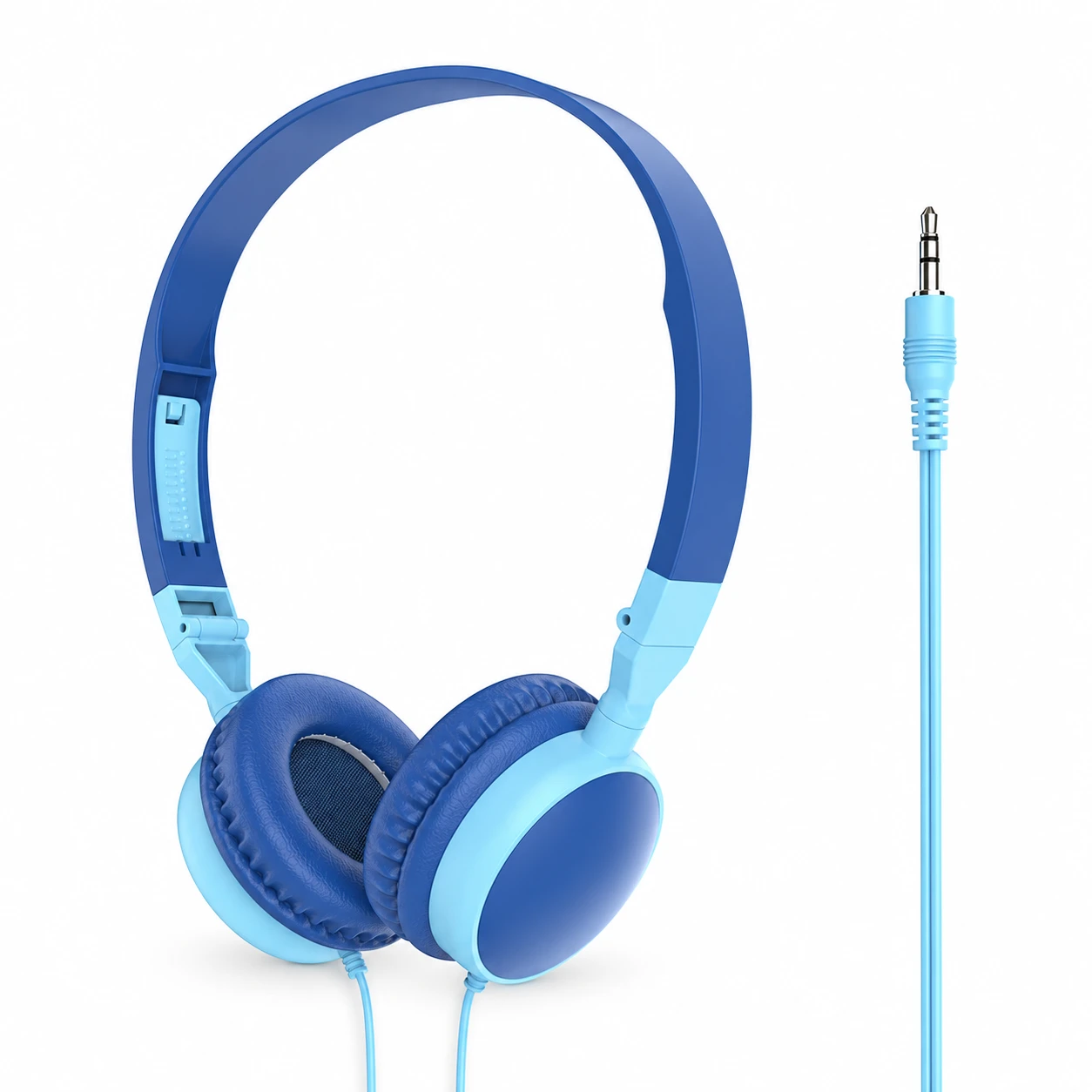
Tossing a rigid, full-sized over-ear headset into a packed commuter backpack or school bookbag usually ends with a snapped plastic headband slider or a kinked strain relief at the earcup entry. Foldable wired headphones solve that packing volume problem by placing inward-folding knuckle hinges just above the yokes, collapsing the earcups into the headband arch to shrink their footprint by nearly half.
Many travel and classroom models also build a secondary 3.5 mm female receptacle directly into the opposite earcup shell. That passive daisy-chain share port lets a second listener plug their own headphones straight into your earcup to watch an inflight movie or language lesson together without carrying a separate Y-splitter dongle.
How Hinge Geometry and Internal Jumper Loops Survive Daily Folding
Every time you fold an earcup inward toward the headband pad, the internal copper jumper wire bridging the left and right drivers bends through a 135-degree arc. Cheap collapsible frames pinch that thin enameled wire directly between two injection-molded ABS walls, eventually shearing the copper strands until one earcup goes completely dead.
Durable foldable frames route a slack service loop of Kevlar-reinforced tinsel wire through a hollow stainless-steel hinge pin or wide routing channel so the conductor twists gently in torsion rather than kinking sharply. Swivel-flat yokes (90-degree rotation) suit slim laptop sleeves best, while inward-clamshell hinges create a compact sphere that resists crushing at the bottom of a heavy rucksack.
| Mechanical / Audio Feature | Inward-Clamshell Fold | Flat-Swivel Yoke (90°) | Detachable Dual-3.5mm Cups | Practical Durability Impact |
|---|---|---|---|---|
| Packed Storage Profile | Compact ball inside headband arch | Flat 35 mm pancake profile | Separate cable + folded frame | Clamshell fits coat pockets; flat fits laptop bags |
| Primary Hinge Stress Point | Upper knuckle pin & internal jumper | Vertical yoke pivot post | Zero fixed cord strain relief | Metal hinge pins prevent yoke snap |
| Daisy-Chain Share Port | Secondary 3.5 mm jack on R cup | Requires external Y-splitter | Bi-directional L/R input-output | Plug a friend’s headset straight into your cup |
| Parallel Load Impedance | Halves load (e.g., two 32 Ω = 16 Ω) | Single headset load (32 Ω) | Halves load when daisy-chained | Raise host volume 3–4 dB when sharing audio |
How Passive Daisy-Chain Share Ports Affect Volume and Impedance
Inside a headphone with a built-in share port, the left, right, and ground terminals of the auxiliary 3.5 mm jack are wired directly in parallel with the primary input jack. On models with dual detachable 3.5 mm ports, either earcup can act as the main input from your tablet while the open port on the other earcup automatically serves as the passthrough output.
Because wiring two 32-ohm headphones in parallel drops the combined electrical load seen by your tablet or laptop down to 16 ohms, the host amplifier splits its current between both headsets. If you daisy-chain a sensitive 16-ohm pair with a 64-ohm pair, the 16-ohm listener will hear the movie significantly louder—so always pair headphones of similar impedance and sensitivity when sharing a single port.
Why Bulky Hinges and Earcups Never Work on a Pillow
Even the most compact foldable over-ear headphones still measure several centimeters thick across the earcup cushions and headband yokes when worn. The moment you lean your head sideways against an airplane window cushion or bedroom pillow, the rigid hinge assembly digs into your temple and breaks the acoustic earpad seal.
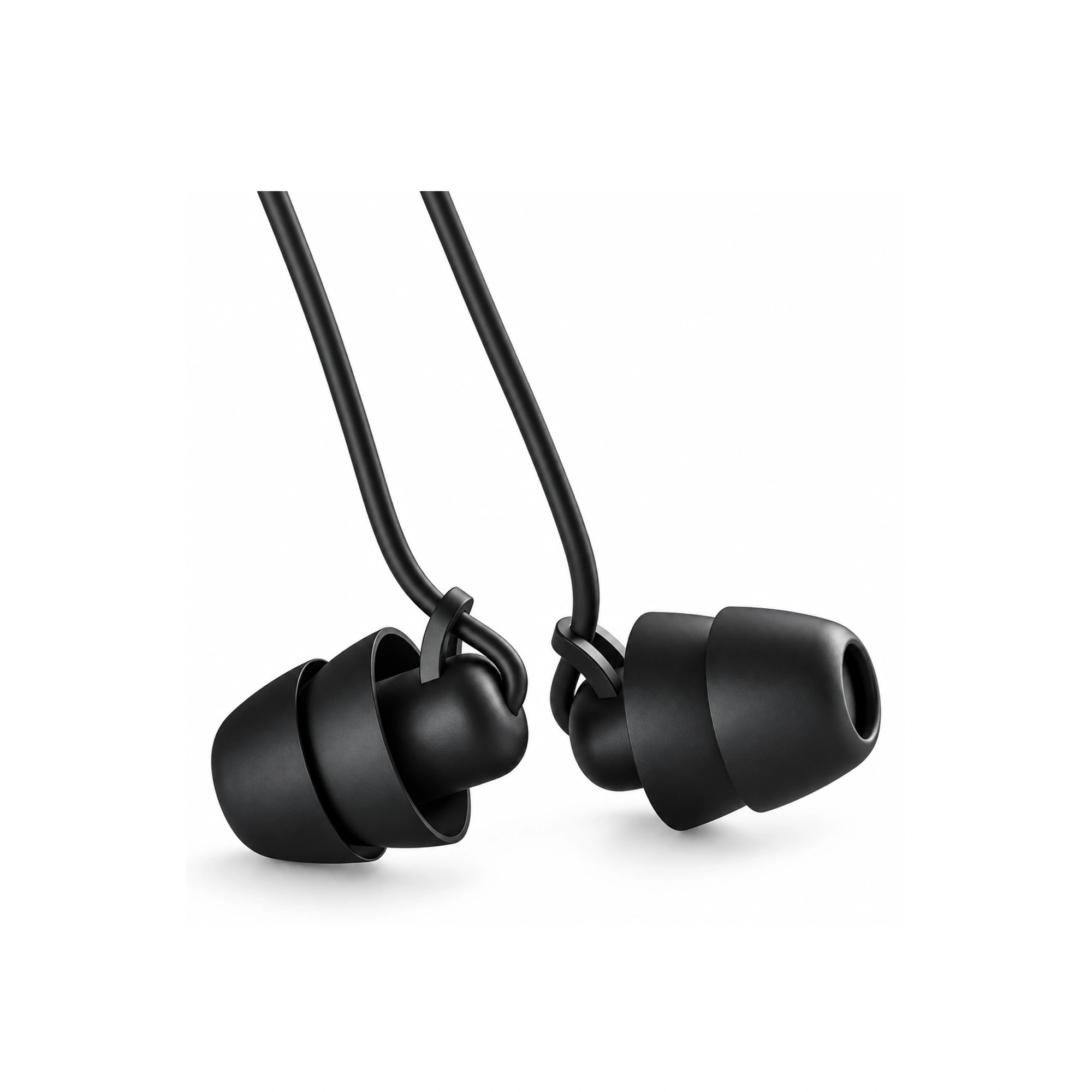
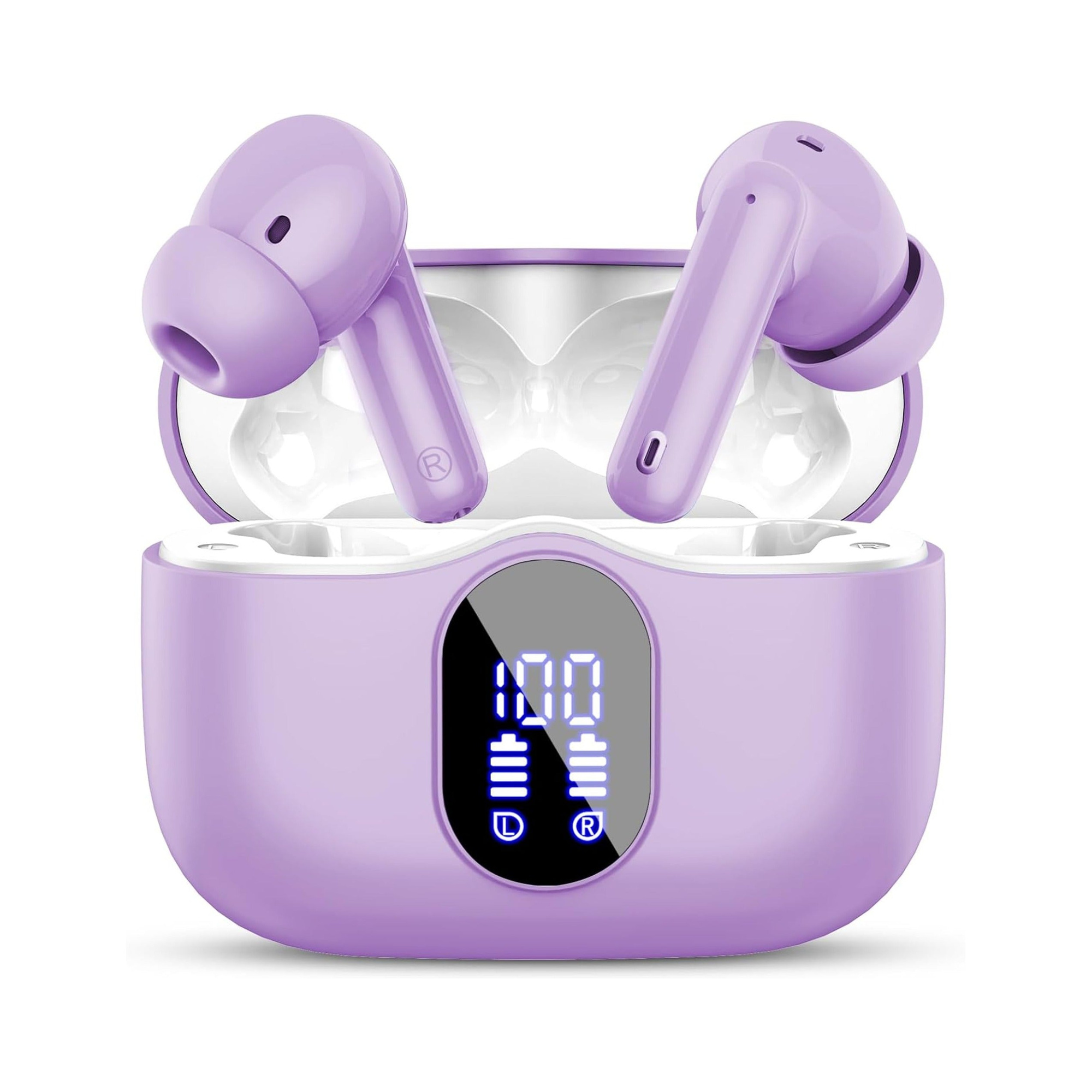
Flat, stemless earbuds for sleeping on your side, with a dynamic sleep-support mode and a starlight glow charging case. See the three colors at EARSOLE.
Swapping collapsible over-ear cans for a wireless, flush-profile sleep earbud when it is time to rest removes headband clamping force and metal hinge knuckles completely. The soft, low-profile silicone shell sits recessed inside your outer ear so you can sleep comfortably on your side anywhere.
Packing and Cord-Care Habits That Double Headphone Lifespan
Never wrap the attached 3.5 mm cable tightly around the folded headband hinges before shoving the headphones into a bag; tension at the base of the earcup pulls the solder pads off the driver PCB within months. Instead, coil the cord loosely using the over-under roadie wrap, secure it with a soft Velcro tie, and detach the cable completely if your model uses a removable 3.5 mm jack.
If your foldable headset uses a larger studio plug adapter on home audio equipment, check our comparison of 6.35 mm headphone jacks vs 3.5 mm TRS mini-plugs to avoid bent jack barrels.
Frequently Asked Questions
How many foldable headphones can you daisy-chain together from one tablet?
Most smartphone and tablet headphone amplifiers can comfortably drive two to three 32-ohm headphones in a passive daisy chain before the combined parallel impedance drops too low and causes volume loss or bass distortion.
Does the inline microphone work on both headsets when using a daisy-chain share port?
Usually no; most secondary 3.5 mm share ports only wire the 3-pole stereo audio lines (Tip, Ring, Sleeve) in parallel, so only the primary headset plugged directly into the laptop or tablet passes microphone audio.