

Side sleeping concentrates significant cranial mass onto a very small anatomical contact zone. When resting laterally on bedding, 4.5 to 5.5 kilograms of human head mass presses the auricular fibrocartilage directly into the mattress plane. For listeners wearing audio gear, standard protruding enclosures and external battery stems transform this force into focused mechanical leverage. The rigid plastic shell presses into the concha cavum—the deep acoustic depression leading into the ear canal—pinching unvascularized cartilage and causing throbbing tenderness by the early morning hours.
Resolving this lateral pressure requires analyzing how ear geometry interacts with pillow compliance, eliminating protruding lever arms, and selecting flush, stemless enclosures engineered specifically for side posture.
Auricular Cartilage Anatomy and Lateral Mechanical Load
The human outer ear (pinna) is structured from elastic fibrocartilage encased in a tight layer of perichondrium and thin skin. Unlike the fleshy earlobe, the concha bowl has minimal subcutaneous fat to cushion mechanical shock. Microvascular capillaries in the perichondrium are easily compressed against the underlying cartilage sheet when subjected to continuous lateral load.
When lying supine, headphones float freely in ambient air. Turning into a lateral side-sleeping posture radically alters the physical boundary conditions:
- Torque and Lever Mechanics: Long external battery stems act as mechanical levers ($$\tau = F \times r$$). As the stem strikes the pillow surface, reactive upward force rotates the opposing end of the earbud housing inward, driving the acoustic nozzle directly into the concha wall.
- Contact Pressure Spikes: Pressure equals force divided by surface contact area ($$P = F / A$$). Standard angular earphone casings concentrate lateral head weight across tiny contact points on the concha rim, creating localized pressure spikes exceeding capillary perfusion pressure.
- Lateral Shear Friction: Natural nocturnal micro-adjustments drag protruding earphone shells across pillow textiles, generating torsional shear against sensitive perichondrial nerve endings.
Over consecutive nights, this mechanical focal load mimics early chondrodermatitis nodularis chronica helicis—a painful inflammatory condition caused by sustained localized pressure on ear cartilage.
Stem Leverage vs Recessed Flush Form Factors
Eliminating concha pain requires shrinking the earphone profile along the lateral z-axis, ensuring the outer shell never crosses the anatomical plane defined by the tragus and antihelix.
| Acoustic Enclosure Parameter | Protruding Stem Wireless Earphones | Recessed Flush Sleep Earbuds |
|---|---|---|
| Lateral Shell Height | Bulky enclosure (18–25 mm outer depth) | Ultra-shallow profile (sub-12 mm depth) |
| External Lever Arm | Rigid stem projecting down the cheek | Stemless pebble geometry seated inside concha |
| Surface Load Distribution | Concentrated focal pressure on concha rim | Broad contact area distributed across ear bowl |
| Pillow Surface Friction | Catches bedding fabric; torques into cartilage | Smooth, curved perimeter slides without shear |
| Acoustic Noise Reduction | Heavy electronic ANC hardware bulk | Passive silicone contour isolation |
By eliminating external battery stems and keeping the entire transducer housing recessed within the natural concha basin, pillow contact spreads across the broad temporal bones rather than driving an angular plastic point into ear cartilage.
EARSOLE Low-Profile Sleeping Earbuds: Design and Passive Isolation
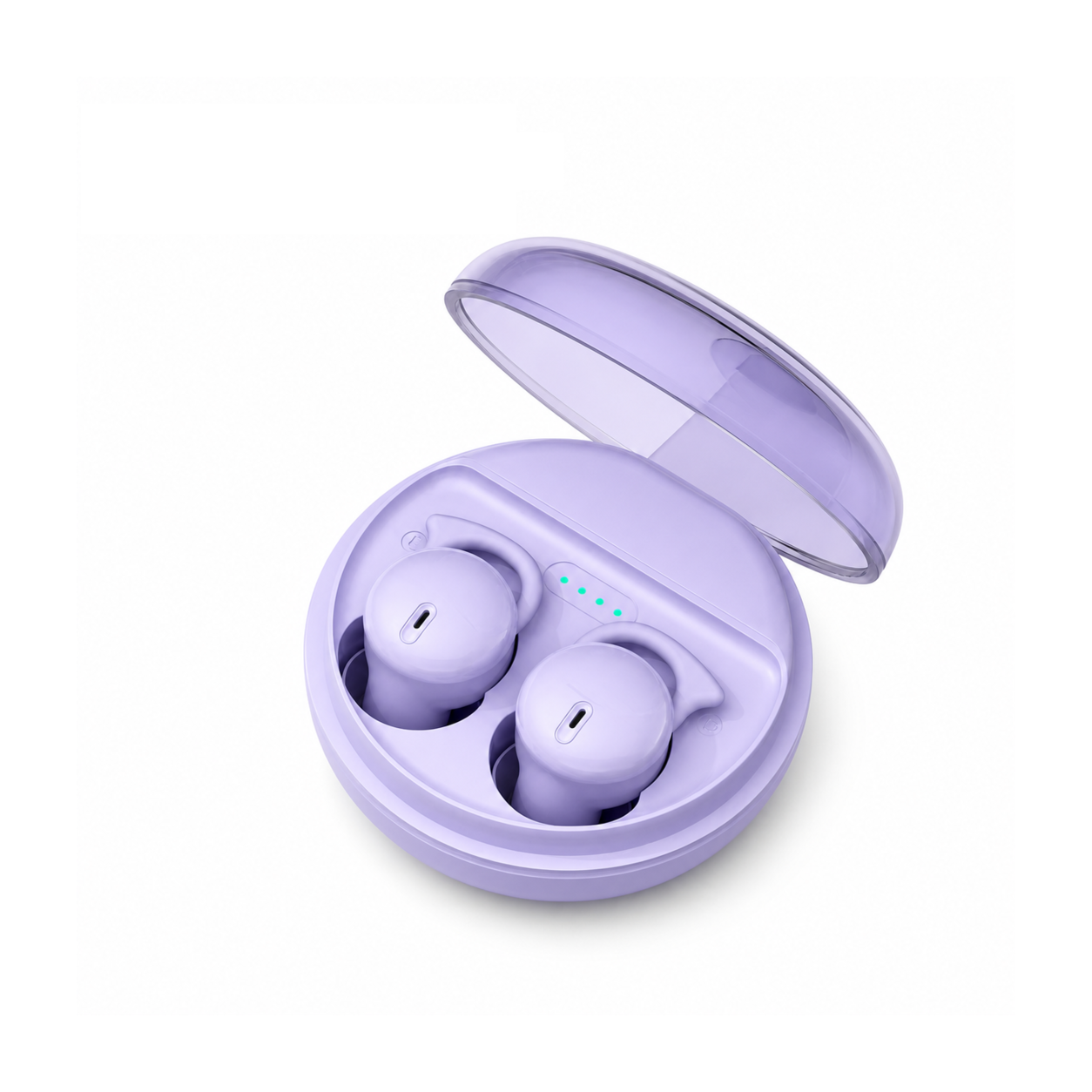
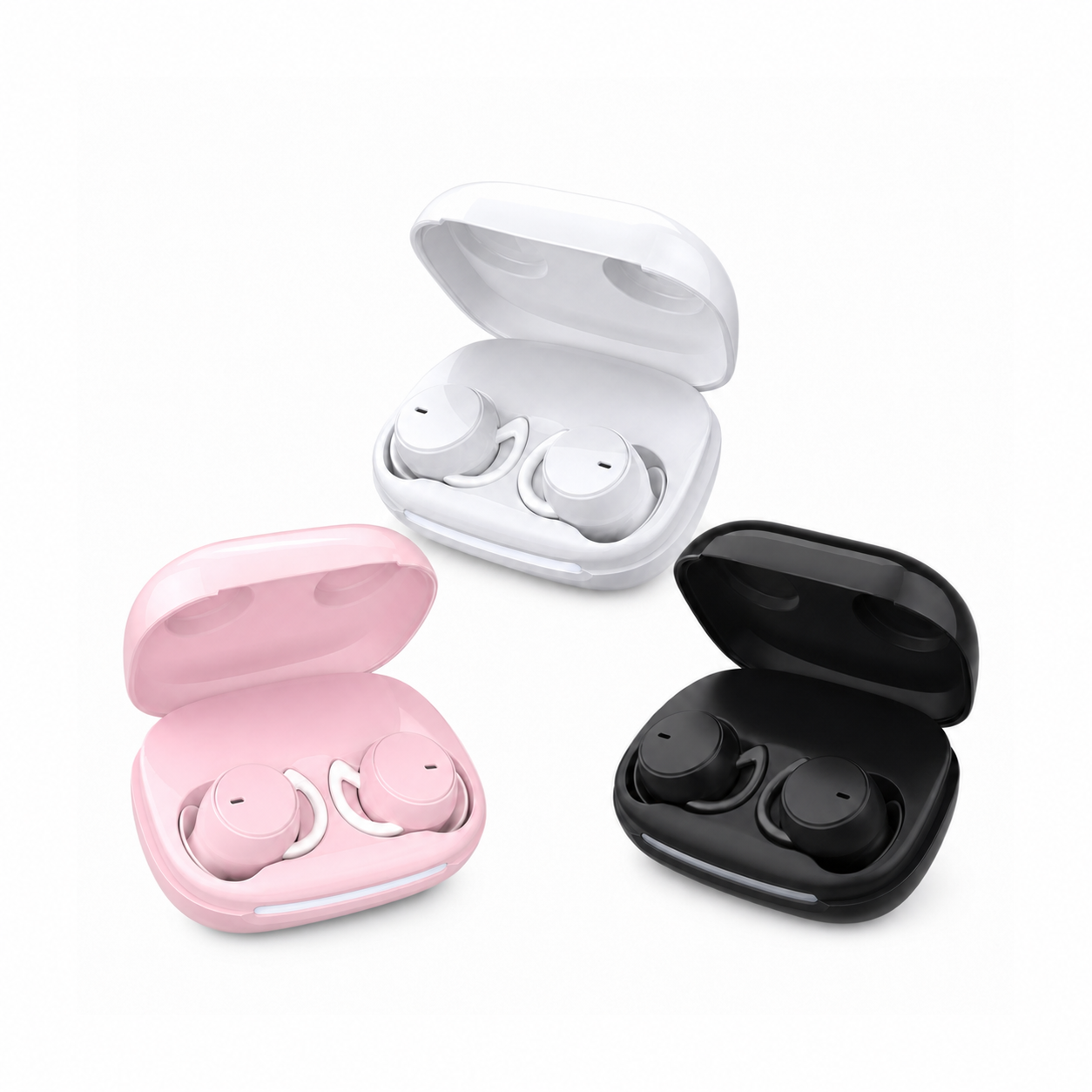
For side sleepers requiring dedicated bedtime audio, ergonomic acoustic engineering eliminates focal cartilage compression. The EARSOLE Low-Profile Sleeping Earbuds for Side Sleepers address lateral bedding force through a purpose-built acoustic architecture:
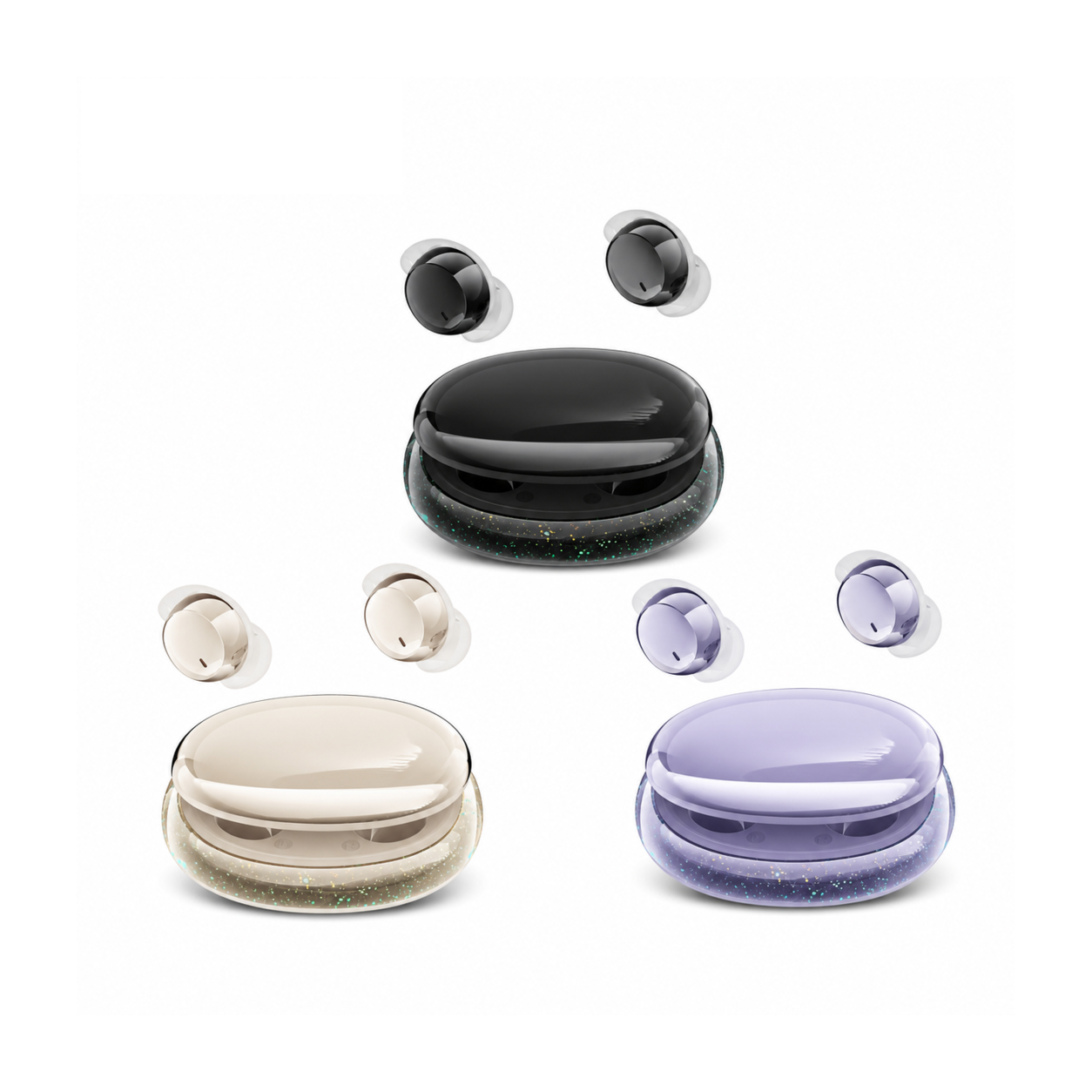
Flat, stemless earbuds for sleeping on your side, with a dynamic sleep-support mode and a starlight glow charging case. See the three colors at EARSOLE.
The enclosure sits completely recessed within the concha bowl, maintaining acoustic coupling without protruding past the lateral ear plane. Rather than relying on power-hungry active noise cancellation—which requires bulky processing DSPs and dual microphones that thicken the shell—the earbuds achieve nocturnal tranquility through an anatomical silicone seal. This passive barrier attenuates intrusive household clatter and partner snoring without generating eardrum pressure sensation.
Bedtime listening often connects with evening relaxation rituals. If your wind-down routine includes a warm evening shower before bed, keeping acoustic seals clean and managing moisture is critical; consult our guide on earphones for shower and bathroom humidity to understand how water vapor and acoustic seals interact across different environments.
Actionable Bedtime Audio Habits for Concha Protection
Alongside hardware geometry, proper bedtime sleep hygiene safeguards your ear cartilage and long-term hearing:
- Bedding Foam Selection: Dense latex and stiff polyester pillows resist deflection and force earbuds deeper into the ear. Medium-density memory foam or contour pillows with center recesses yield under cranial load, allowing the ear to rest without localized compressive stress.
- Sleep Playback Timers: All-night audio playback keeps auditory pathways active and traps humidity inside the ear canal. Configure playback timers on your media device to halt audio 30 to 45 minutes after you typically drift off.
- Controlled Sound Pressure Levels: Ambient nighttime bedrooms average 30 to 35 dBA. Keep audio playback below 60 dBA (under 50% device output) to prevent cumulative acoustic fatigue on delicate cochlear hair cells.
- Charging Contact Hygiene: Perspiration, natural sebum, and earwax accumulate on earbud surfaces overnight. Wipe the charging points with a dry lint-free cloth before returning the units to their charging cradle to prevent galvanic contact corrosion.
Frequently Asked Questions
Can I sleep on my side with headphones on?
Yes, you can sleep on your side with headphones, provided you choose models engineered specifically for side sleeping. Standard over-ear headphones and protruding stem earbuds generate intense mechanical leverage against pillow foam, compressing the concha cartilage and causing soreness. Using ultra-compact, stemless, low-profile earbuds that seat flush within the concha bowl allows you to rest comfortably on your side without localized housing pressure.
Are stemless earbuds actually better for side sleeping?
Yes, stemless earbuds eliminate the external lever arm that standard stem earphones present against a pillow. By resting recessed inside the ear concha cavity, the physical contact area is distributed smoothly, preventing concentrated cartilage compression.
Does the sleep-support mode cancel noise electronically?
No, the dynamic sleep-support mode relies on anatomical passive silicone seal isolation rather than active electronic noise cancellation. This avoids internal processing bulk and battery drain while effectively reducing ambient nocturnal noise.