



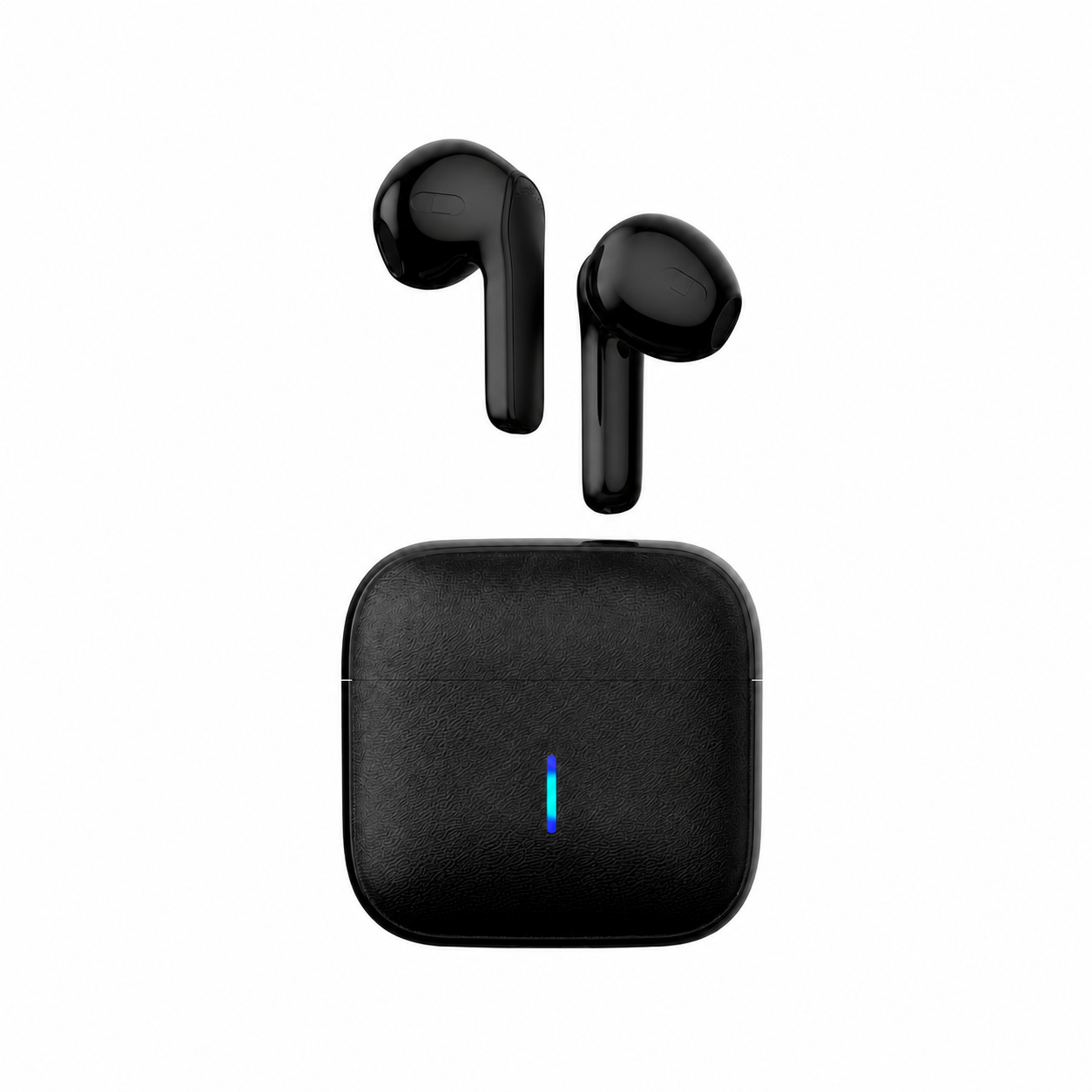
Wireless earbuds work as a chain of five steps. Your phone packs the music with a codec and sends it over a short-range Bluetooth radio link. The sound reaches both buds, a driver in each bud turns the signal into moving air, and the ear tip’s seal in your ear canal finishes the job.
One Reddit user asked how Bluetooth devices like earbuds even exist. The steps below answer that with three Wikipedia articles: Bluetooth, List of Bluetooth profiles and Headphones. They describe wireless earbuds in general, not any particular EARSOLE model.
Key takeaways
- Wikipedia says Bluetooth uses radio waves from 2.402 GHz to 2.48 GHz.
- Wikipedia says the A2DP profile for Bluetooth audio includes mandatory support for the SBC codec.
- Wikipedia says the moving-coil or “dynamic” driver is the most common type used in headphones.
The five steps at a glance
| Step | What happens | Where it happens |
|---|---|---|
| 1. Radio link | The phone sends the audio over Bluetooth | Between the phone and the earbuds |
| 2. Codec | The music is packed for the radio link, with SBC as the shared minimum | Phone and earbuds |
| 3. Both ears | One bud forwards a stream to the other, or each bud gets its own | Between the two buds |
| 4. Driver | A driver turns the electrical signal into sound | Inside each bud |
| 5. Seal | The ear tip closes off the ear canal | In your ear |
Step 1: the radio link
Wikipedia says Bluetooth employs UHF radio waves in the ISM bands, from 2.402 GHz to 2.48 GHz. In the most widely used mode, it says, transmission power is limited to 2.5 milliwatts, giving a range of up to 10 metres (33 ft). Wikipedia also says Bluetooth divides the data it sends into packets and transmits each packet on one of 79 designated channels.
So the music leaves your phone as short-range radio, not through a wire.
Step 2: packing the music with a codec
Wikipedia says the Advanced Audio Distribution Profile (A2DP) defines how audio is streamed from one device to another over Bluetooth, for example from a mobile phone to a wireless headset. It says each A2DP stream carries audio in up to 2-channel stereo.
Wikipedia says A2DP includes mandatory support for the SBC codec, which it describes as low-complexity and low-bitrate. It says the profile optionally supports MP3, AAC and ATRAC, and can be extended to manufacturer-defined codecs such as aptX and LDAC. Every A2DP device therefore supports SBC.
Phone calls work a little differently. Wikipedia says these systems often also implement the Headset (HSP) or Hands-Free (HFP) profiles for telephone calls.
Step 3: getting sound to both ears
Wikipedia says modern wireless earphones have no cord connecting the two earphones to the source device or to each other. It describes two ways the sound reaches both ears. On some models, both audio streams go to one earphone, which forwards one stream to the other earphone. On other models, each earphone receives its audio stream directly from the source device.
Wikipedia says the first arrangement has the advantage of being compatible with legacy systems, while the second has the advantage of causing less power drain.
Step 4: the driver turns the signal into sound
Wikipedia describes cordless headphones as battery-powered receiver systems, of which the headphone is only a component. It says headphones use various types of transducer to convert electrical signals to sound, and that the moving-coil or “dynamic” driver is the most common type.
In a dynamic driver, Wikipedia says, a voice coil, a light coil of wire, is suspended in the magnetic field of a magnet and attached to a diaphragm. When the varying current of the audio signal passes through the coil, the coil and the attached diaphragm vibrate, and the vibrating diaphragm pushes on the air to produce sound waves.
Wikipedia says balanced armature drivers are today typically used only in in-ear headphones and hearing aids, where their high efficiency and small size are a major advantage.
Step 5: the seal finishes the job
Wikipedia describes earbuds as individual units that plug into the ear canal. It says headphones’ low-frequency performance is possible because they are so much closer to the ear that they only need to move relatively small volumes of air. Wikipedia also says that, through passive noise isolation, in-ears block anywhere from 10 to 15 dB.
The seal matters even more for one driver type. Wikipedia says balanced armatures require a better seal than other types of drivers to deliver their full potential.
So the fit of the ear tip is part of how earbuds sound, not just how they feel. Our guides on what earbud sound quality means and how headphones block outside sound go further on the seal.
What you can check on a listing
A product page can tell you about some of these steps. Look for the codecs it names besides SBC, the driver type, and how many ear tip sizes come in the box. If a listing leans on a Bluetooth version number, our guide to reading Bluetooth version claims explains what rides along with that number on our own product pages.
Do wireless earbuds need a special codec to play music?
Wikipedia says the A2DP profile used for Bluetooth audio includes mandatory support for the SBC codec. It says AAC is optional and that the profile can be extended with manufacturer codecs such as aptX and LDAC.
Why do earbuds sound different when they don’t fit?
Wikipedia says that, through passive noise isolation, in-ears block anywhere from 10 to 15 dB. It also says balanced armature drivers require a better seal than other types of drivers to deliver their full potential.
