

In-Ear Monitors for Drummers Protecting Against Cymbal Transients and Click Bleed
Performing behind an acoustic drum kit places musicians in one of the most physically demanding auditory environments in modern music. Between the instantaneous acoustic crack of a snare drum exceeding 120 dB SPL and the relentless high-frequency wash of crash and ride cymbals, drummers face extreme acoustic transients inches from their ears.
At the same time, modern live and studio drumming demands unwavering timing accuracy anchored by high-tempo metronome clicks and sequencing tracks. Choosing the right in-ear monitors requires balancing deep acoustic isolation to safeguard delicate cochlear hair cells against cymbal trauma while preventing sharp metronome clicks from bleeding into sensitive overhead microphones.
High-SPL Dynamic Range, Hybrid Driver Configurations, and Sub-Bass Headroom
Unlike vocalists who operate predominantly within midrange frequencies, drummers require simultaneous reproduction of sub-bass impact from kick drums and crisp high-frequency transient attack from snare wires. Single balanced armature drivers physically lack the acoustic diaphragm displacement required to reproduce 40 Hz to 80 Hz bass frequencies at stage volumes, causing early harmonic distortion and audio clipping.
To resolve this limitation, professional drummer in-ear monitors utilize hybrid multi-driver configurations. A dedicated dynamic driver handles low-frequency kinetic displacement, while tuned balanced armature armatures handle snare snap and vocal cues, incorporating internal acoustic dampers that smooth out harsh 6 kHz to 10 kHz cymbal spikes before reaching the eardrum.
| Monitor Driver Setup | Low-End SPL Headroom | Click Bleed Isolation | High-Frequency Transient Damping | Continuous Drumming Comfort |
|---|---|---|---|---|
| Single Balanced Armature | Low (clips on kick transients) | 22 to 25 dB attenuation | Moderate (sharp cymbal attack) | 2 to 3 hours (light shell) |
| Dedicated Dynamic Driver | High (natural bass displacement) | 20 to 24 dB attenuation | Smooth (slower transient rise) | 3 to 4 hours (vented body) |
| Hybrid Dynamic + Multi-BA | Exceptional (deep sub-bass impact) | 26 to 30 dB attenuation | Precision (damper-tamed peaks) | 4 to 6 hours (dense concha) |
| Custom Medical Silicone | Exceptional (airtight canal seal) | 28 to 34 dB attenuation | Optimal (flesh-coupled mass) | 5+ hours (jaw-flex grip) |
Eliminating Metronome Click Bleed into Overhead Microphones
In professional recording studios, a common technical flaw occurs when high-sensitivity condenser overhead microphones capture high-pitch click bleed leaking from a drummer’s ears. If a drummer uses unsealed earbuds or models with open acoustic vents, the high-frequency 2 kHz to 4 kHz metronome clicks spill directly into quiet drum tracks, ruining acoustic recordings.
Preventing click bleed requires an absolute acoustic seal. Drummers must select dense viscoelastic memory foam tips or deep-seated custom silicone earmolds that provide at least 26 dB of continuous physical isolation, trapping the click track entirely within the auditory canal where it cannot contaminate sensitive recording gear.
Cable Strain Relief, Sweat Ingress, and Post-Set Auditory Recovery
A drummer’s upper body undergoes rapid, forceful acceleration throughout a performance, placing severe mechanical stress on monitor cables. Reliable drummer IEMs feature reinforced braided cables with formable over-ear memory wire guides and sweat-resistant acoustic nozzle filters that prevent salty perspiration from clogging delicate driver acoustic bores.
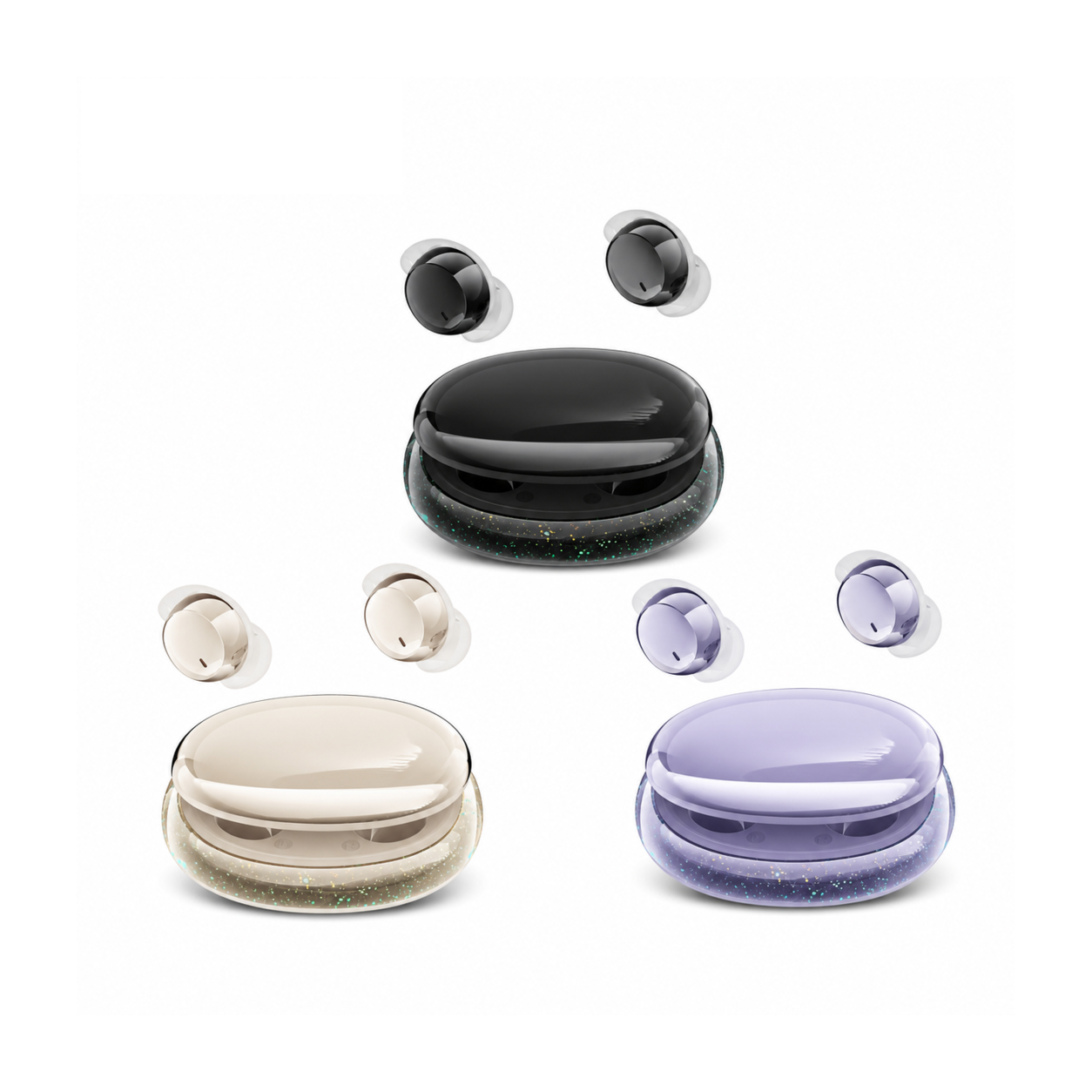
Flat, stemless earbuds for sleeping on your side, with a dynamic sleep-support mode and a starlight glow charging case. See the three colors at EARSOLE.
After finishing high-energy concerts or intensive studio sessions, drummers need downtime to let auditory fatigue and ear canal irritation subside. Transitioning from tight, deep-insertion stage monitors to ultra-low-profile silicone earbuds like the EARSOLE Low-Profile Earbuds provides soothing, pressure-free listening that promotes restful sleep without physical ear discomfort.
Essential Drumming In-Ear Monitor Setup Checklist
Maximize hearing protection, groove consistency, and mix clarity behind the kit with these proven monitoring guidelines:
- Select Multi-Driver Hybrid Architectures: Combine dynamic drivers for tactile kick drum punch with balanced armatures for detailed snare and vocal monitoring.
- Verify Airtight Click Bleed Seals: Perform test recordings near overhead microphones to verify zero click track spill before tracking drum takes.
- Incorporate Tactile Bass Shakers: Mount a low-frequency transducer to your drum throne so you physically feel sub-bass, allowing safer monitoring volume levels.
Frequently Asked Questions
Why do drummers need multiple drivers in their in-ear monitors?
Kick drums require substantial acoustic air displacement that overloads single balanced armatures; hybrid setups dedicate dynamic drivers to low end to eliminate distortion.
How can drummers prevent click track bleed into studio drum mics?
Drummers must use fully sealed, non-vented in-ear monitors with dense memory foam or custom silicone tips providing at least 26 dB of continuous acoustic isolation.