


Drummers use in-ear monitors to hear a click and their own mix without that sound spilling into the room. Whether a pair works for drumming comes down to four things: the seal, how much isolation you want, the cable, and how you look after them.
Why drummers use in-ear monitors
Drumeo’s guide to in-ear monitors for drummers says the monitor engineer can feed the metronome to the band members who need or want it. The same guide says IEMs can reduce the outside noise level by anywhere from 20-30 dB.
Drumeo also sells its own in-ear monitors, which it describes as triple-driver IEMs that reduce external volume by up to 29 dB, so read its advice with that in mind.
The guide is clear that in-ears are not the right tool for every gig. It lists low-volume gigs and gigs where you have to take them on and off constantly, and notes that in rare cases some people get itches or rashes when wearing them for long periods.
Make them stay in and seal
Wikipedia’s in-ear monitor article says IEMs sit in the ear canal and seal against its sides, and that the seal is a major part of how well they work; without a good seal, more ambient noise leaks in.
A drummer posting in r/drums said the traditional universal type does not stay in their ears. In the replies, one drummer said the most important thing with universal monitors is finding a tip that fits your ear well, and another said their Shure SE215s have never fallen out during long, loud, sweaty rock gigs. The original poster later wrote that their new pair fit with the smallest ear piece.
Tip depth is also a control. One drummer said triple-flanged tips gave better isolation than the stock foam tips, and that they push them deeper for more isolation when running a full mix, or only a little when using just a click and needing to hear the room. Our guide to choosing ear tip size walks through a fit test.
How much isolation you want
More isolation is not always the goal. Drumeo suggests that for moderately loud situations you might want less isolation so you can hear your colleagues better, and that 20-25 dB of reduction might be more than enough.
Drumeo’s advice is not to put only one in: it says taking one IEM out means that ear will take on the full sound level of the stage. The guide says the idea is to bring the whole level down to where your ears hear best, around 70-80 dB SPL.
It also warns against using ordinary consumer earbuds, such as Apple EarPods, for drum practice and stage, because it says they do not offer sound isolation.
Cable and first-pair checks
- Detachable cable: Drumeo recommends IEMs with detachable cables because the cables are under stress as they bend around the ear lobe, and sweat can eat away at the cable plastic.
- Over-ear routing: Wikipedia says wire-over-ear is preferred for professional use, giving a more secure fit with reduced microphonics.
- Budget: Drumeo says that if you have never used IEMs before, you should not buy a high-end model.
- Sleeves: Drumeo suggests trying different sleeve materials, which it says is considerably cheaper than a silicone custom earmold and lets you figure out what you like best.
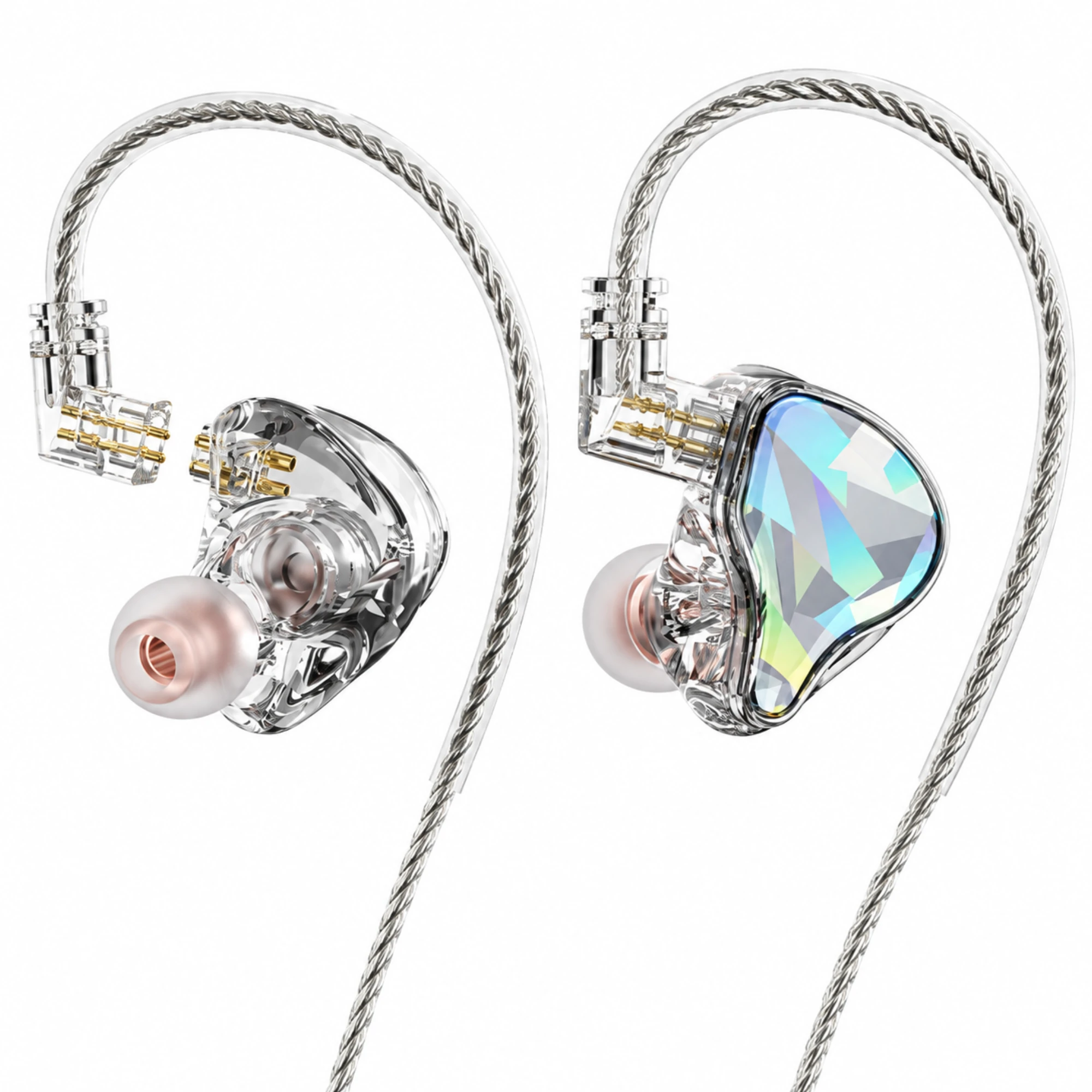
As an example of reading a listing, EARSOLE’s Faceted In-Ear Monitors with Detachable Braided Cable listing describes a braided over-ear cable and says its display image shows a detachable two-pin connection. The same listing says connector size, acoustic measurements and device compatibility have not been verified, so ask the seller about those before relying on the pair for a gig.
Look after them
Drumeo suggests cleaning IEMs regularly, as in weekly if you use them constantly, and letting them dry outside their case so mold and bacteria do not form. It also says neoprene sleeves lose elasticity over time, so the IEM isolates less and less, and recommends replacing them regularly.
For the difference between the terms, see our in-ear monitors vs earbuds explainer.
Do drummers use in-ear monitors?
Drumeo’s guide says the monitor engineer can feed a metronome through in-ear monitors to the band members who need it, and that in-ears can reduce outside noise by 20-30 dB. In r/drums, one drummer said their Shure SE215s have never fallen out during long, loud, sweaty rock gigs.
