


Because modern USB-C phones, tablets, and laptops output digital audio over USB-C, listening with wired headphones requires a Digital-to-Analog Converter (DAC) and amplifier—either built directly into a USB-C headphone cable or housed in a compact USB-C to 3.5mm Dongle DAC that bypasses your device’s internal circuitry and lets you plug in any 3.5mm or dual-mode headphones. For everyday low-impedance wired headphones, a budget ~$8–$10 USB-C DAC adapter already delivers clean conversion, while $59–$229 portable DAC/amps are primarily worth buying when you need higher amplifier voltage for demanding headphones, a CNC-machined metal chassis, or app-based gain and EQ controls.
When smartphone and laptop makers removed the dedicated 3.5mm headphone socket, they did not just change the shape of the plug—they moved the digital-to-analog conversion step outside the phone’s main audio jack. That shift created two categories that shoppers searching for usb c dac headphones often see side by side: fixed-cable usb-c headphones with dac chips sealed inside the USB-C connector shell, and versatile 3.5mm headphones paired with an external USB-C Dongle DAC.
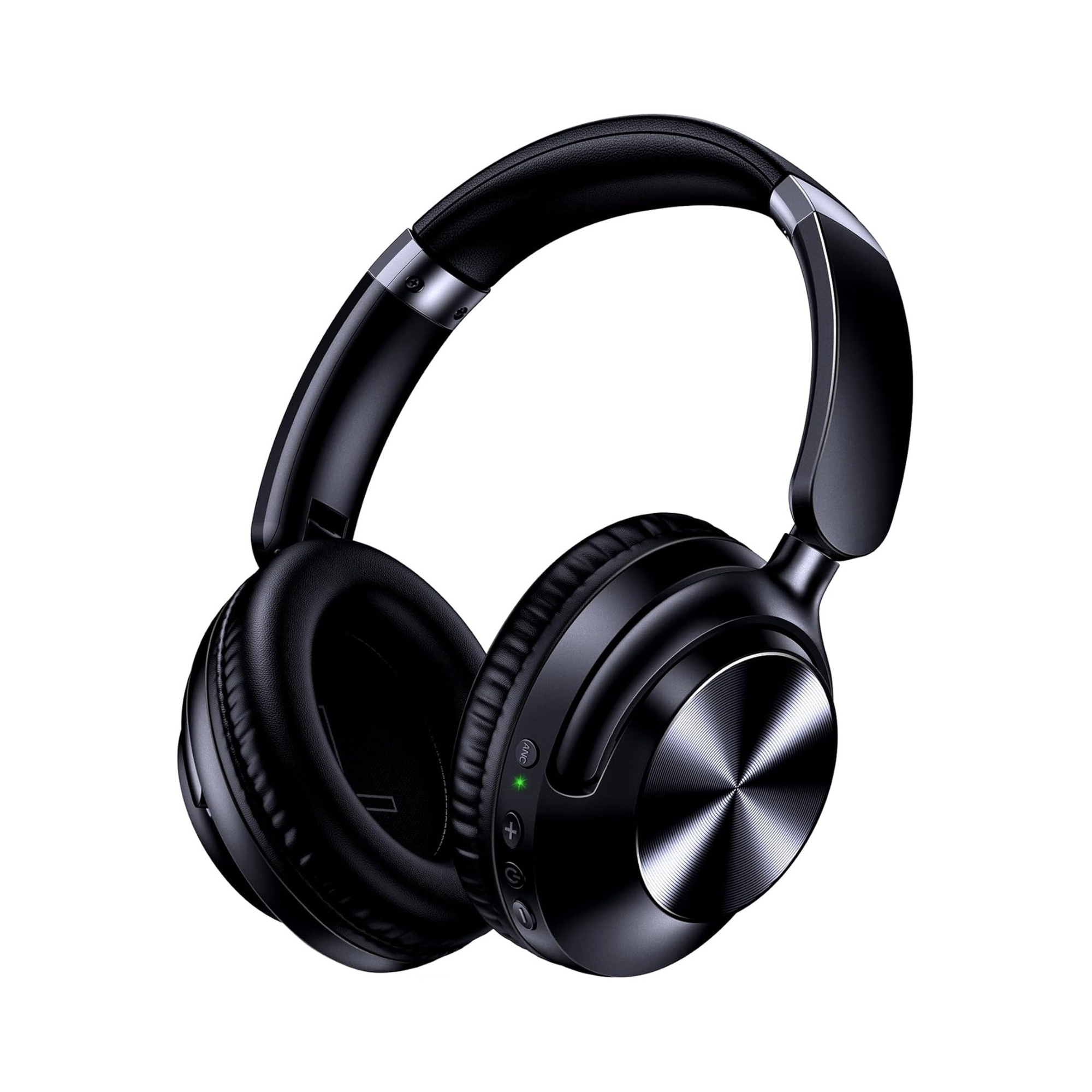
Below, we break down how a USB-C Dongle DAC works between your source device and your ears, compare budget ~$8–$10 dongles against $59–$229 audiophile DAC/amps and $500–$3,000 standalone players, and show why pairing dual-mode 3.5mm/Bluetooth headphones like the EARSOLE Series 127 Noise Cancelling Over-Ear Headphones with a modular USB-C DAC dongle gives you far more flexibility than a fixed USB-C cord.
What Does a USB-C Dongle DAC Actually Do Between Your Phone and Headphones?
Every speaker driver inside a pair of headphones—whether a compact in-ear monitor (IEM) or a full-size over-ear headphone—is an analog transducer. Its voice coil and diaphragm cannot read raw digital ones and zeroes streaming from Spotify, Apple Music, or a laptop video timeline. Something in the signal chain must translate digital audio data into a continuous analog electrical wave (the DAC, or Digital-to-Analog Converter) and then boost that tiny voltage enough to move the headphone drivers cleanly (the headphone amplifier).
According to ecoustics’ Best Dongle DACs: Editors’ Choice 2025 guide by W. Jennings, a Dongle DAC is a small adapter that connects between a smartphone, tablet, or laptop and wired headphones to improve digital audio quality and provide a higher-quality, more powerful headphone amplifier in the same compact package. As ecoustics explains, a USB-C Dongle DAC accomplishes this by bypassing the internal DAC circuitry built into phones—which is generally low quality—and offloading both digital-to-analog processing and headphone amplification to dedicated external hardware.
Even with the rapid rise of wireless headphones and true wireless earbuds, ecoustics notes that USB-C Dongle DACs remain popular with listeners who prefer wired headphones and have zero interest in spending $500 to $3,000 on a dedicated portable digital audio player (DAP) when they already carry a capable smartphone in their pocket. Instead of buying a redundant standalone music player, offloading conversion to an external USB-C Dongle DAC lets you put your budget toward better headphones while breathing new life into phones, tablets, and laptops.
Fixed USB-C Headphones With a Built-In DAC vs. 3.5mm Headphones + a USB-C Dongle DAC
Understanding where the DAC chip sits helps you avoid buying gear that locks you into a single port:
- Fixed-cable USB-C headphones with a built-in DAC: A tiny DAC and amp chip is permanently molded inside the USB-C plug at the end of the headphone cord. They plug straight into USB-C phones and laptops, but you cannot plug them directly into a 3.5mm airplane armrest jack, a desktop audio interface, or a vintage stereo receiver without special converters—and if the USB-C plug wears out, the entire headphone is sidelined.
- 3.5mm wired or dual-mode headphones + an external USB-C to 3.5mm Dongle DAC: Your headphones keep a universal 3.5mm analog plug, and the USB-C Dongle DAC acts as a modular bridge whenever you connect to a USB-C smartphone, tablet, or laptop. For a deeper look at how active DAC adapters differ from passive wiring, see our guide to choosing a USB-C to 3.5mm audio adapter.
Budget $8–$10 USB-C DAC Dongles vs $59–$229 Portable DAC/Amps: What You Actually Pay For
One of the most common questions from newcomers entering wired audio is whether upgrading from a basic $8–$10 USB-C adapter to an audiophile dongle will transform the sound of everyday headphones. In Reddit’s r/inearfidelity community (thread 175w7f1, Best USB-C to 3.5 mm Portable DAC?), a new listener noted that online consensus pointed to the Apple USB-C to 3.5mm dongle as the best starting bet and asked whether a pricier portable DAC would deliver noticeably improved sound.
The community response in r/inearfidelity (thread 175w7f1) offers a candid reality check for buyers:
- Why budget ~$8–$10 dongles are enough for most standard headphones: Commenter
Tanachipinr/inearfidelity(thread175w7f1) advised that a pricier unit is highly unlikely to improve sound on its own, urging buyers to be honest with themselves that stepping up mostly means paying for better physical build quality and additional functionality depending on the model. In the same thread, commenterc0ng0pr0highlighted that JSAUX makes a sturdy USB-C dongle with a DAC chip capable of handling high-definition audio that goes on sale for as little as $8 and lasts for years without breaking. - When $59–$229 portable DAC/amps actually make sense: Both
r/inearfidelitycontributors and ecoustics point out specific hardware reasons to spend more. Inr/inearfidelity(thread175w7f1), userIndependent-Win-8844chose the battery-free FiiO KA3 specifically for its Android companion app, which provides volume limits and hardware gain settings, while usersJongalt26andcr0ftpraised lightweight clip-on DAC/amps like the Qudelix 5K and FiiO BTR5/BTR7 because they combine USB DAC/amp operation for a PC with high-bitrate Bluetooth receiver modes (such as aptX HD) for a phone. - What ecoustics’ 2025 Editors’ Choice tier ($59–$229) adds: According to ecoustics, listeners who use higher-impedance over-ear headphones or more revealing IEMs with a laptop or smartphone benefit from dedicated dongle DACs priced between $59 and $229. In its 2025 Editors’ Choice roundup, ecoustics highlights four standout portable options:
- Questyle QCC & QCC Pro ($59 / $99): Ultra-compact 2.5 cm USB-C Bluetooth transmitters for iPhone and iPad that unlock Snapdragon Sound aptX Adaptive (and LDAC on the Pro model), though ecoustics notes they are iOS-only with no Windows or macOS drivers.
- iFi GO blu Air ($129): A 5 cm, 30-gram clip-on Bluetooth 5.2 and USB DAC/amp using a Qualcomm QCC5144 chip and Cirrus Logic MasterHIFI DAC with twin-mono amplification, 3.5mm S-Bal and 4.4mm balanced outputs, XBass/XSpace analog processing, and a 10-hour battery.
- Audioengine HXL ($169): A USB-C portable DAC/amp in a CNC-machined aluminum chassis packing dual CS43131 DACs, a 60-step digital volume control, 3.5mm single-ended (2.06 Vrms) and 4.4mm balanced (4.09 Vrms) outputs, up to 32-bit/384kHz PCM and DSD256 support, and output impedance under 0.5 ohms.
- Campfire Audio Relay ($229): A 56-gram CNC-machined aluminum USB-C dongle DAC built around an AKM Velvet Sound AK4493SEQ DAC, supporting up to 32-bit/768kHz PCM and DSD256, six selectable digital filters, and both 3.5mm single-ended and 4.4mm balanced outputs delivering up to 4 Vrms of power across Windows, macOS, iOS, and Android.
Comparison: Budget USB-C DAC Dongles vs. Portable DAC/Amps vs. Standalone DAPs
| Category & Price Tier | Representative Examples (From Sources) | Power & Output Connectivity | Core Strengths | Honest Limitations (Per ecoustics & r/inearfidelity) |
|---|---|---|---|---|
| Budget Everyday USB-C DAC Dongles (~$8–$10) | Apple USB-C to 3.5mm dongle; JSAUX braided USB-C to 3.5mm DAC adapter (r/inearfidelity thread 175w7f1) | Draws minimal bus power from host USB-C port; single-ended 3.5mm jack | Clean digital-to-analog conversion for standard low-impedance headphones; JSAUX braided cables go on sale for ~$8 and last for years (r/inearfidelity) | No hardware gain switches, balanced 4.4mm ports, or onboard volume wheel; Apple dongle is mainly tailored for iPhone/iOS voltage levels (r/inearfidelity) |
| Enthusiast Portable USB-C DAC/Amps & Transmitters ($59–$229) | FiiO KA3, BTR5/BTR7, Qudelix 5K (r/inearfidelity); Questyle QCC/Pro ($59/$99), iFi GO blu Air ($129), Audioengine HXL ($169), Campfire Relay ($229) (ecoustics) | Host USB-C bus power (KA3, HXL, Relay) or internal battery + Bluetooth/USB (BTR5/BTR7, Qudelix 5K, iFi GO blu Air); often adds 4.4mm balanced + 3.5mm outputs (up to 4–4.09 Vrms on Relay/HXL) | Drives higher-impedance headphones; CNC-machined aluminum bodies (HXL, Relay); app gain/volume limits (FiiO KA3) or shirt-clip Bluetooth + USB flexibility (Qudelix 5K, iFi GO blu Air) | Unlikely to dramatically change sound on easy-to-drive headphones (r/inearfidelity); tethered dongles can snag on doorknobs and draw phone battery (ecoustics) |
| Standalone Digital Audio Players / DAPs ($500–$3,000) | Dedicated portable hi-res music players referenced by ecoustics | Self-contained battery, storage, screen, internal DAC, and headphone amplifier | All-in-one offline player completely separate from your smartphone | Redundant hardware and high cost ($500–$3,000) when you already carry a capable smartphone in your pocket (ecoustics) |
Why Pairing 3.5mm Dual-Mode Headphones With a USB-C DAC Beats Fixed-Cable USB-C Earbuds
When you look at how people actually listen across a full week—commuting on a train, taking video calls on a laptop, watching movies on a flight, and relaxing at a desk—locking yourself into a pair of fixed-cable USB-C earbuds creates unnecessary friction. As ecoustics candidly points out, even the best wired dongle tether can snag on a doorknob when you are walking around, yet wired playback remains the cleanest way to avoid wireless compression at your desk.
Pairing dual-mode over-ear headphones that include a detachable 3.5mm audio cable with a separate USB-C to 3.5mm Dongle DAC gives you three connection modes from a single headphone investment:
- USB-C wired mode for phones, tablets, and slim laptops: Plug your headphones’ 3.5mm cable into an ~$8 JSAUX or Apple USB-C DAC dongle (or a higher-powered portable DAC/amp) to get zero-latency, battery-free wired audio from any USB-C port.
- Direct 3.5mm AUX mode for legacy gear: Unplug the USB-C dongle and connect the 3.5mm cable straight into desktop PCs, home stereos, gaming controllers, or airplane seatback entertainment systems.
- Cordless Bluetooth mode when moving: Leave the cable and dongle in your bag and listen wirelessly over Bluetooth when working out, walking, or commuting.
According to the product listing for the EARSOLE Series 127 Noise Cancelling Over-Ear Headphones, the headphones seamlessly switch between wireless Bluetooth connectivity and a 3.5 mm AUX wired connection using an included 47.2-inch audio cable for home stereos, plane entertainment systems, or everyday wired listening. The EARSOLE Series 127 listing also states Active Noise Cancellation (reducing up to 95% of ambient noise), up to 100 hours of wireless playtime on a single charge (with a 5-minute fast charge providing 10 hours of music playback), ultra-soft protein leather ear cups that rotate up to 105 degrees, an adjustable headband, and an included travel pouch.
- Practical setup note: The EARSOLE Series 127 includes the 47.2-inch 3.5mm AUX audio cable and travel pouch in the box; if your smartphone, tablet, or laptop only has USB-C ports, a USB-C to 3.5mm DAC adapter is sold separately and slips easily into the travel pouch alongside the 3.5mm cord. Because the Series 127 is designed as an everyday commuter and desk headphone rather than a hard-to-drive 600-ohm studio monitor, a sturdy budget ~$8–$10 USB-C to 3.5mm DAC dongle is all you need for clean wired playback.
Frequently Asked Questions
What is the difference between USB-C headphones with a built-in DAC and a USB-C to 3.5mm dongle DAC?
USB-C headphones with a built-in DAC seal a small digital-to-analog converter inside the fixed USB-C plug at the end of the cord, which means they can only plug into USB-C ports. By contrast, according to ecoustics, a USB-C Dongle DAC is a compact external adapter that connects between a smartphone, tablet, or laptop and traditional 3.5mm wired headphones, bypassing the phone’s basic internal DAC circuitry to handle digital-to-analog conversion and headphone amplification. Using an external USB-C Dongle DAC lets you pair versatile headphones—such as the EARSOLE Series 127, which includes a detachable 47.2-inch 3.5mm AUX cable and wireless Bluetooth—with USB-C devices, 3.5mm jacks, and wireless sources alike.
Will an expensive USB-C portable DAC sound noticeably better than an $8–$10 USB-C DAC dongle?
For standard, easy-to-drive wired headphones, usually not. In r/inearfidelity (thread 175w7f1), community members note that a budget USB-C to 3.5mm DAC adapter—such as the Apple USB-C dongle or a sturdy ~$8 JSAUX braided DAC cable—already delivers clean high-definition audio conversion, and stepping up to a pricier unit is unlikely to dramatically change the sound of easy-to-drive headphones. As both r/inearfidelity contributors and ecoustics explain, spending $59 to $229 on a portable DAC/amp (like the FiiO KA3, Qudelix 5K, iFi GO blu Air, Audioengine HXL, or Campfire Audio Relay) mainly buys higher amplifier output (up to 4 Vrms balanced) for demanding higher-impedance headphones, CNC-machined aluminum durability, or app-based gain and EQ controls—while still costing far less than a $500 to $3,000 standalone digital audio player.
Can I use dual-mode Bluetooth and 3.5mm headphones with a USB-C DAC adapter?
Yes. According to the EARSOLE Series 127 listing, the over-ear headphones switch between wireless Bluetooth and a wired 3.5mm AUX connection using the included 47.2-inch audio cable. To use them in wired mode with a USB-C phone, tablet, or laptop that lacks a 3.5mm jack, simply plug the included 47.2-inch 3.5mm cable into a separate USB-C to 3.5mm DAC dongle (which ecoustics notes bypasses the device’s internal DAC circuitry, and which r/inearfidelity users note costs around $8–$10 for a durable everyday adapter). Note that while the EARSOLE Series 127 includes the 47.2-inch 3.5mm AUX cable, a USB-C to 3.5mm DAC adapter is sold separately.
