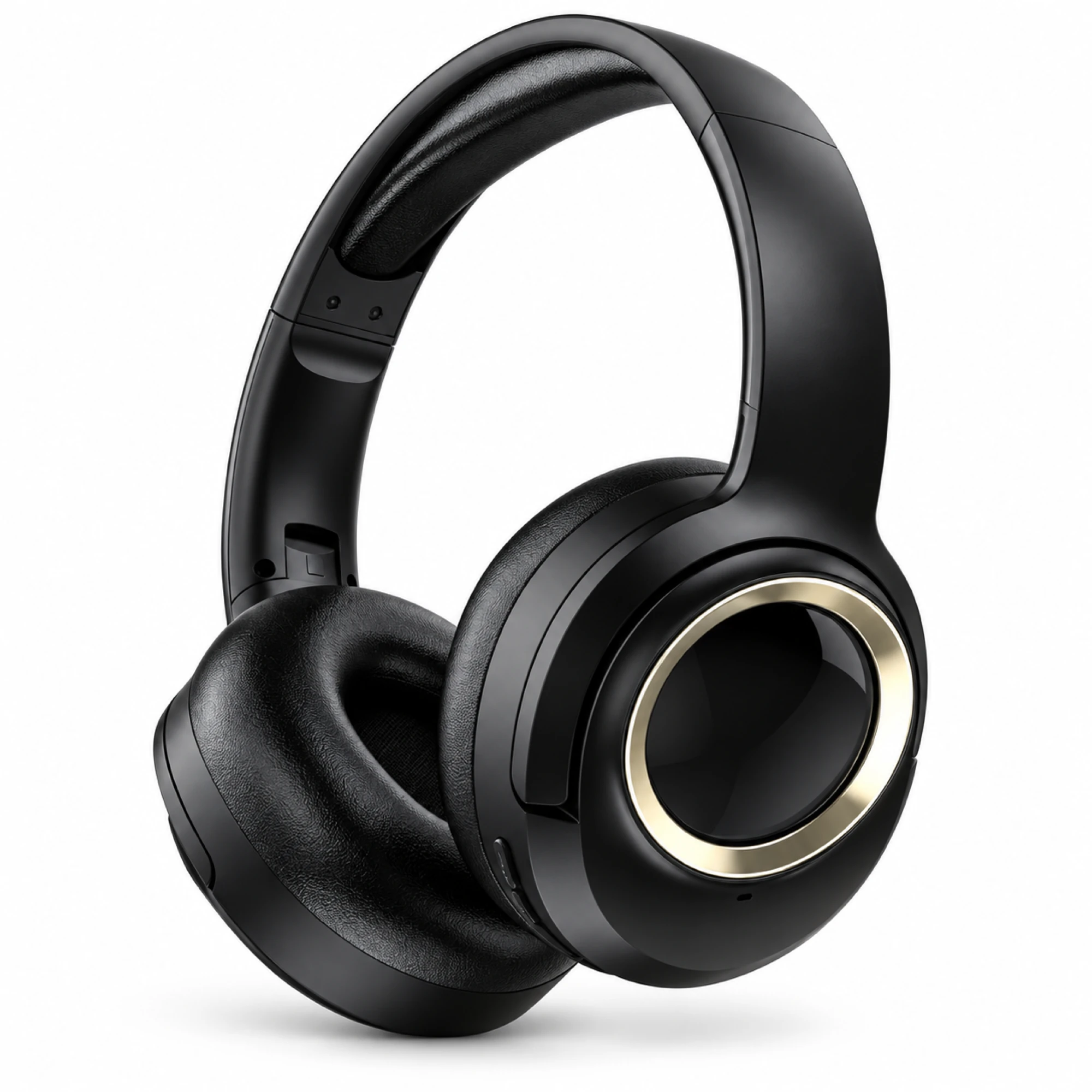
 MX-21 Black and Gold Wireless Headphones
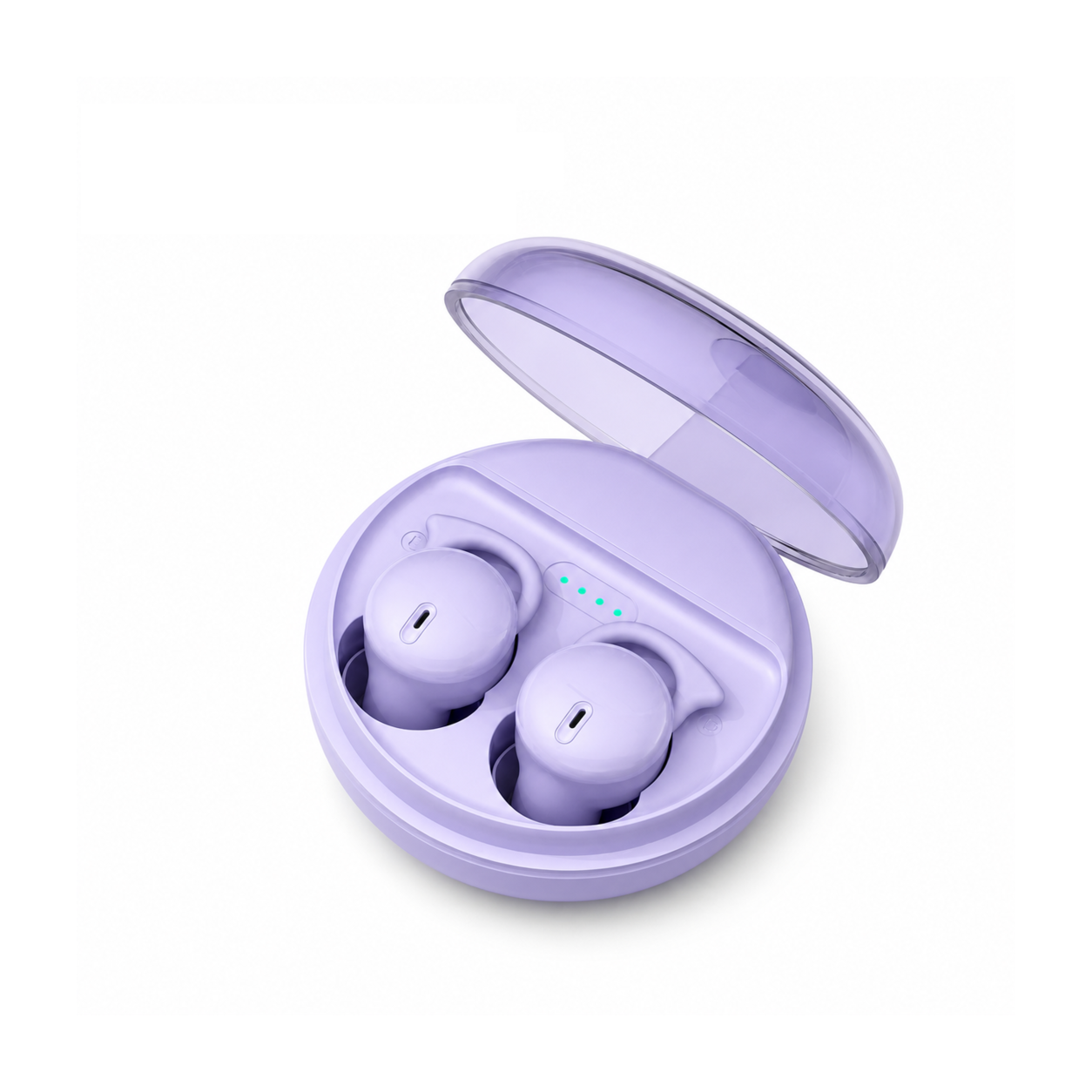
 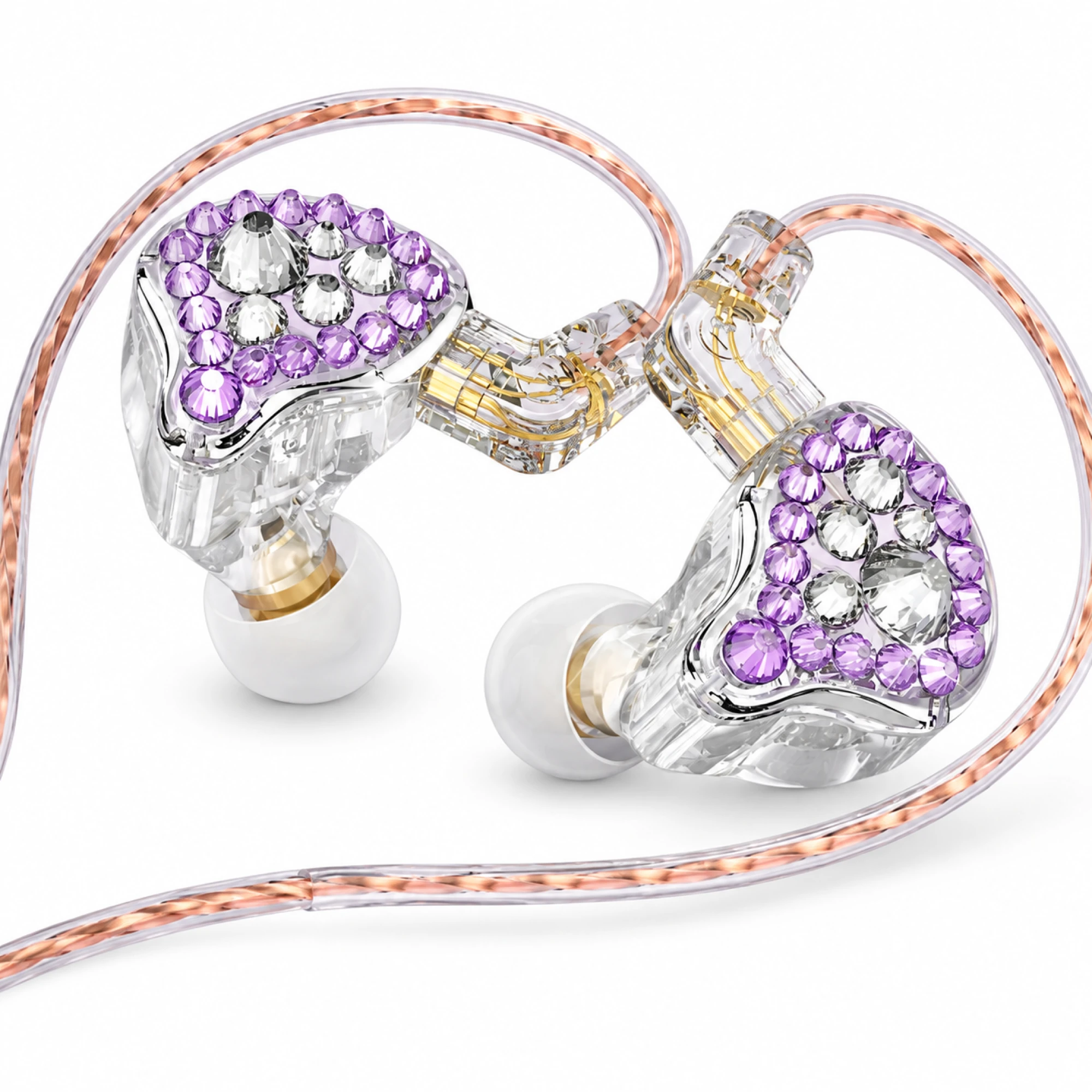 Q2 Pro Purple Crystal In-Ear Monitors
 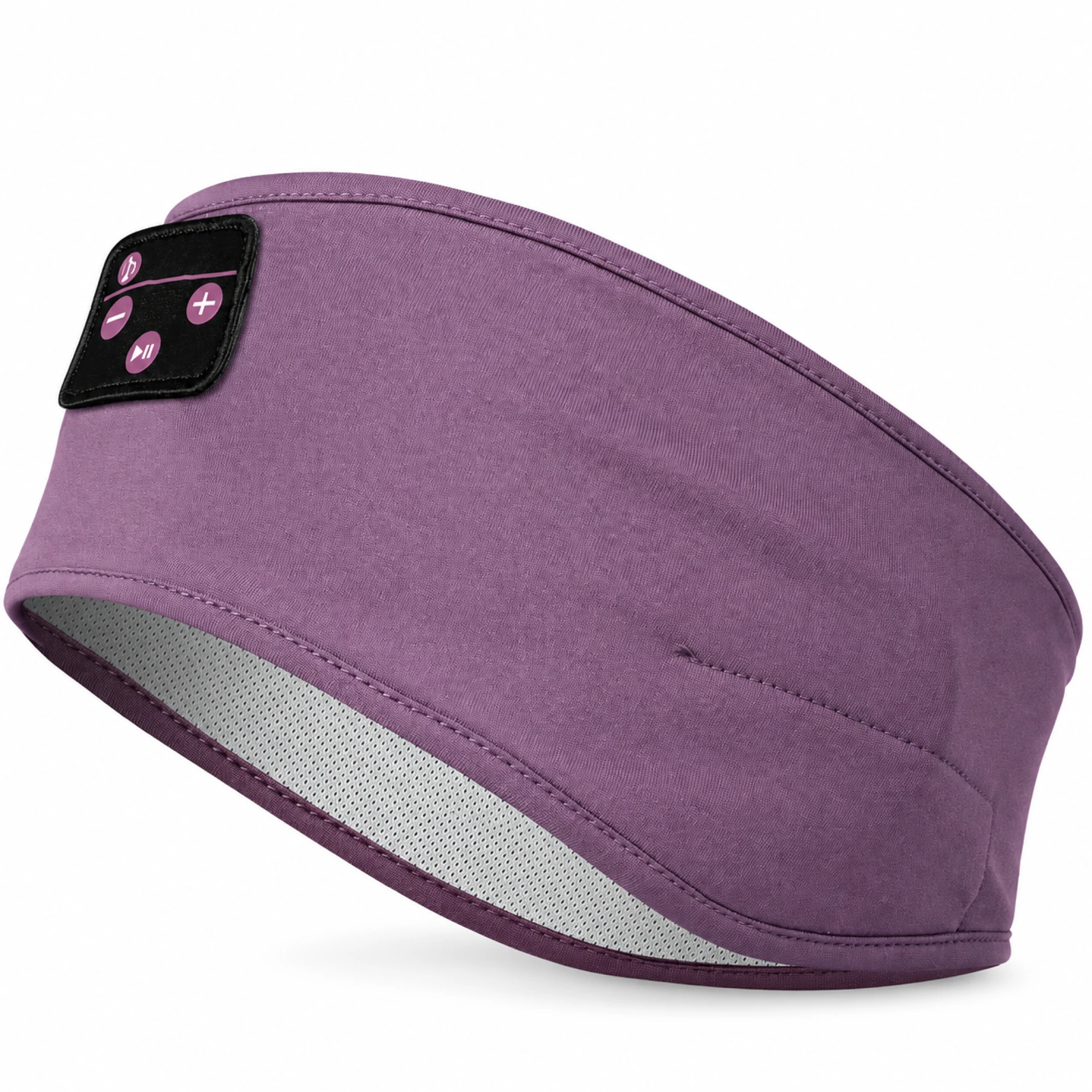 Purple Sleep Headband Headphones with Triangle Controls
 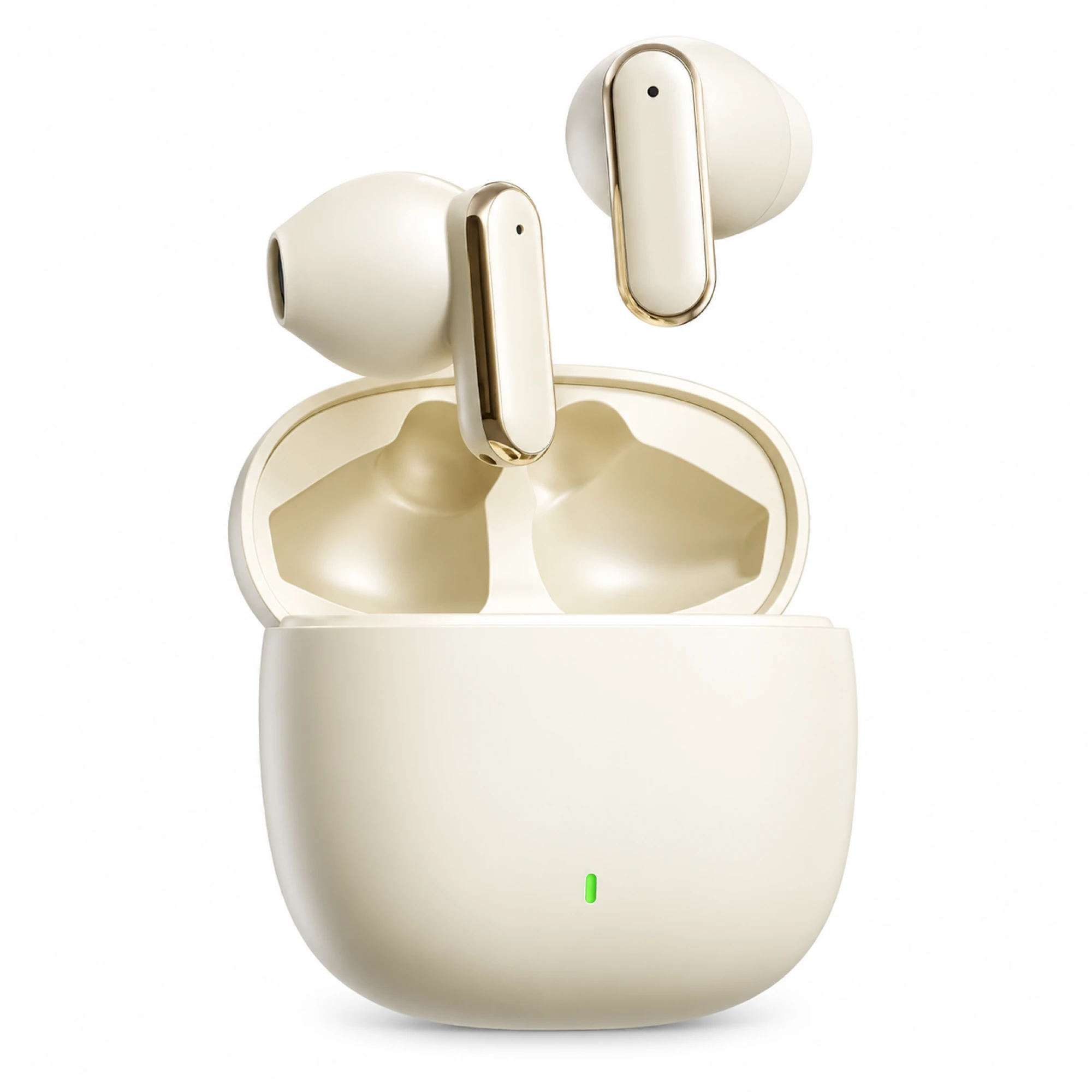 Cream Reflective-Stem Wireless Earbuds
 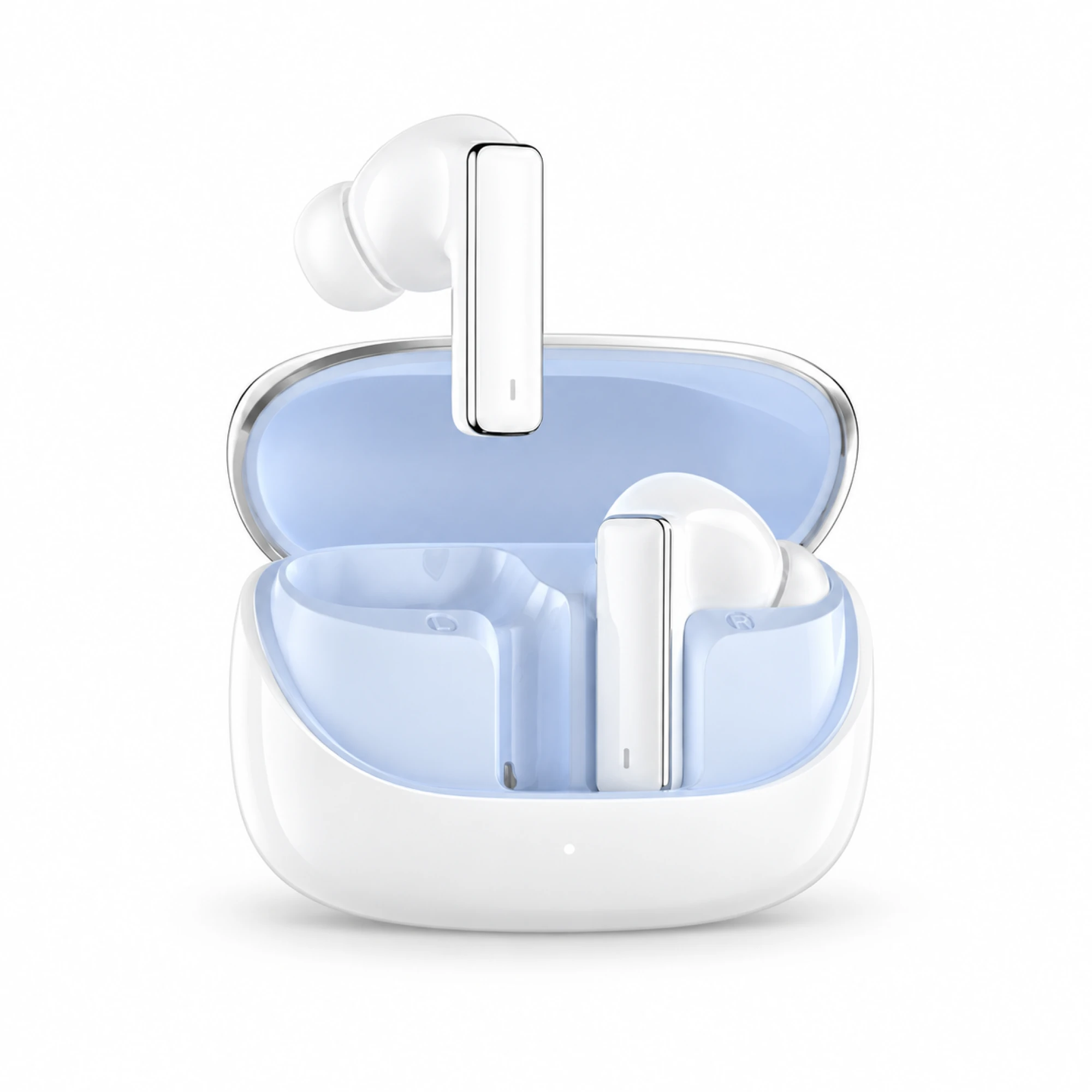 IN-01 White ANC Earbuds with Pale Blue Case Interior
 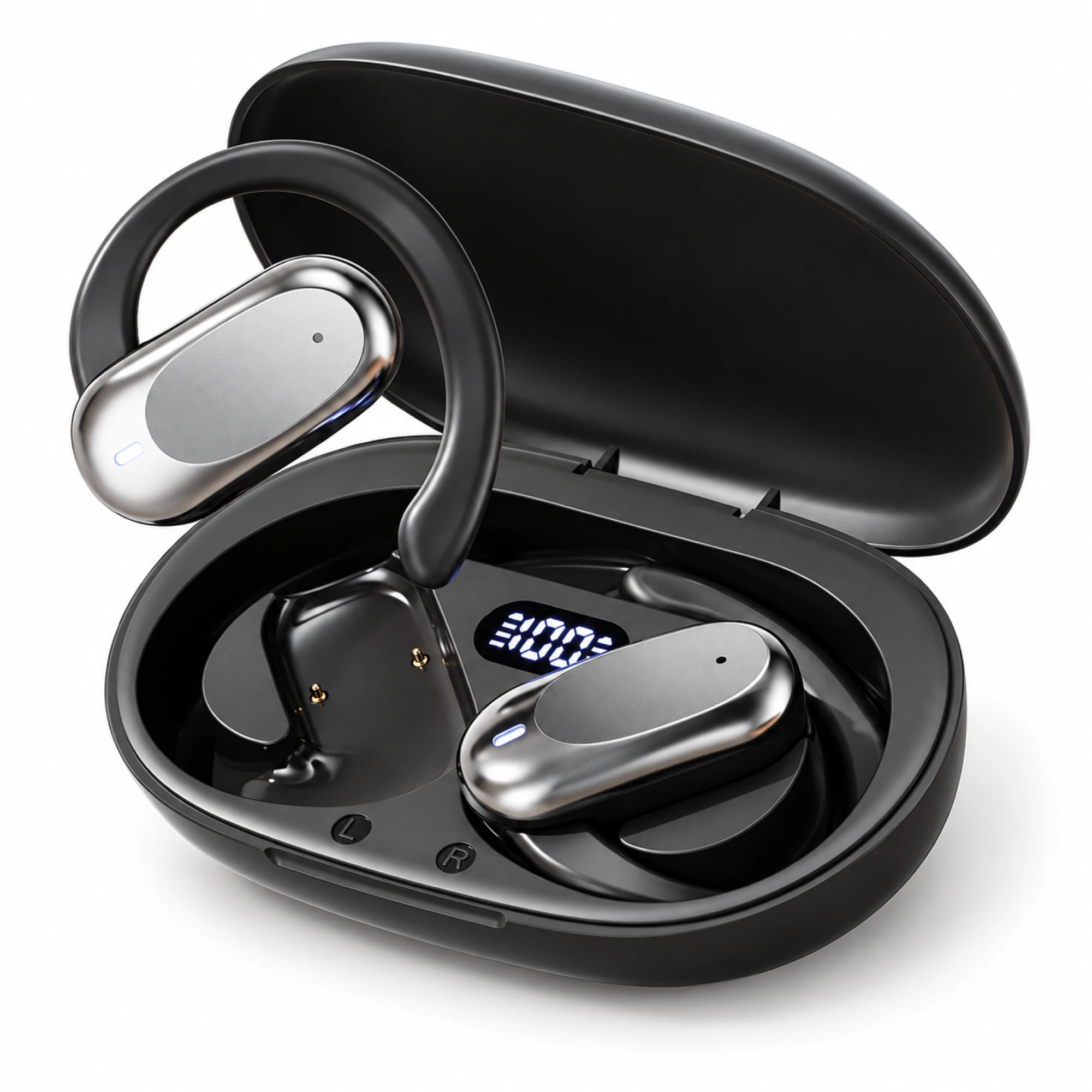 Silver Capsule Open-Ear Earbuds
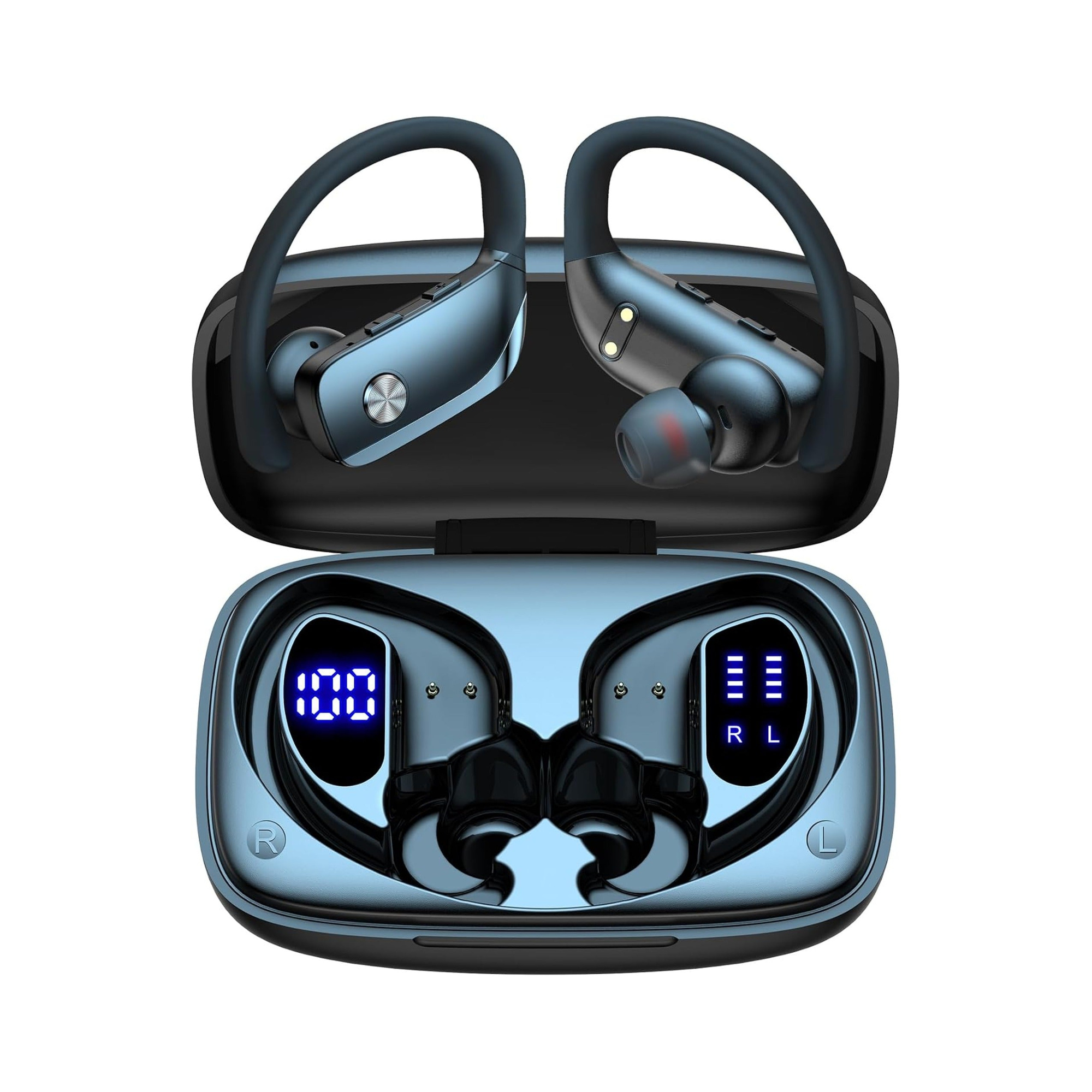
 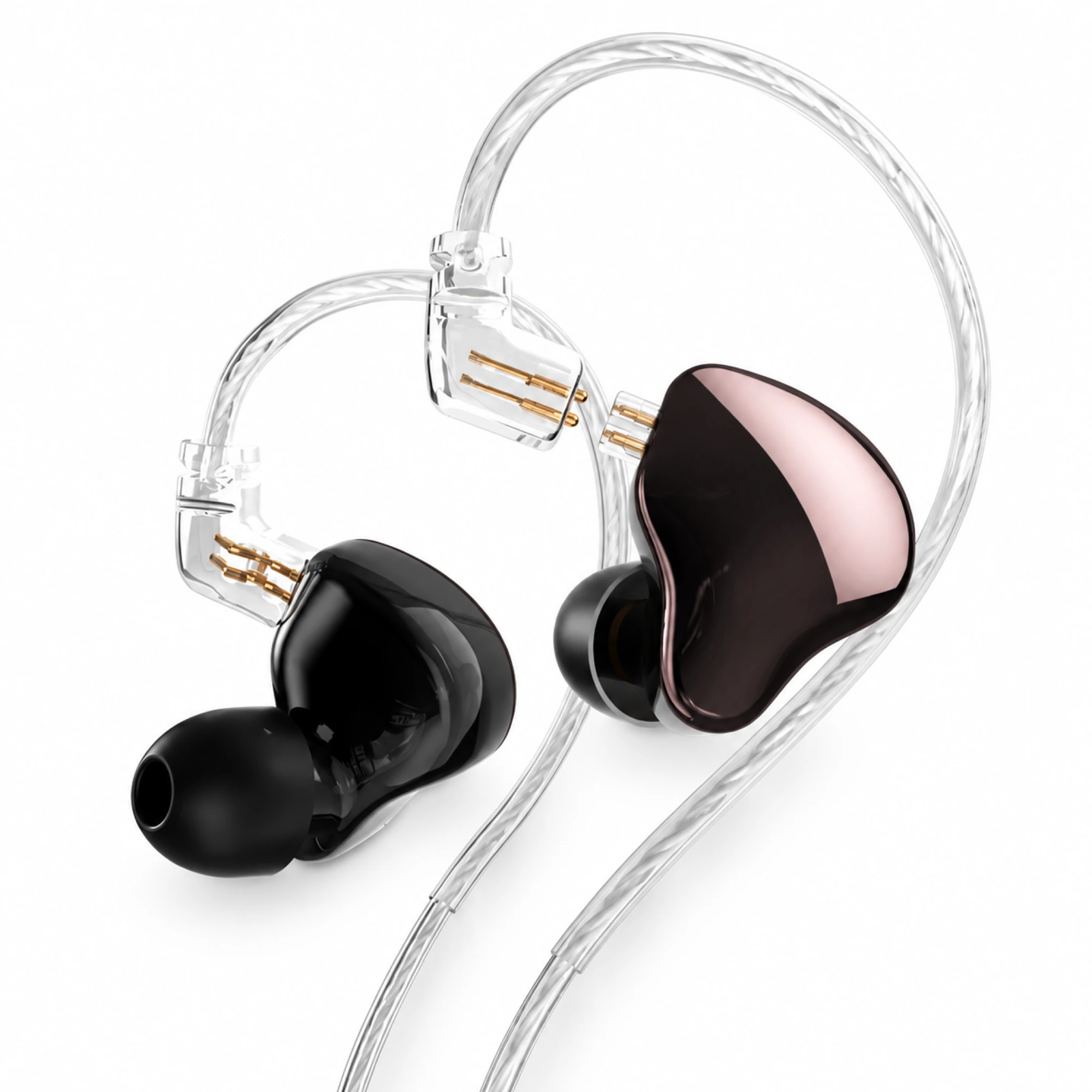 MN Rose-Metallic Detachable In-Ear Monitors
 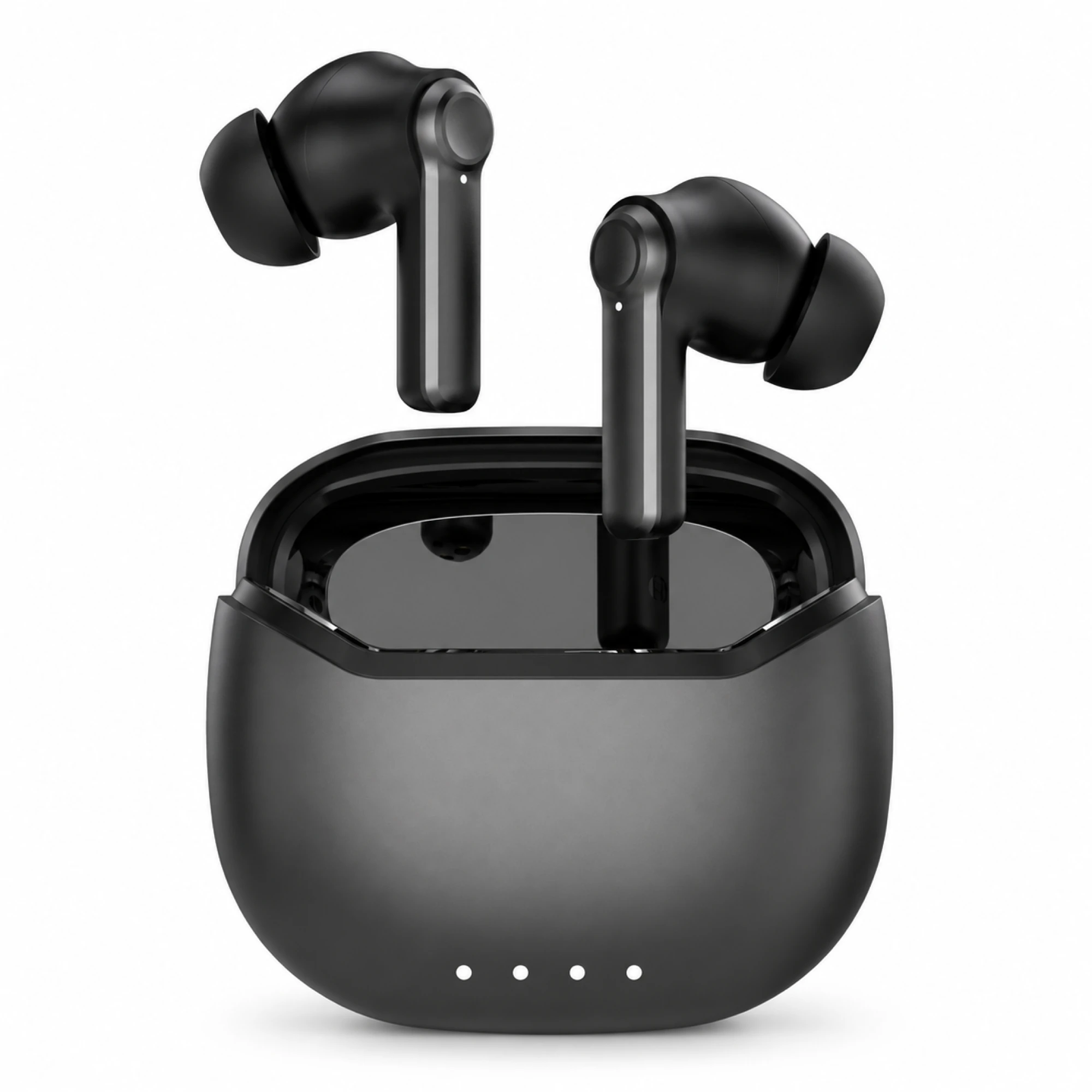 Black ANC Earbuds with Four-Indicator Case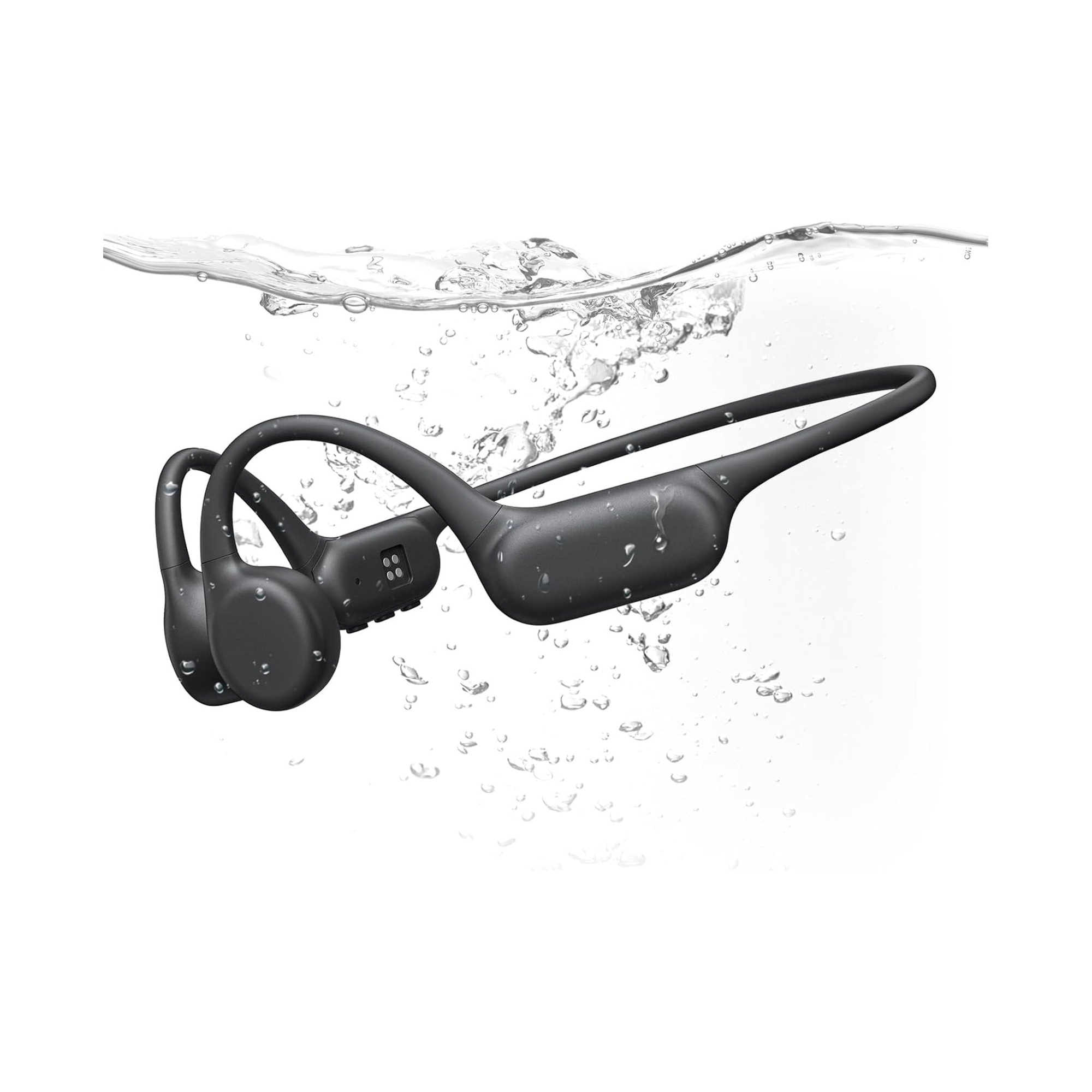
Real swim headphones do not stream. Bluetooth works around 2.4 GHz, a frequency water absorbs heavily, so a phone-to-headset link drops within centimetres of the surface. Purpose-built swim models therefore carry onboard flash storage and play files copied from a computer. Streaming is a dry-land mode; once you push off, the headset is a self-contained player.
Four specs decide whether a headset can swim
Sound and price are the last two questions. A headset for swimming either satisfies four structural requirements or it stays on the deck, and all four are checkable from a listing.
| Spec | What a swim-capable listing states | What silence means |
|---|---|---|
| Playback source | Onboard storage in GB, plus a way to load files onto it | No storage, no audio once your head is under |
| Water rating | An IP code with a stated depth and duration | "Waterproof" alone is a word without a test behind it |
| Retention | A wrap-around band worn with the goggle strap | Loose parts end up on the bottom of the pool |
| Aftercare | A rinse-and-dry procedure for chlorine or salt | Assume the chemistry was never tested |
Swimming with headphones means giving up your streaming apps
The radio limit is settled physics: water absorbs 2.4 GHz signals so strongly that the link fails almost immediately below the surface instead of degrading gracefully. We covered that mechanism in do Bluetooth earbuds work underwater. What rarely gets said out loud is the practical cost.
Underwater, a swim headset behaves like a small USB music player strapped to your head. Most buyers discover the consequences after the first session.
- Subscription libraries generally will not transfer. Offline downloads inside a streaming app are encrypted and bound to that app, so they cannot be dragged onto a headset's storage as ordinary files.
- Files you own do work. Purchased or ripped MP3s, podcast episodes saved as plain files, audiobooks and coach-recorded interval tracks all copy across normally.
- No calls, no assistant, no notifications. There is no link to carry them.
- No recovery signal. If it comes off in open water, no radio helps you find it.
Our own swimming model is built around exactly this split, with a Bluetooth mode for dry land and an MP3 mode for the lane; the model table further down has the figures.
Plan the playlist before you plan the swim
- Gather files you own, in a format the headset lists as supported.
- Connect it to a computer with its data cable; on most swim models the storage mounts as a drive.
- Copy the files across. Playback order commonly follows filename, so number them if sequence matters.
- Set volume and pick a starting track on dry land; wet controls are fiddly and there is no phone to reach for.
- Charge and load only when every surface is dry.
Bone conduction or a sealed plug?
The second structural difference is where the sound enters your head. A sealed in-ear tip must hold that seal against water pressure and the drag of every stroke and push-off. If it lifts even slightly, water gets in front of the driver and the sound collapses.
Bone conduction sidesteps the problem. Transducers rest on the cheekbones ahead of the ear and pass vibration into the skull, so the canal is not the sound path at all. That is why nearly every purpose-built swim headset is a bone conduction band instead of a pair of buds, and why the goggle strap doubles as the retention system. Our guide to open-ear versus bone conduction covers both sound paths.
One consequence surprises people: with bone conduction, headphones for swimmers often work better with earplugs in. Plugging the canal keeps water and splash noise out without muting the music, because the music never travelled through the canal. The product photo for our IP54 sport model even shows a pair of foam earplugs beside the band.
Watch ear health regardless. NHS guidance on ear infections lists water in the ear canal, and wearing earplugs, among the irritants that can bring on an outer-ear infection (otitis externa), and it advises against swimming while you have one.
If a product causes pain, irritation, ringing or a noticeable hearing change, stop using it and seek qualified care.
What IPX8 promises, and what it leaves to the manufacturer
The IP code comes from IEC 60529, the standard for degrees of protection provided by enclosures. Its highest water digit, 8, covers continuous immersion under conditions the manufacturer specifies, so the depth and duration come from the maker and are never fixed by the standard itself. Three practical readings follow.
- "IPX8 waterproof" with no numbers attached is an incomplete claim. "IPX8, tested to 2 m for one hour" is something a seller can be held to. Ask for missing figures before assuming a generous default.
- Immersion ratings are not automatically a superset of jet ratings. A product tested for still immersion has not necessarily been tested against pressurised spray, which is a separate marking. A poolside shower is a different exposure from the deep end.
- The tests use plain water at rest. Swimming is neither. Moving at speed and hitting a wall on a turn apply forces the static test never modelled.
A worked example from our own listing. The swimming model states IPX8 with submersion to two metres for one hour. A 45-minute lap session in a 1.5 m lane sits inside both figures with margin to spare. A 90-minute open-water swim exceeds the stated duration, and a dive to the bottom of a 3 m pool exceeds the stated depth, so neither is covered by the claim even though the water is the same. Read every IPX8 figure that way: as a box, with depth on one side and time on the other.
IPX8 is still the most useful signal on the page, just not blanket permission. Our guide to reading IP ratings covers the rest of the code.
Chlorine and salt sit outside the test entirely
The World Health Organization's guidelines for swimming pools and similar environments treat exposure to chemicals as one of the three hazard groups a pool is managed for, alongside injury and microbial contamination. A pool is a treated chemical solution by design, and sea water adds dissolved salt that crystallises on every surface as it dries.
An ingress test answers one question: did water get inside during the test. It says nothing about what a season of chlorine does to a silicone gasket, or what dried salt does to exposed charging contacts. So whenever you swim with headphones, rinse under fresh running water as soon as you are out, dry completely, contacts included, before charging, and store dry instead of in a damp kit bag. Where a maker publishes a cleaning procedure, follow that; where none exists, treat the absence as an open question rather than permission.
One model on our shelf is rated for submersion; two are not
One model in our range is documented for submerged use. Two others that sound as though they might be are not.
| Model | Stated water rating | Onboard storage | Suitable for swimming? |
|---|---|---|---|
| EARSOLE Waterproof Swimming Headphones, $36.99 as the listing reads today | IPX8; listing states submersion to two metres for one hour | 32 GB, listed as up to 4,000 songs | Yes, in MP3 mode |
| EARSOLE Bone Conduction Open-Ear Sport Headphones, $39.99 as the listing reads today | IP54; sweat, splashes and light rain | None | No; sweat and rain only |
| EARSOLE Sport Ear-Hook Wireless Earbuds, $28.99 as the listing reads today | No IP code stated; described as sweat- and dust-resistant | None | No; treat as dry land |
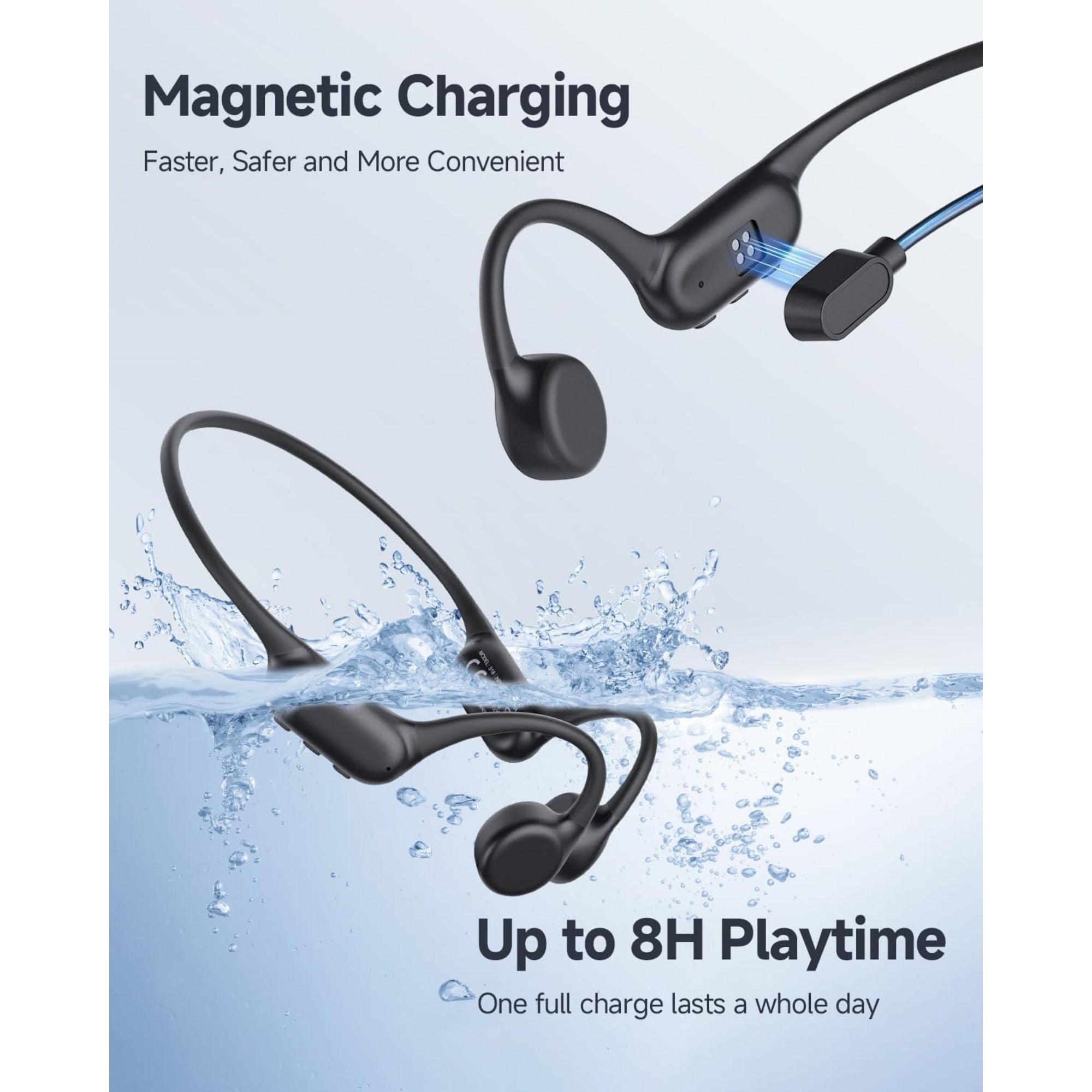
The swimming model follows the pattern above: a bone conduction band with 14 mm drivers, silicone cushions in front of the ears, and an adjustable strap in the package for different head sizes. Its magnetic charging cable also connects to a computer, which is how the storage mounts and files copy across. A double-click switches between Bluetooth and MP3 mode, and the listing says outright to use MP3 mode in the water because Bluetooth cannot connect underwater, the same limit this article opened with, stated by the product itself.
Three gaps in that listing are worth naming. The 8-hour playtime figure is quoted for Bluetooth mode, with no MP3-mode runtime given. Chlorine and salt-water tolerance are not addressed and no rinse-and-dry procedure is published. No separate protection against pressurised jets is claimed. Treat all three as unanswered questions, and rinse and dry anyway.
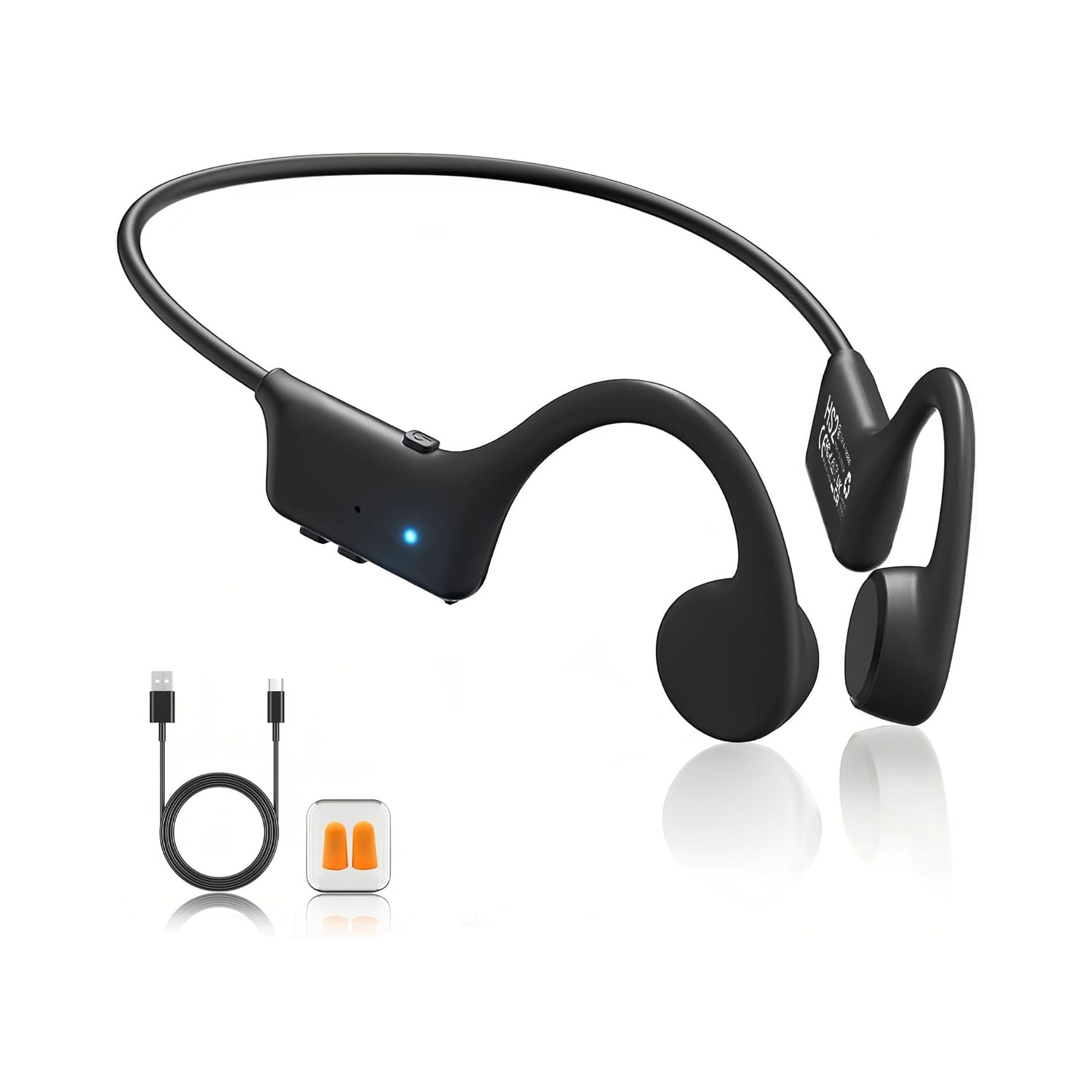
The first two rows are the lesson in miniature. Both are bone conduction, both are open-ear, and the IP54 sport model costs three dollars more yet must not go in a pool. Those two labels describe the sound path and the fit; water protection is a separate line on the spec sheet, and price is no proxy for it. Both also sit in the everyday wireless earbuds collection, so only the specification separates them. For dry-land training, the running fit test is the more relevant guide.
Questions swimmers ask before buying a headset
How can I listen to music while swimming laps?
Load the files onto the headset itself before you get in. Bluetooth does not carry through water, so a phone at the poolside cannot stream to you mid-lap. Use DRM-free files the unit can play from its own storage, and set the playlist before your hands are wet.
Can any headphones be worn while swimming?
Yes, but they form a distinct product category instead of a waterproof version of ordinary earbuds. A usable swimmers' headset combines an immersion rating with a stated depth and time, onboard storage for playback, and a band-style fit that survives turns. Ordinary water-resistant earbuds meet none of those three requirements.
Do swimming headphones really work underwater?
They work well within their design, which is playing files stored on the device itself. What does not work is streaming from a phone underwater, because 2.4 GHz radio is absorbed within a very short distance. Buyers expecting their usual streaming app in the pool are the ones who end up disappointed.