
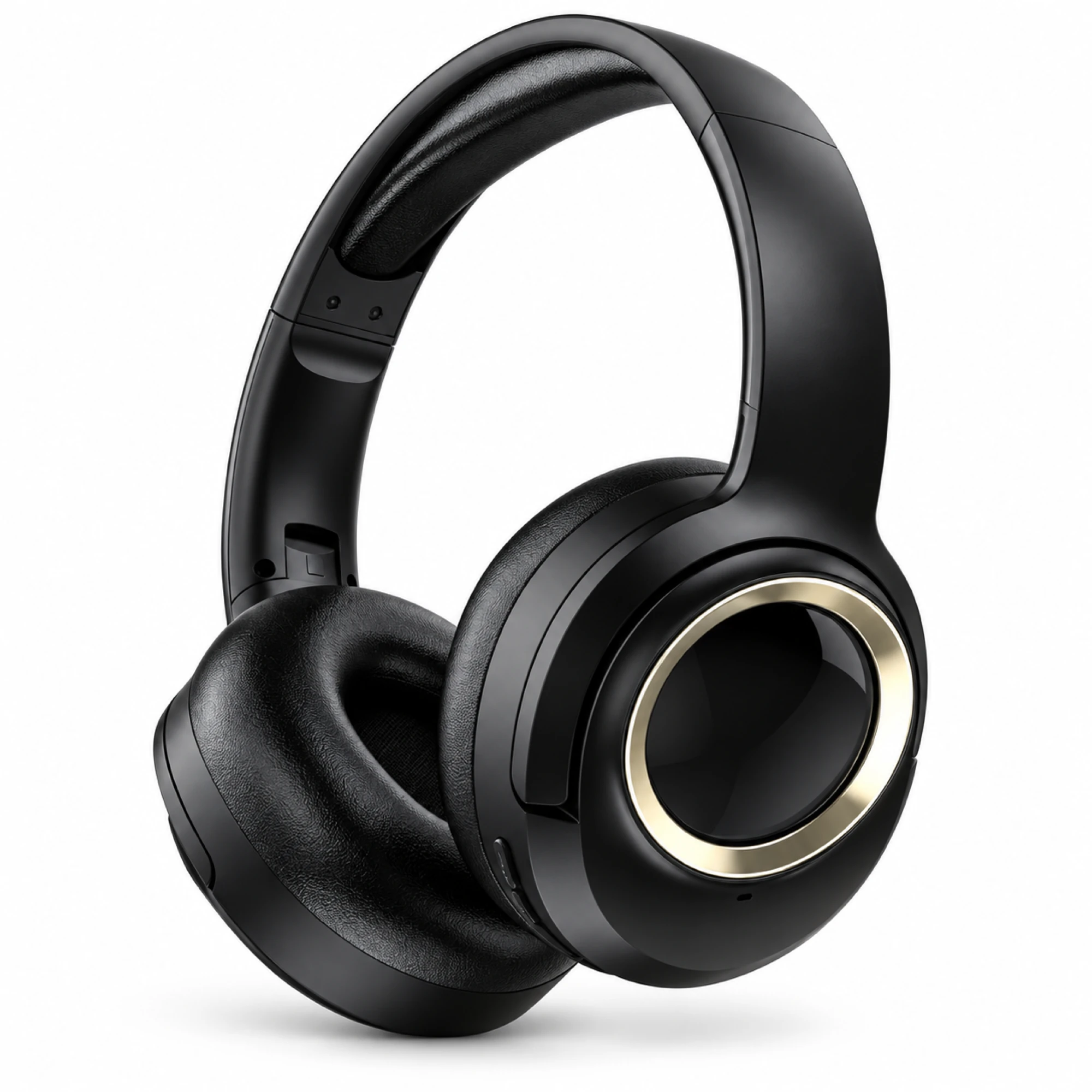
 MX-21 Black and Gold Wireless Headphones
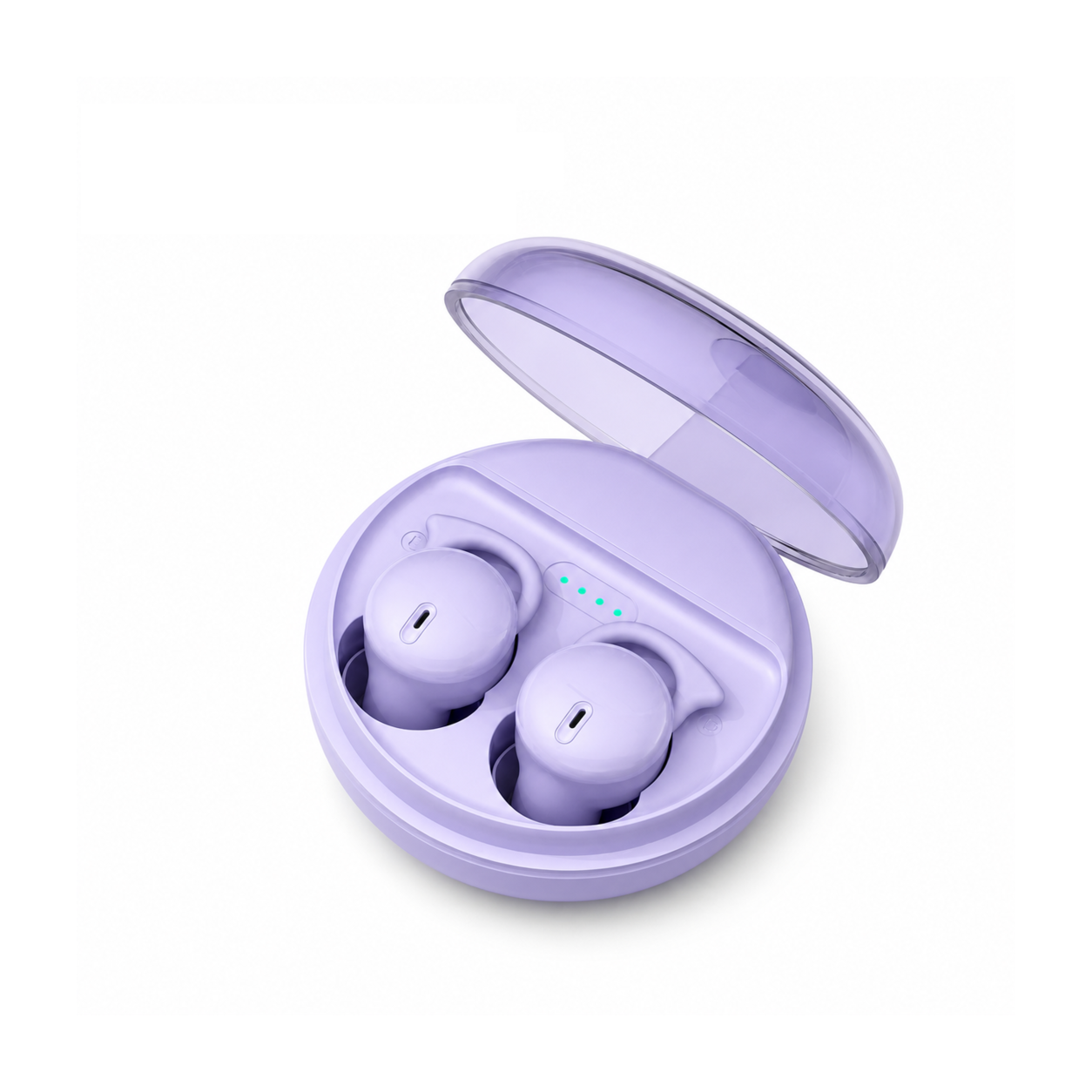
  Q2 Pro Purple Crystal In-Ear Monitors
 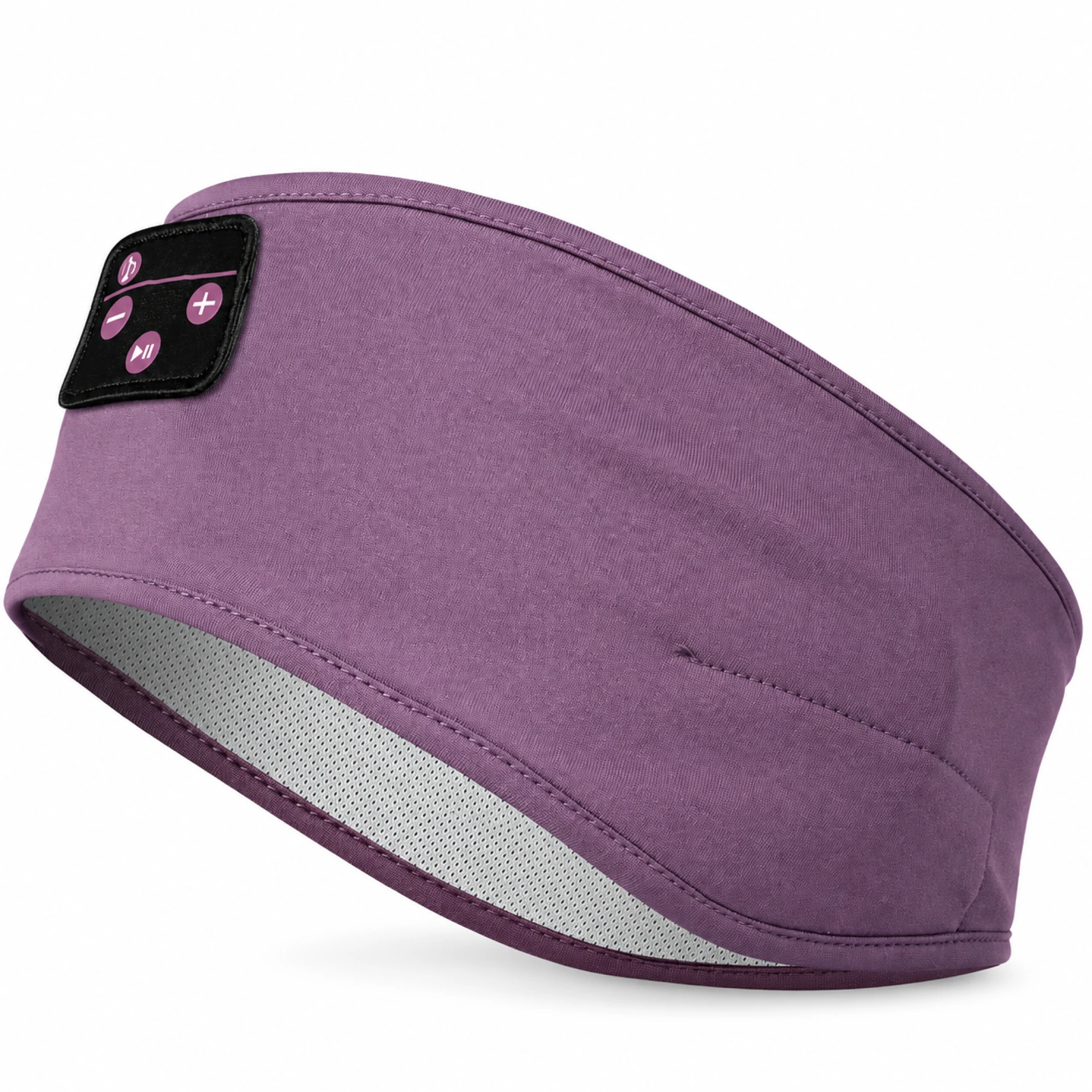 Purple Sleep Headband Headphones with Triangle Controls
 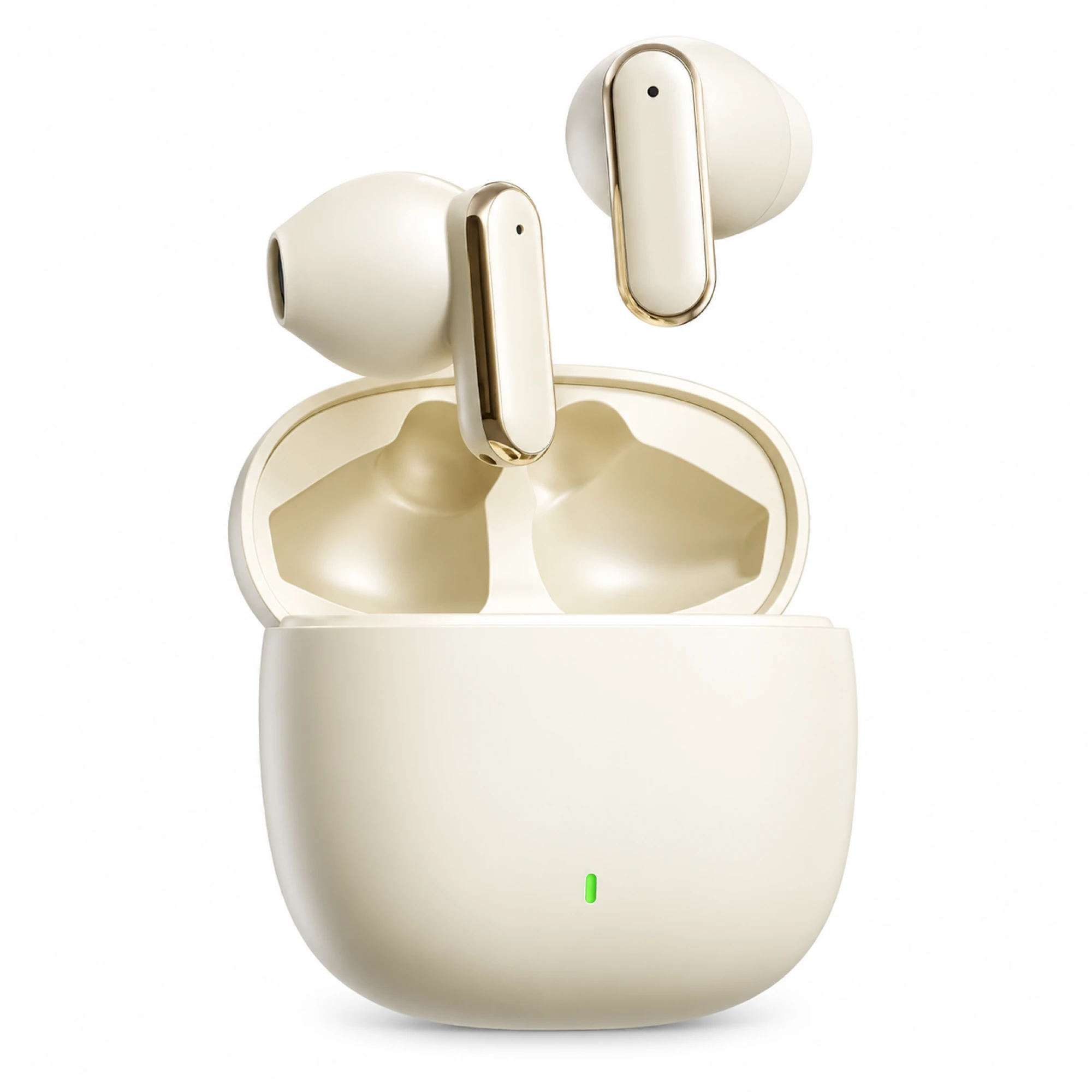 Cream Reflective-Stem Wireless Earbuds
 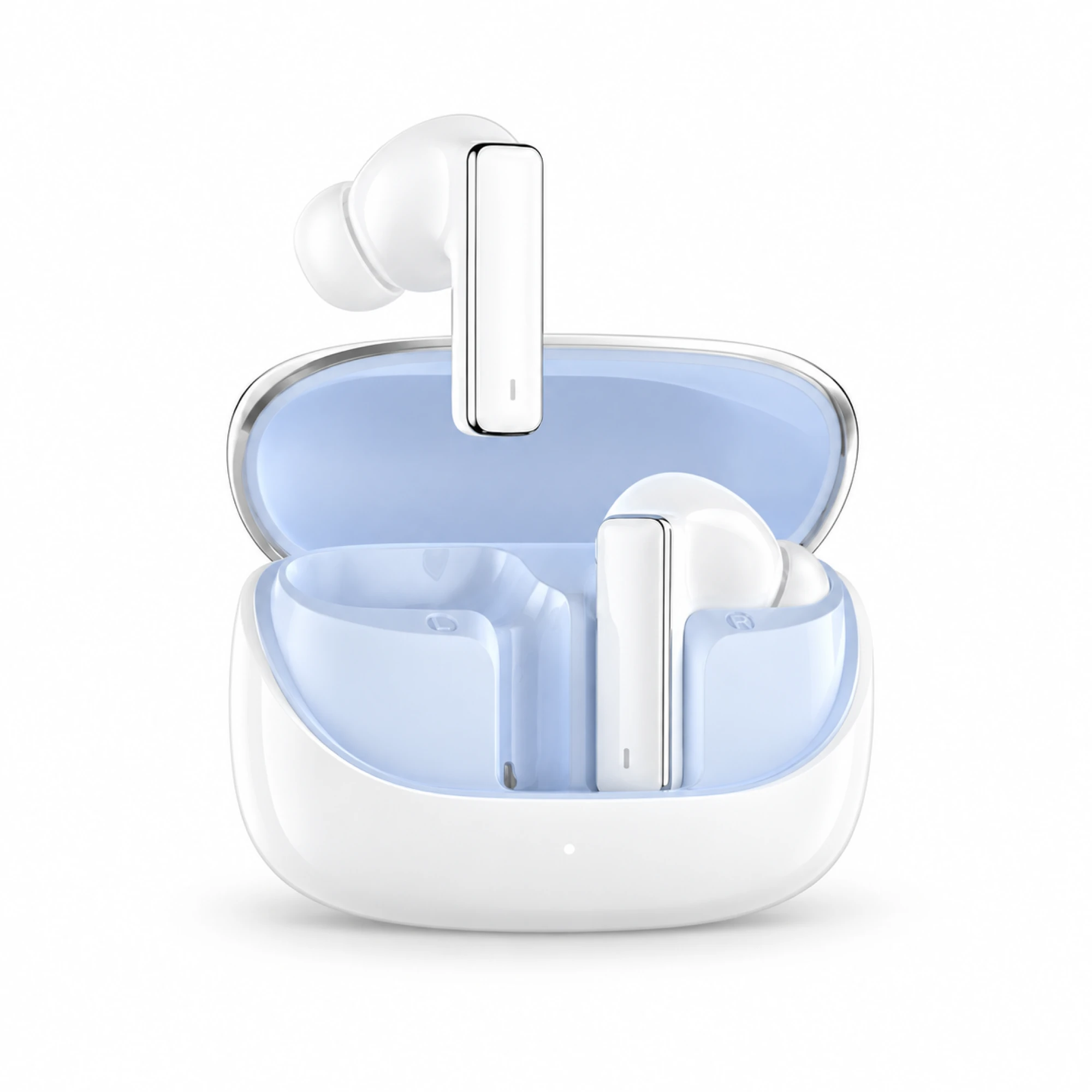 IN-01 White ANC Earbuds with Pale Blue Case Interior
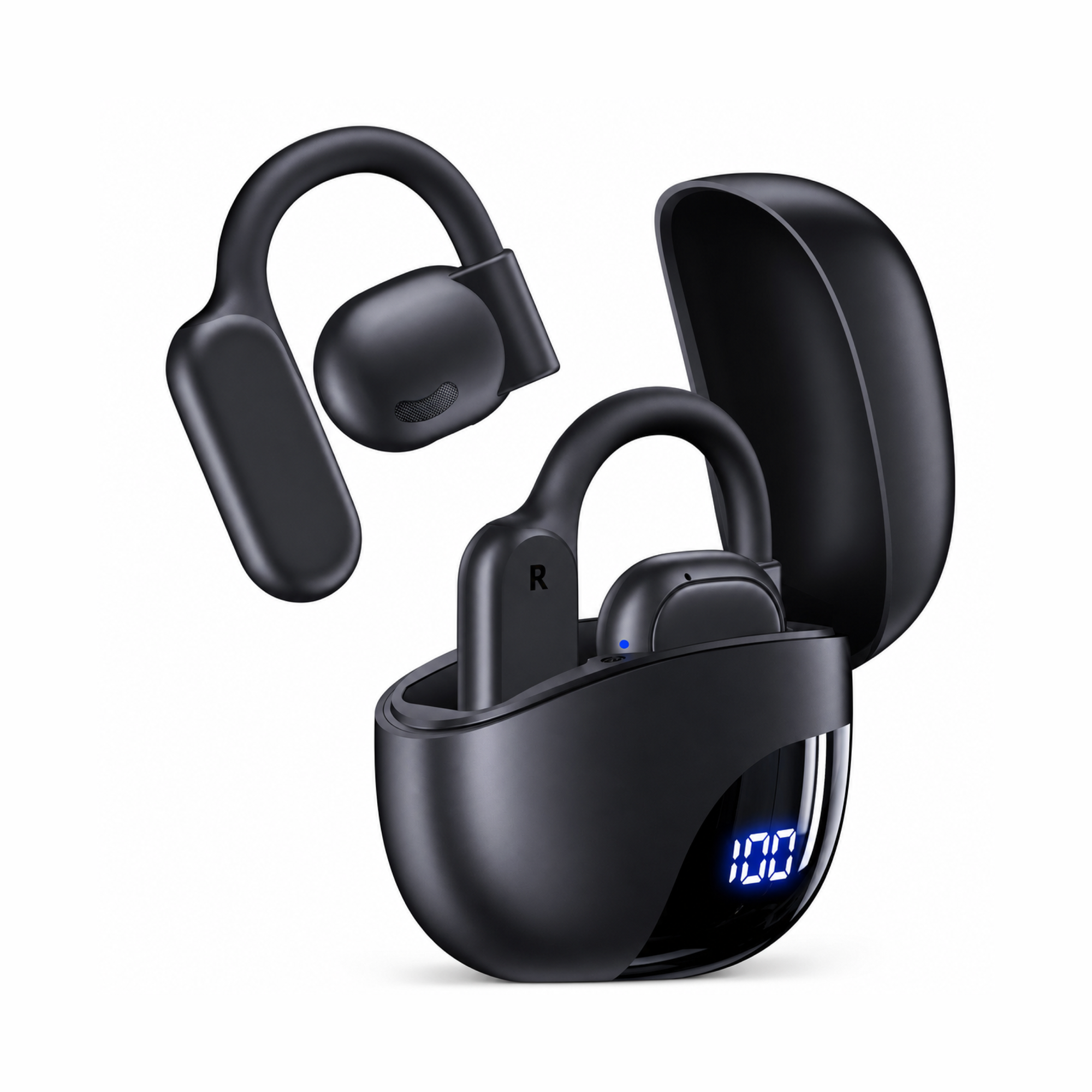
 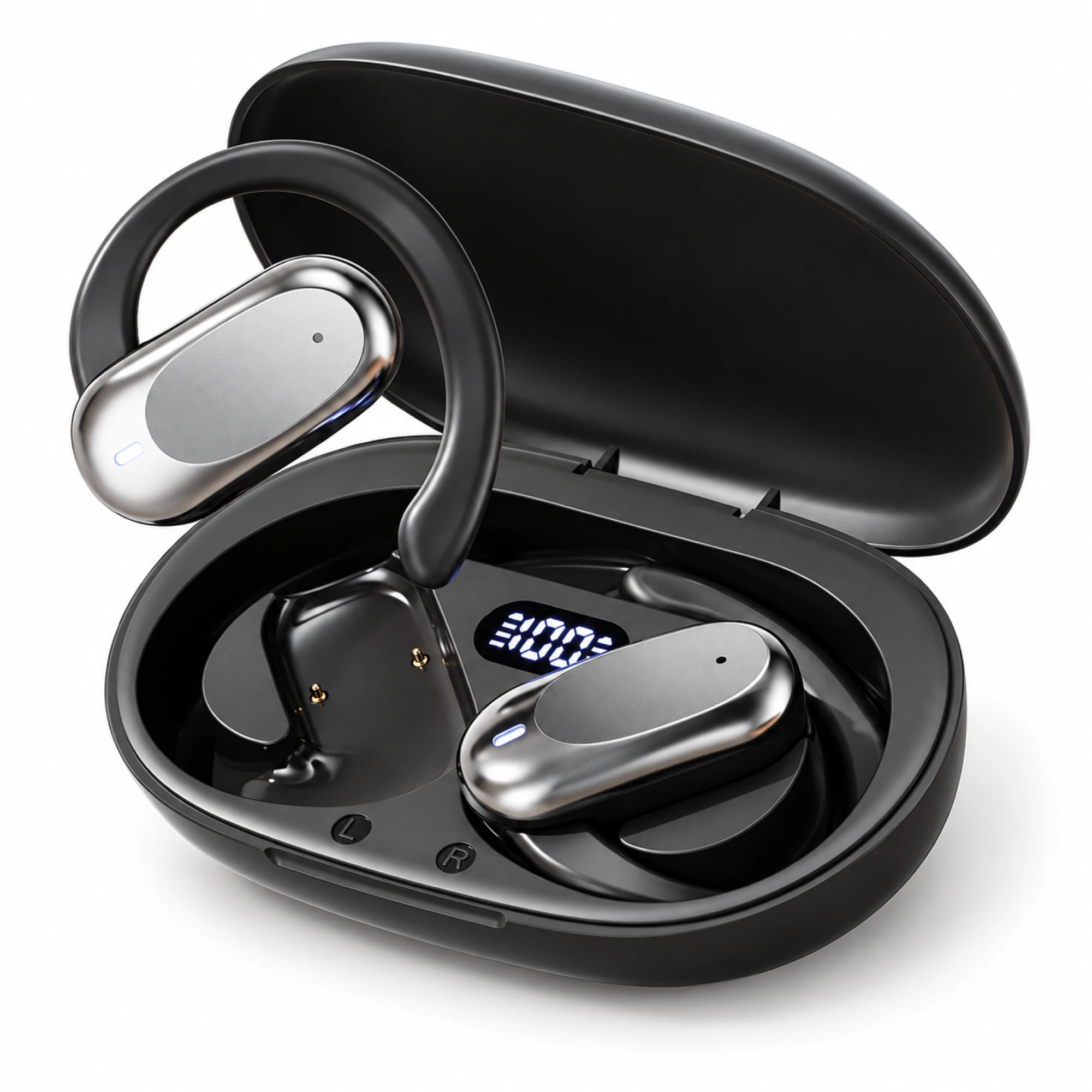 Silver Capsule Open-Ear Earbuds
 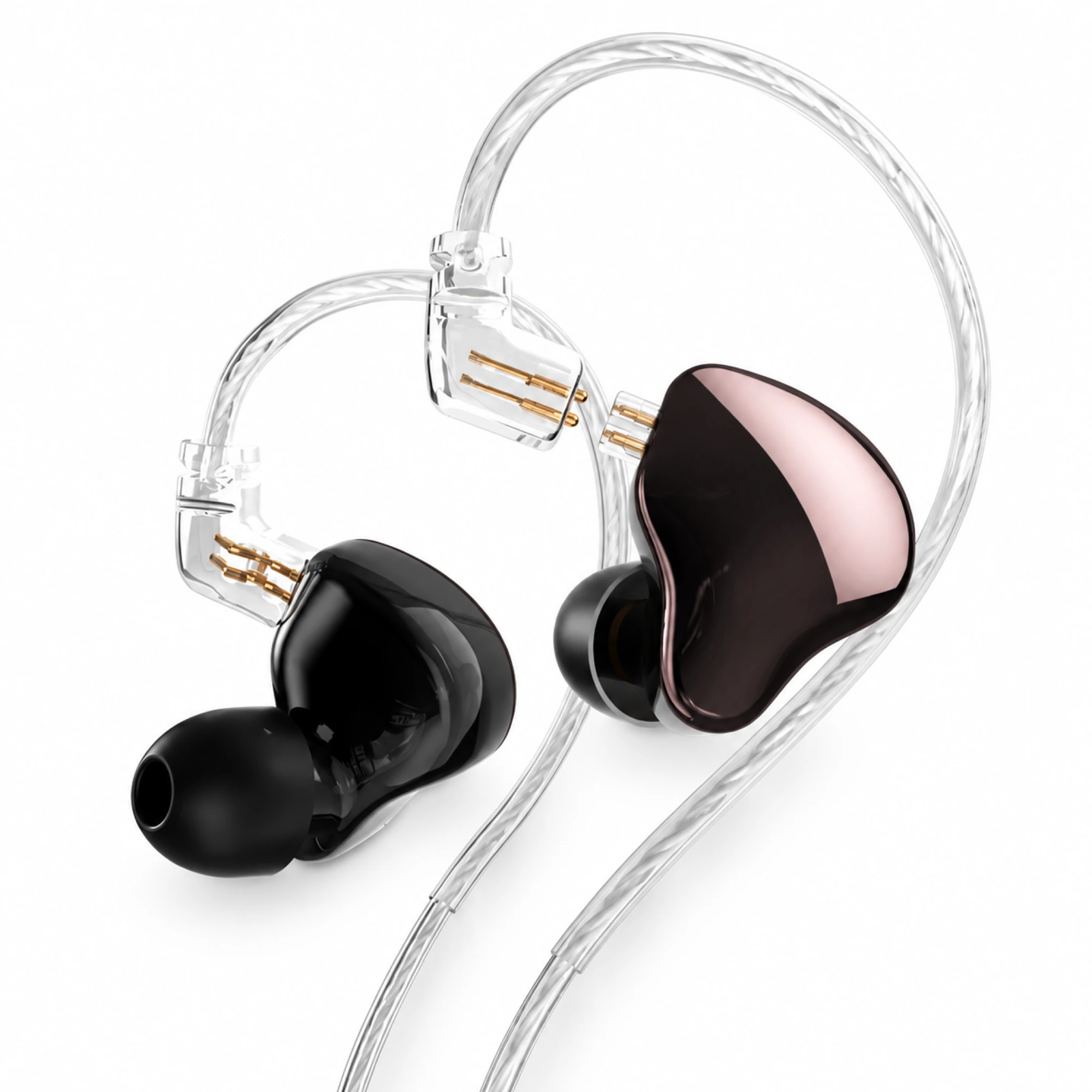 MN Rose-Metallic Detachable In-Ear Monitors
 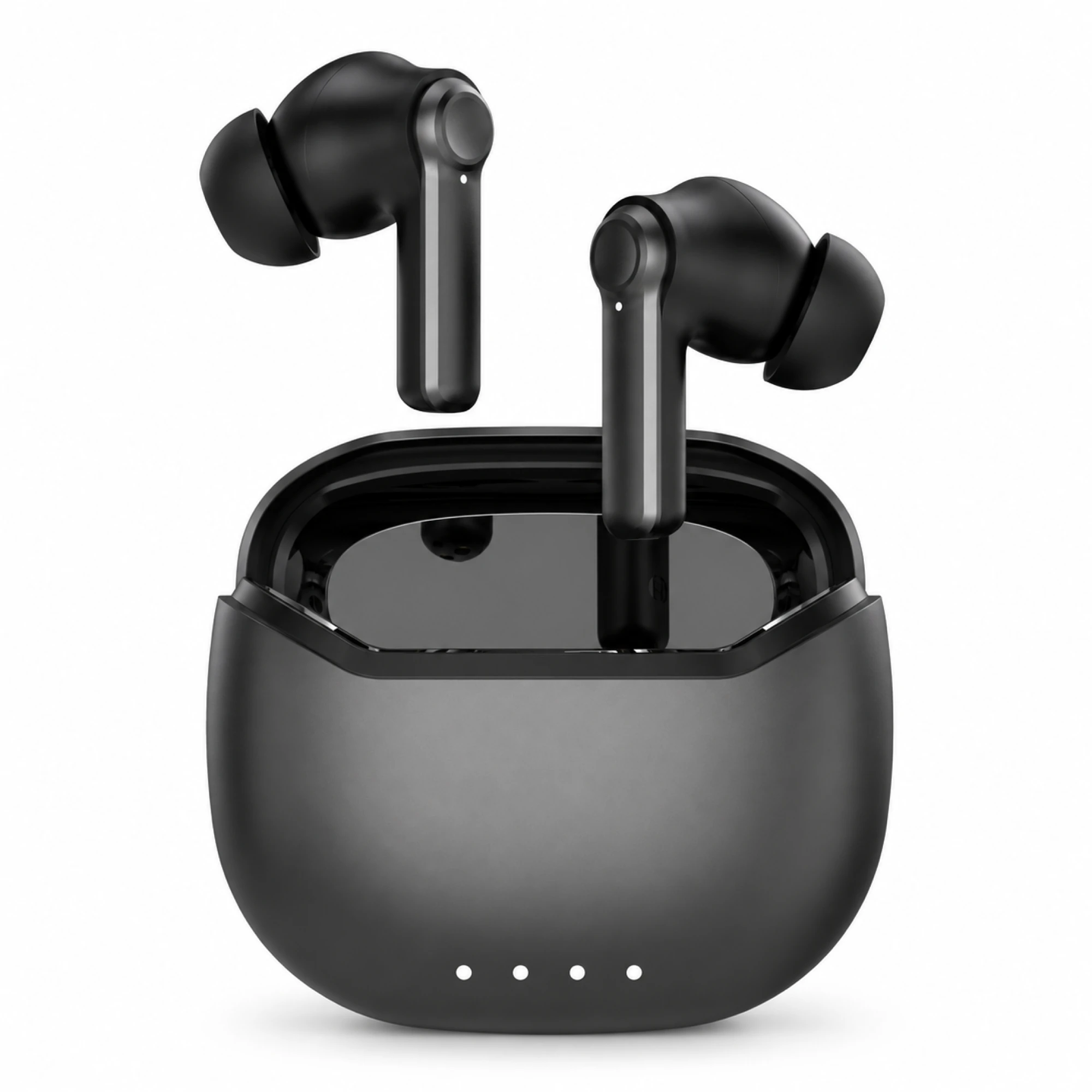 Black ANC Earbuds with Four-Indicator Case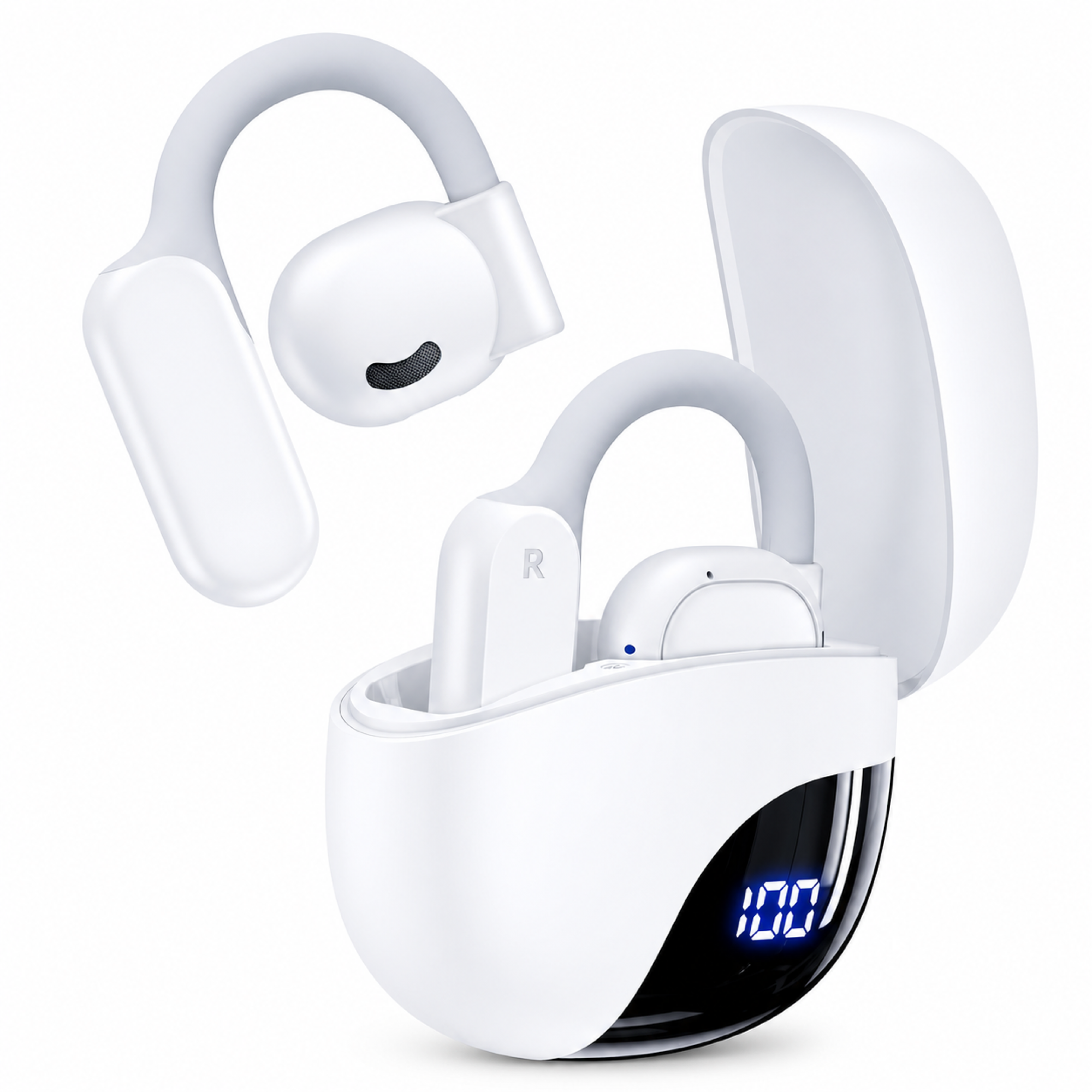
Wireless earbuds with AI translation rarely do the translating. In most designs the earbud is a microphone and a speaker; recognition and translation run on your phone, and usually on a company's server a long way from the room you are standing in. That routing decides your delay, your offline behaviour and, the part nobody prints on a box, who else can hear the conversation.
Almost none of the AI is inside the earbud
A translation earbud is sold as though it were one device doing one clever thing. It is closer to a relay. Six things happen in order, across three different places, and only two of the six typically happen in the object you paid for.
| Stage | Where it usually runs | What it depends on |
|---|---|---|
| Capturing your speech | The earbud microphone | Fit, distance, background noise |
| Carrying that audio to the phone | The Bluetooth voice link | A telephony profile, not the music one |
| Turning speech into text | Phone or a remote server | Which model the app chose |
| Translating the text | Almost always a remote server | A live connection and an account |
| Turning text back into speech | Phone or a remote server | Voice availability per language |
| Playing the result | The earbud driver | Nothing unusual |
Row two matters more than it looks. When a microphone goes live, phones generally switch the earbuds from the music profile to a hands-free voice profile, which the Bluetooth SIG publishes as a separate specification built for telephony instead of fidelity. Speech recognition is therefore not hearing a studio recording of you. If your earbuds also apply environmental noise cancellation on the microphone side, that processing happens before the recognizer hears a word. Testing what your microphone actually sends tells you more about translation accuracy than any language count does.
So the conversation usually leaves the room
Follow the table down and the privacy question answers itself: for the middle stages, your speech is being sent somewhere. It is the thing worth asking about first, and the one detail listings almost never carry.
Major providers do publish their terms. Google's Cloud Translation data usage FAQ states that text sent to the API is held briefly in memory to perform the translation, is not shared with third parties, and is not used to train its translation features. A reassuring default. The speech half of the pipeline reads differently: Cloud Speech-to-Text does not log customer audio or transcripts by default, but a developer can opt into a data logging program, and the documentation is explicit that the trade is discounted pricing, and that logged data is not deleted when the project is.
Read that with a buyer's eye. The person choosing whether your voice is logged is not you. It is whoever publishes the companion app, weighing a cheaper bill against a setting no customer will ever see. Those are one provider's terms, cited because they are public; an earbud app may use that provider, another, or several, and most listings in this category never say which.
None of this makes the category unsafe. It makes it unsuited to a specific set of conversations. Treat AI real-time translation earbuds as about as private as text typed into a free web service: fine for directions, a menu, a check-in or a museum tour; wrong for a medical history, immigration paperwork or anything commercially confidential. Those cases wanted a human interpreter anyway.
What changed under the label, and what stayed hard
The label is not empty. Something real did change, and it is worth being precise about what.
- The phrasebook era. Early travel gadgets shipped a fixed list of prepared sentences. You could ask where the station was, and nothing else.
- Phrase-based statistical translation. Google's own account of its 2016 switch describes the older approach as breaking a sentence into words and phrases translated largely independently, which is why that generation mangled word order and dropped agreement.
- Neural machine translation. The same announcement describes treating the entire input sentence as one unit. Pronouns, tense and clause order stopped being guesswork. This is the largest quality step the category has had.
- Recognition moving onto the device. In 2019 Google shipped an all-neural on-device recognizer for Gboard, compact enough to sit on a phone and available offline. Speech-to-text stopped requiring a round trip; translation mostly still does.
- A language-model layer on top. Newer systems can re-read a passage and repair their own transcription slips from context. Few consumer products document theirs, so treat this one as a claim to verify.
What did not change is the physical half. The microphone still has to hear you in a noisy street, and turn-taking still costs two processing delays per exchange. Support also remains uneven by pair: Google's Cloud Translation documentation lists coverage per model instead of as one flat list, a quiet admission that a language count is a coverage claim and not a quality claim.
Why "AI" on the box is not a capability statement
There is no test a product passes to print those two letters. On a translation earbud, "AI" can fairly describe at least four builds: a neural translation service called over the internet; a compact model running on your phone; a language model tidying up the output; or ordinary earbuds paired to an app calling a free public API. All four are defensible uses of the word, they differ enormously in delay, offline behaviour and where your voice ends up, and the packaging distinguishes none of them.
Which turns the label into a list of questions for the seller. Five are worth asking before you order.
- Which translation service is behind the app? If the listing will not name it, you cannot read its terms.
- Does recognition run on the phone or on a server? This sets your delay and decides what survives with data switched off.
- Where is the app's privacy policy? Read the retention section and the app store's data-safety label.
- Can it work from a downloaded language pack? Offline capability is the clearest signal that some processing is genuinely local.
- Which modes need the other person to wear an earbud? That decides whether it is usable at a counter.
What our two translation listings state
Only what the product listings state appears below.
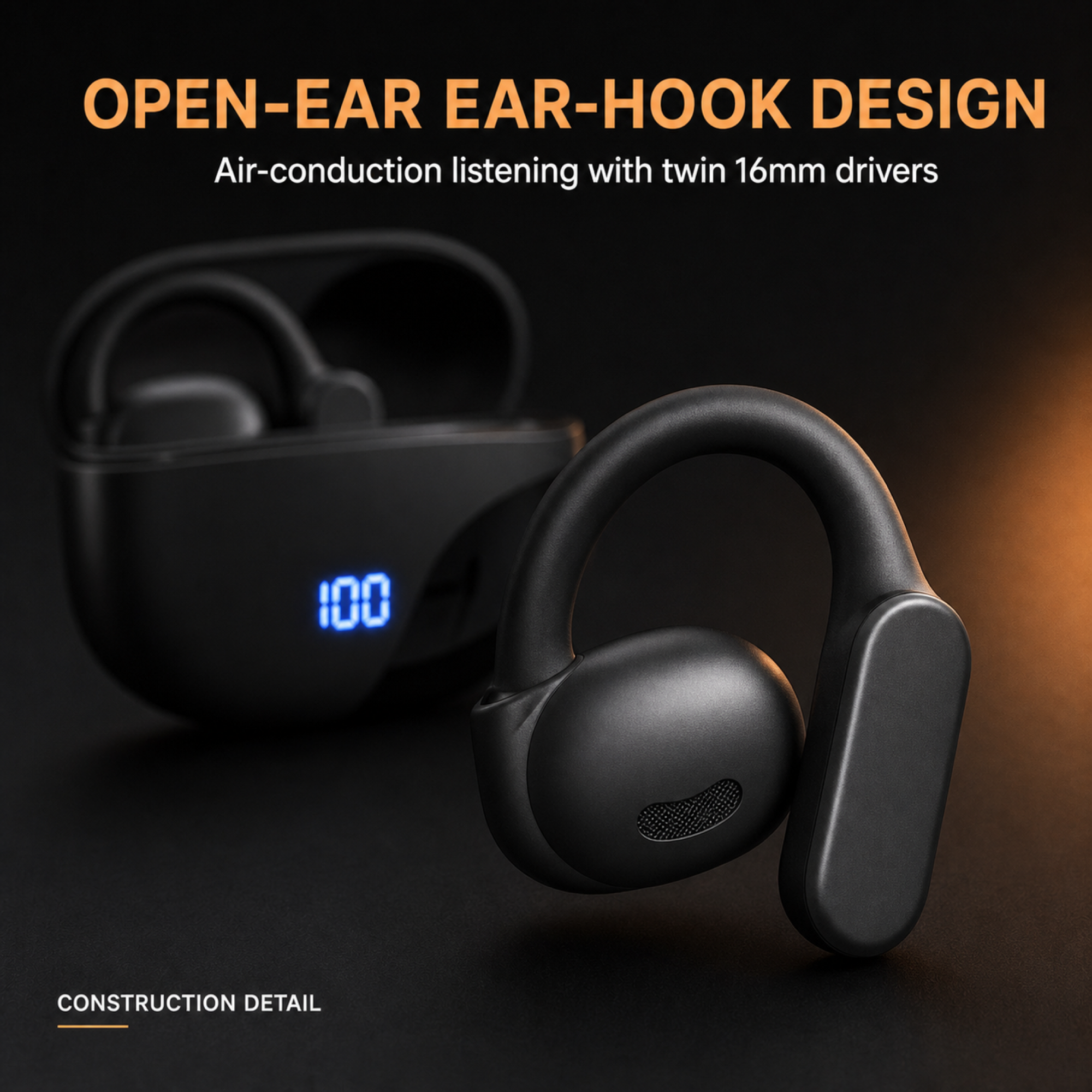
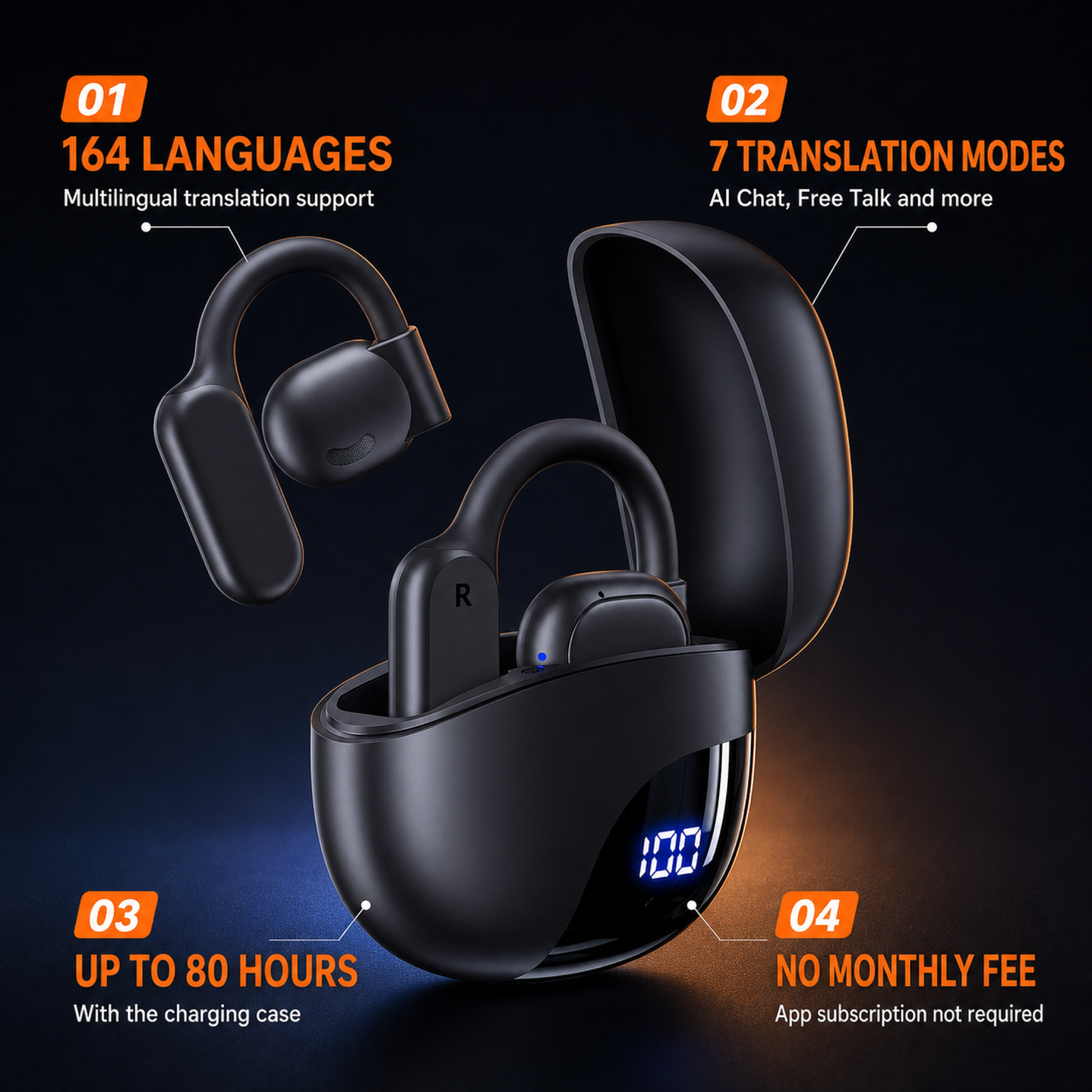
The EARSOLE K08 Open-Ear AI Translation Earbuds ($49.99 as the listing stands) are listed with an open-ear ear-hook design, support across 164 languages, twin 16 mm air-conduction drivers, an LED battery display on the case, up to 13.5 hours per charge or up to 80 hours with the case, and seven modes: AI Chat, Free Talk, Headphone + Phone, Audio/Video Call Translation, Translation Machine, Photo Translation and Voice Note. The listing states that the app does not require a monthly subscription fee.
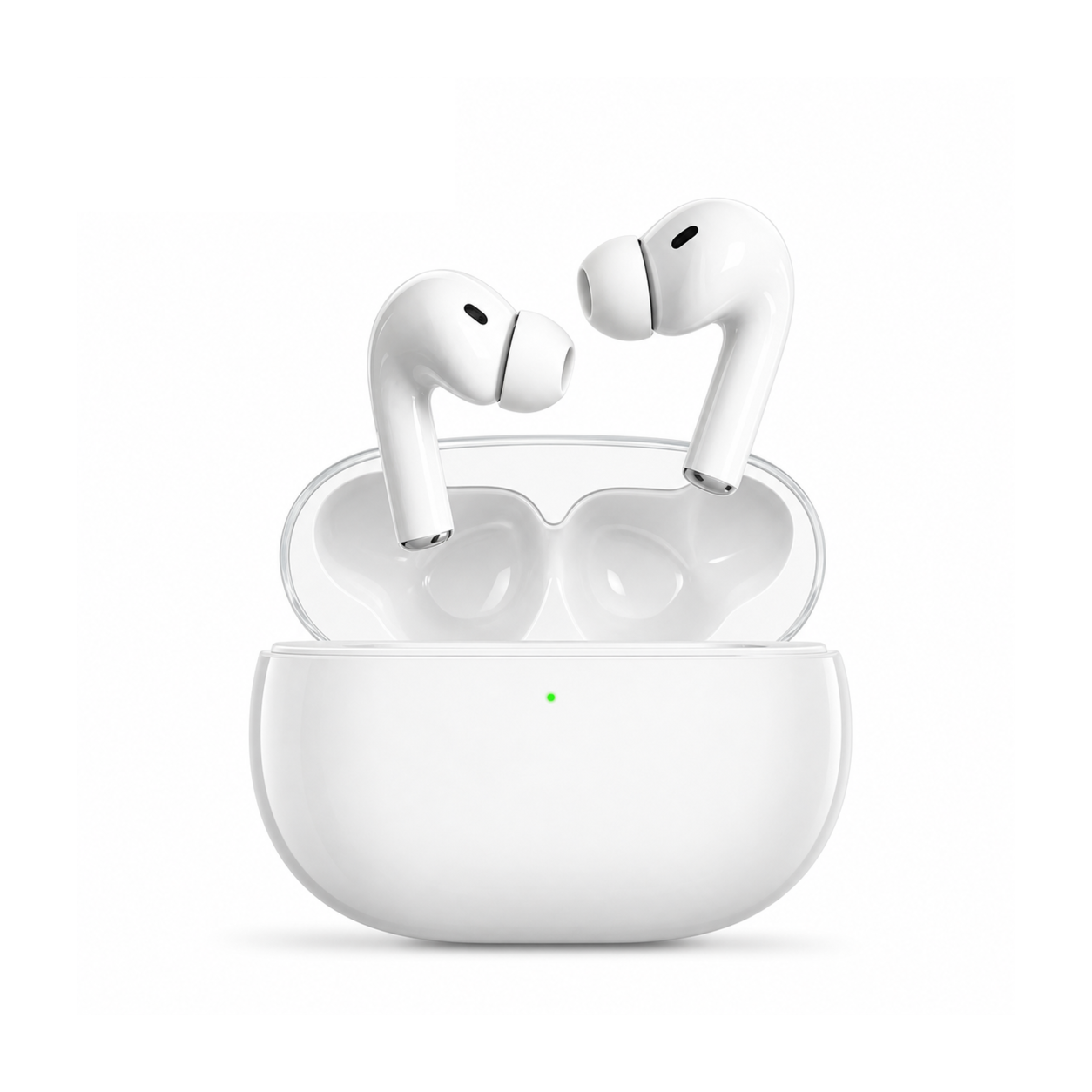
The EARSOLE Smart Pro 3 ($59.99 as the listing stands) is an in-ear design with silicone tips, active noise cancellation, spatial audio, and heart-rate and blood-oxygen readings for personal reference only. Its listing describes real-time translation via a supported app and states that availability and performance may depend on the application, language and connected device. It gives no language count, and this page will not invent one.
Now the awkward part, measured against the five questions above. Neither listing names the translation service behind the app, states whether recognition runs on the phone or on a server, or links an app privacy policy. The K08's "no monthly subscription fee" is a pricing fact and not a data-handling one: free describes what you pay, not what is retained. Ask before ordering. The end-to-end workflow write-up covers the mechanics; the wider range sits in AI earbuds and smart earbuds.
Questions buyers ask before a first trip with these
Do AI translation earbuds really work?
For one-way listening, short transactional exchanges and well-supported language pairs, generally yes. For fast natural conversation in a noisy place, or for low-resource pairs, often no. The limiting factor is rarely the earbud: it is microphone conditions, the connection, and whichever service the app calls on your behalf.
Does translation still work with mobile data switched off?
Only if the app has downloaded a language pack and does that pair on the phone. Recognition has been able to run locally since 2019, but the translation step in most consumer apps is a server call, so the usual offline result is a working recogniser and no output. Test it in aeroplane mode at home before you rely on it abroad.
Does the other person need to wear an earbud as well?
For some modes, yes. The K08 listing is unusually clear about this: some of its seven modes pair two buds across two people, while others play the translation aloud from the phone. The second kind is what works at a counter, where handing a stranger an earbud is not an option.
The part to remember at the counter
The earbud captures and plays; your phone and somebody's server do the thinking. "AI" on the packaging can mean a cloud service, an on-device model, a language-model layer or an app calling a free API, and the box does not say which, so read the word as a prompt to ask questions instead of as a specification. The improvement is real: whole-sentence neural translation replaced phrase-by-phrase guessing, and recognition can now run locally. What did not improve is the microphone in a noisy street, the pace of turn-taking, and the fact that for most of these products your conversation leaves the room. Keep the sensitive ones out of it, keep listening levels moderate, and stop if you notice pain, ringing or any change in hearing.
- Google Cloud Translation: Data usage FAQ
- Google Cloud Speech-to-Text: Data logging
- Google Research: A Neural Network for Machine Translation, at Production Scale
- Google Research: An All-Neural On-Device Speech Recognizer
- Google Cloud Translation: Language support
- Bluetooth SIG: Hands-Free Profile specification
- World Health Organization: Deafness and hearing loss, safe listening