
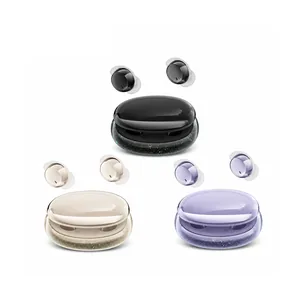
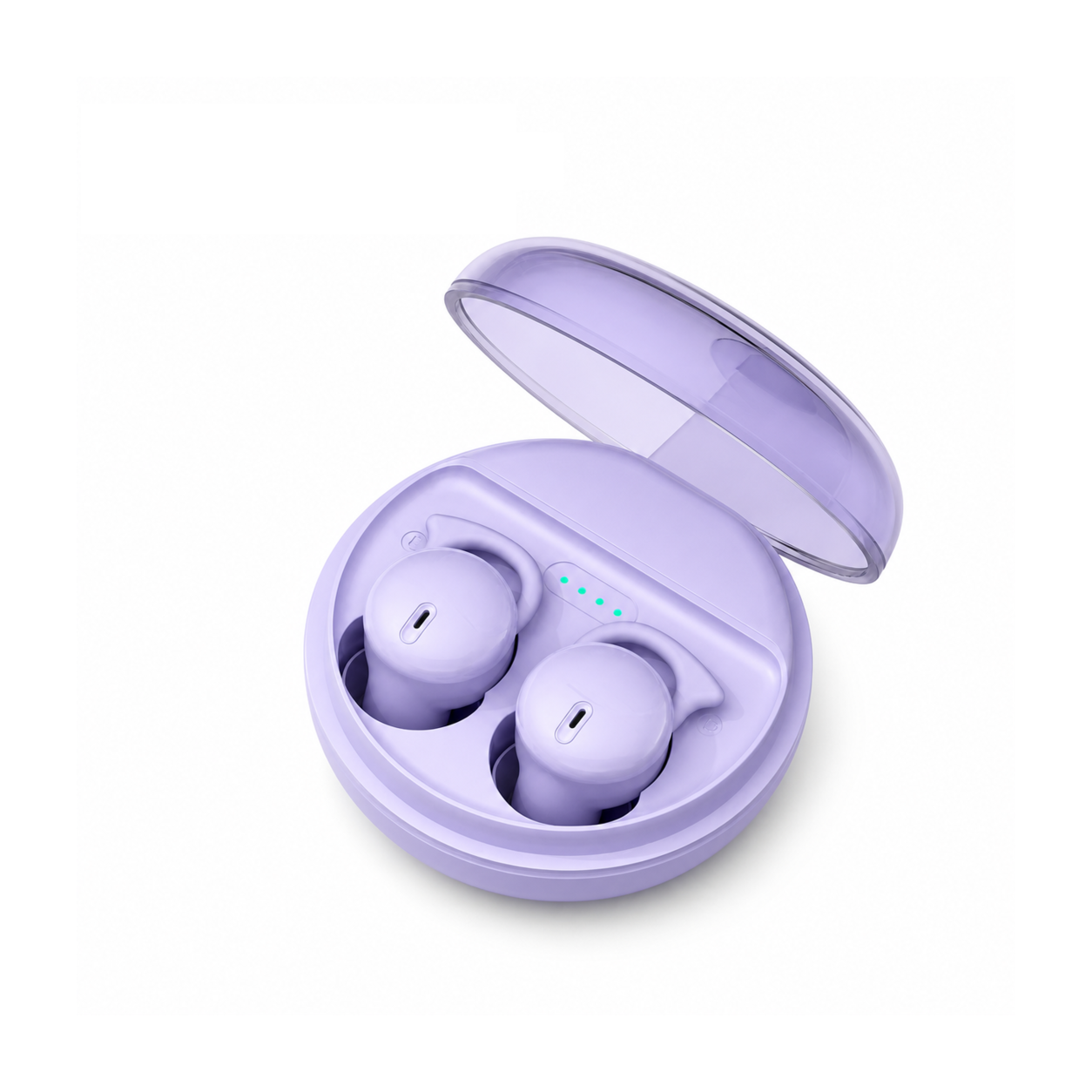
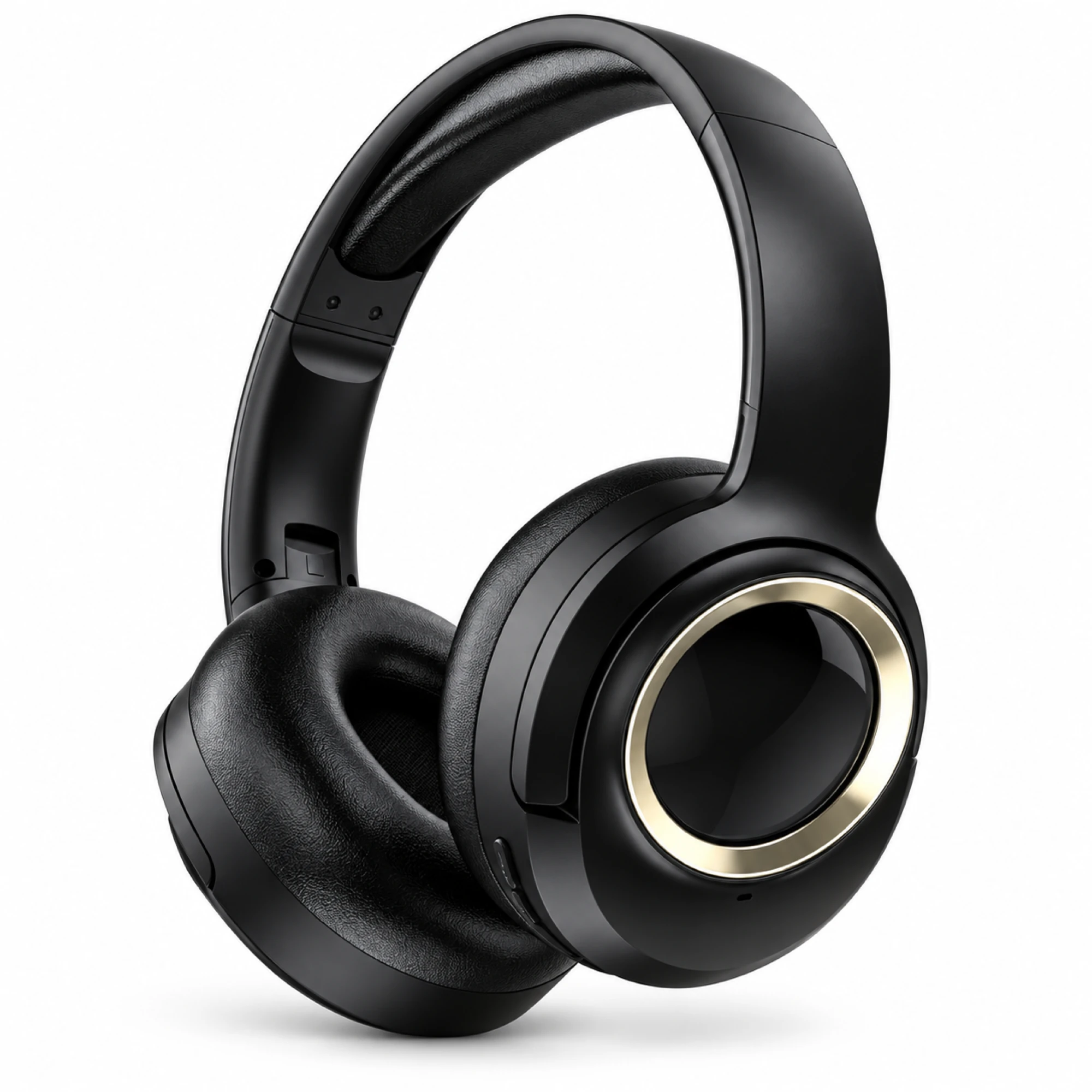
 MX-21 Black and Gold Wireless Headphones
 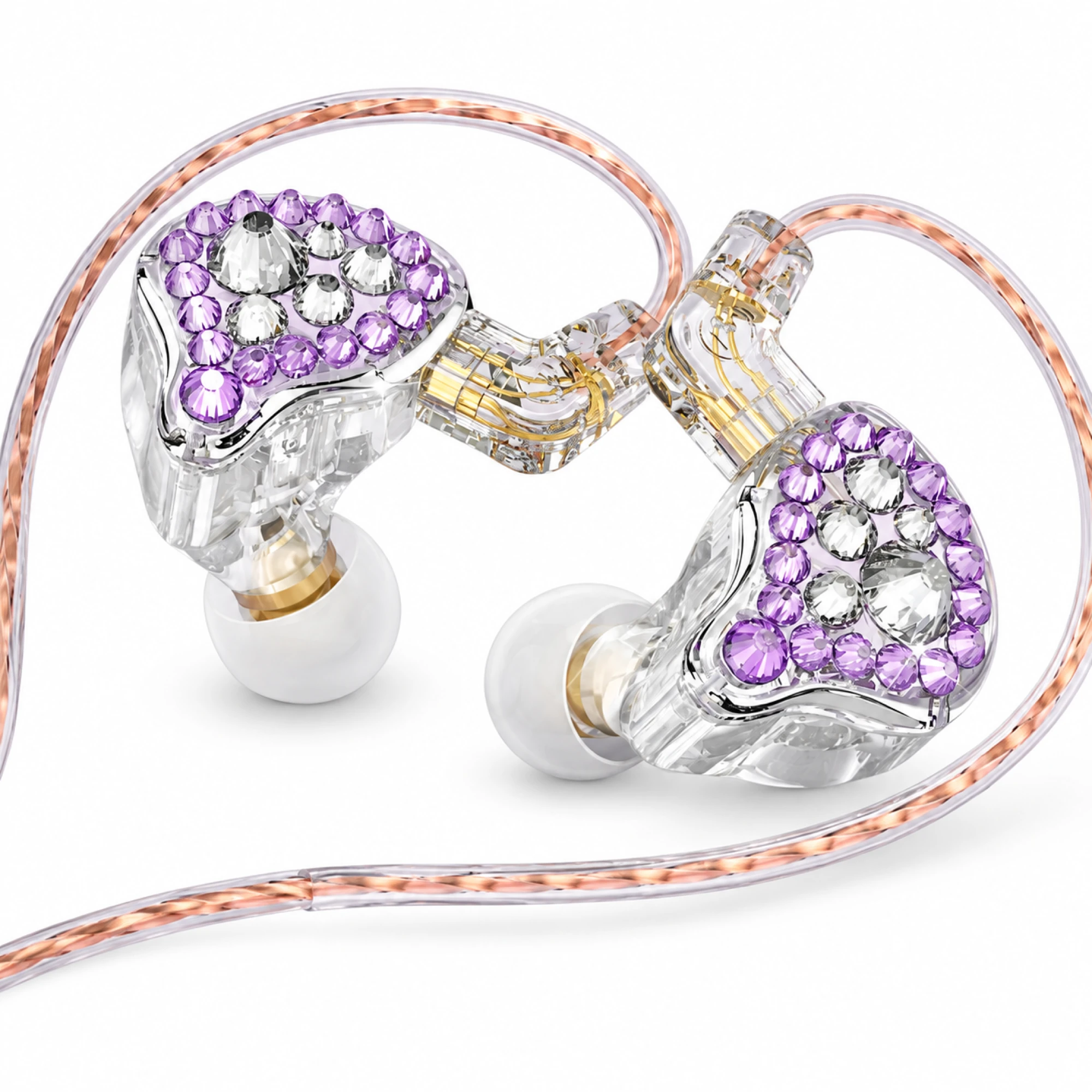 Q2 Pro Purple Crystal In-Ear Monitors
 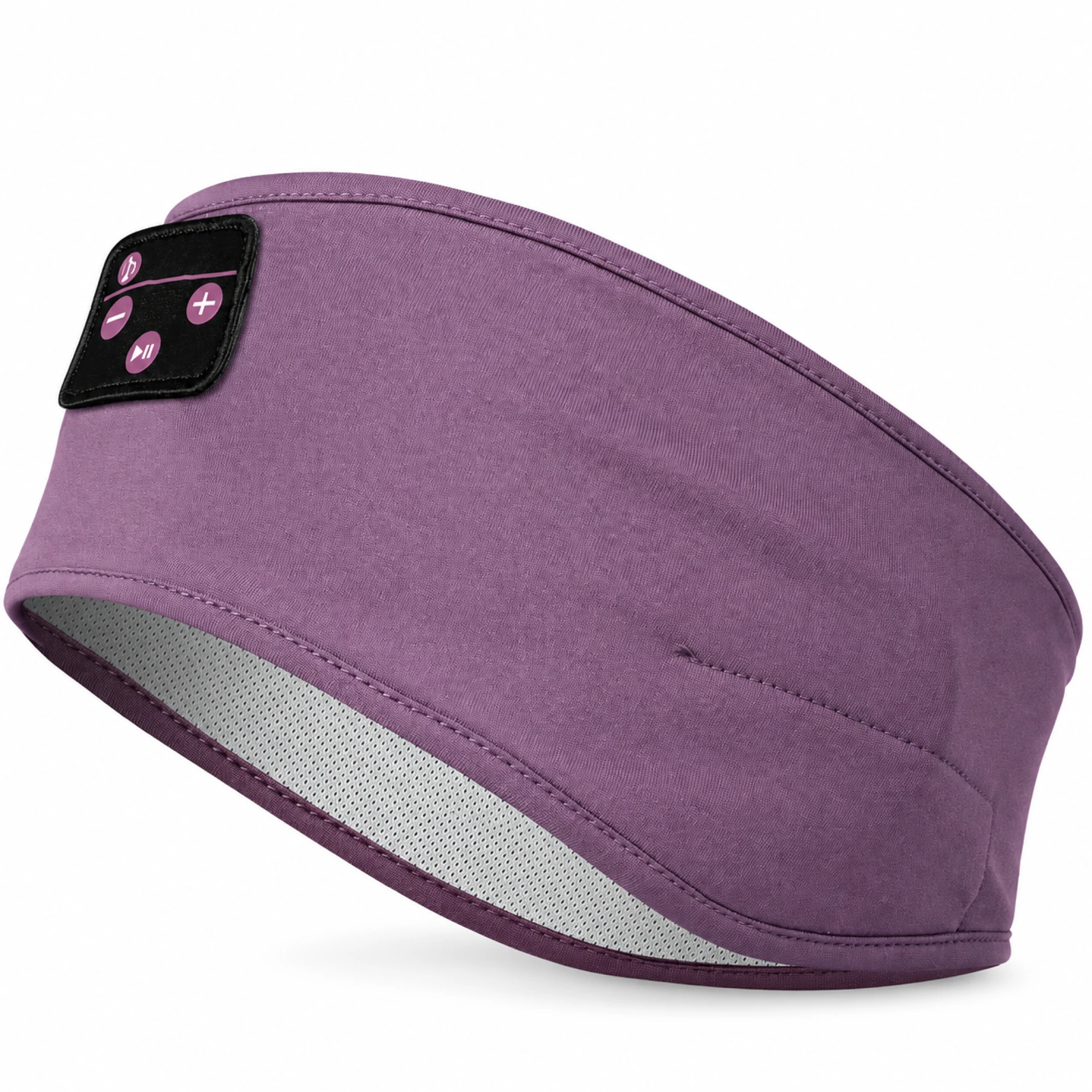 Purple Sleep Headband Headphones with Triangle Controls
 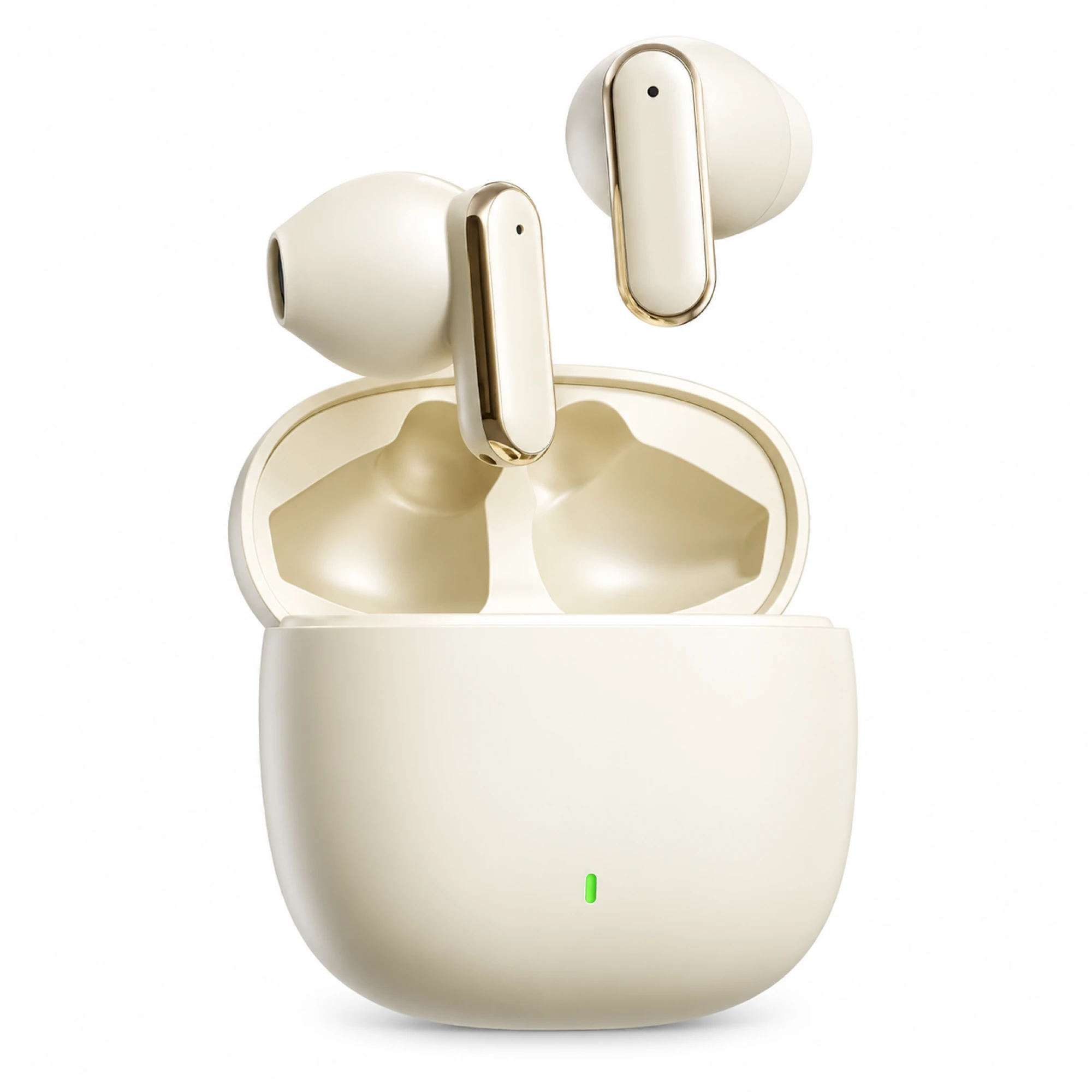 Cream Reflective-Stem Wireless Earbuds
 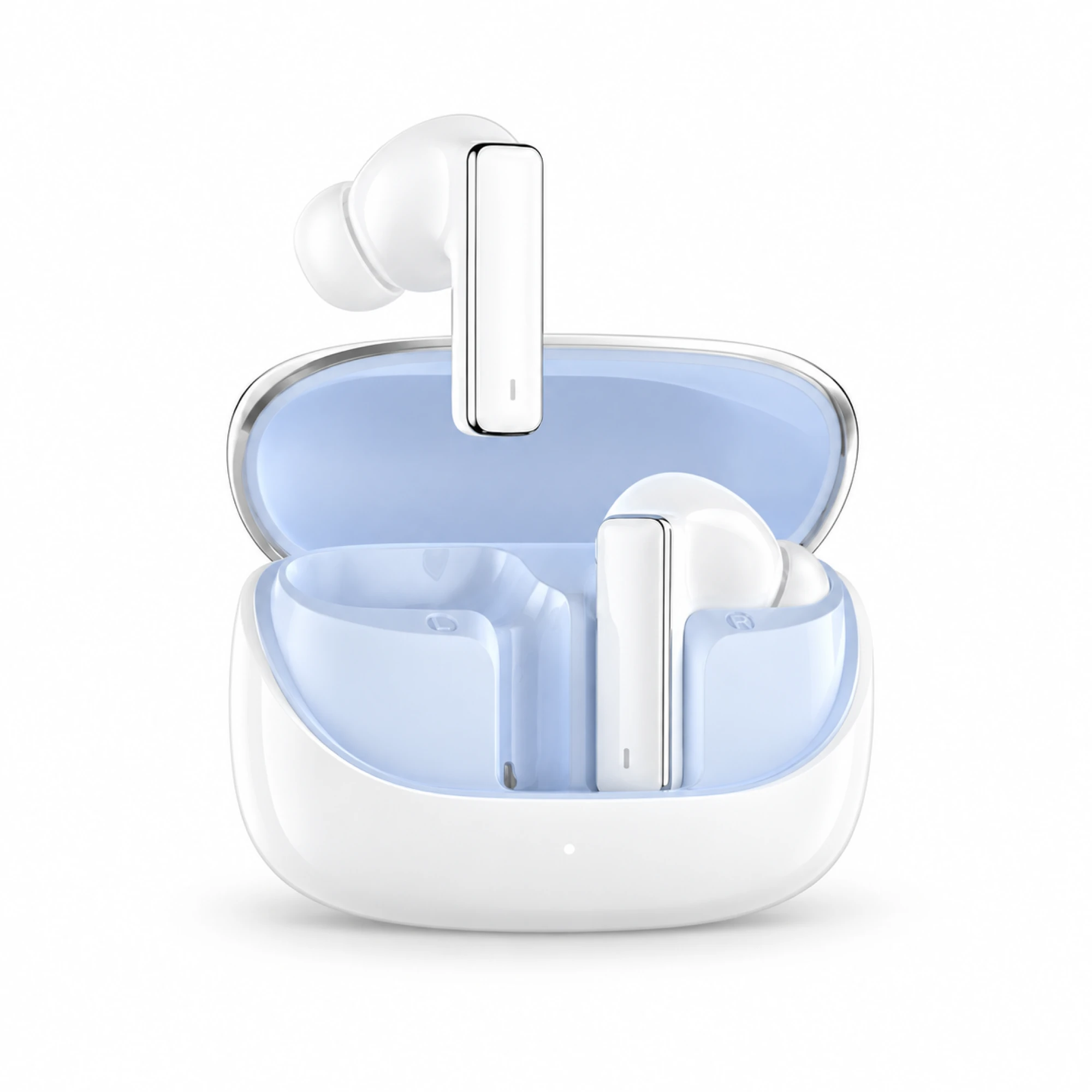 IN-01 White ANC Earbuds with Pale Blue Case Interior
 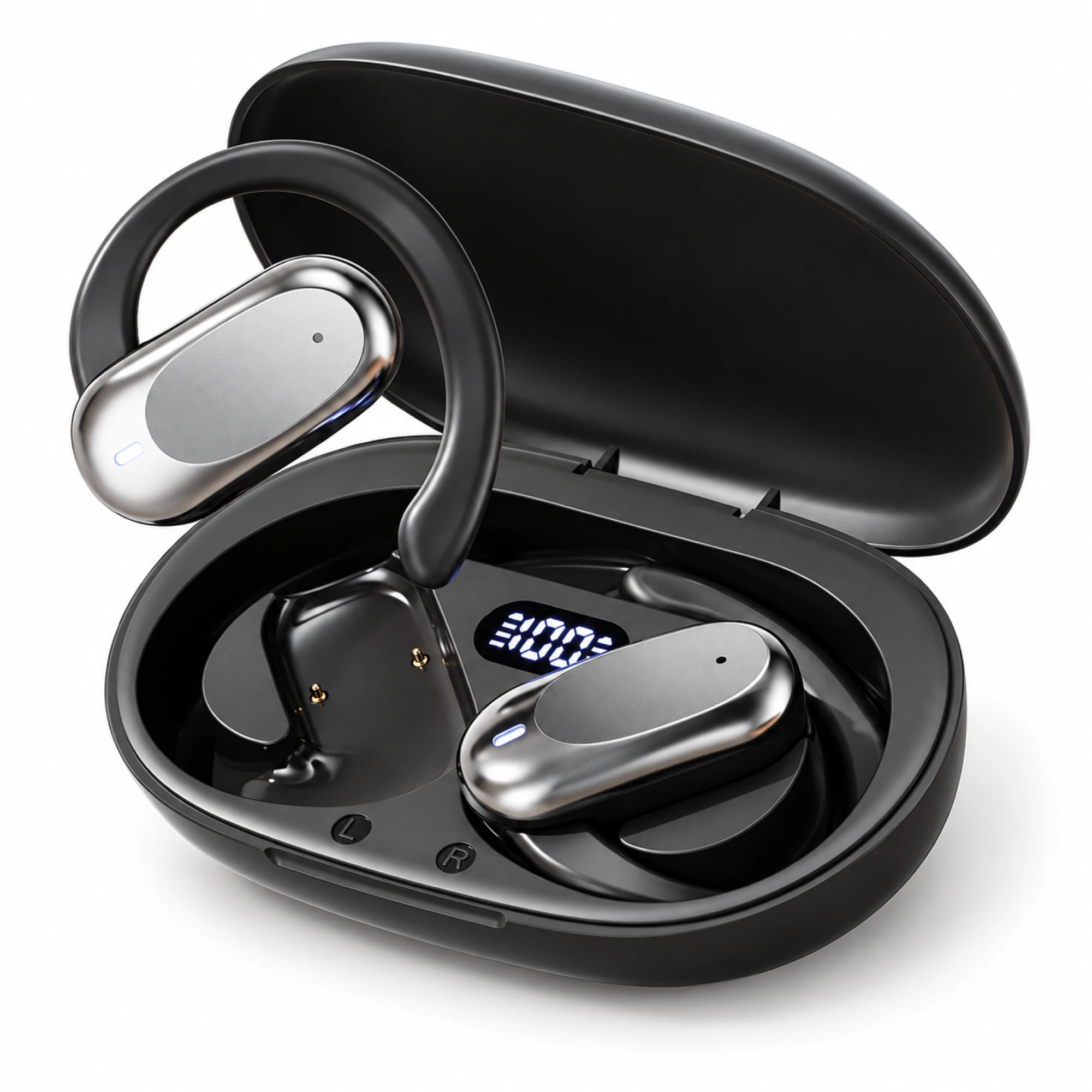 Silver Capsule Open-Ear Earbuds
 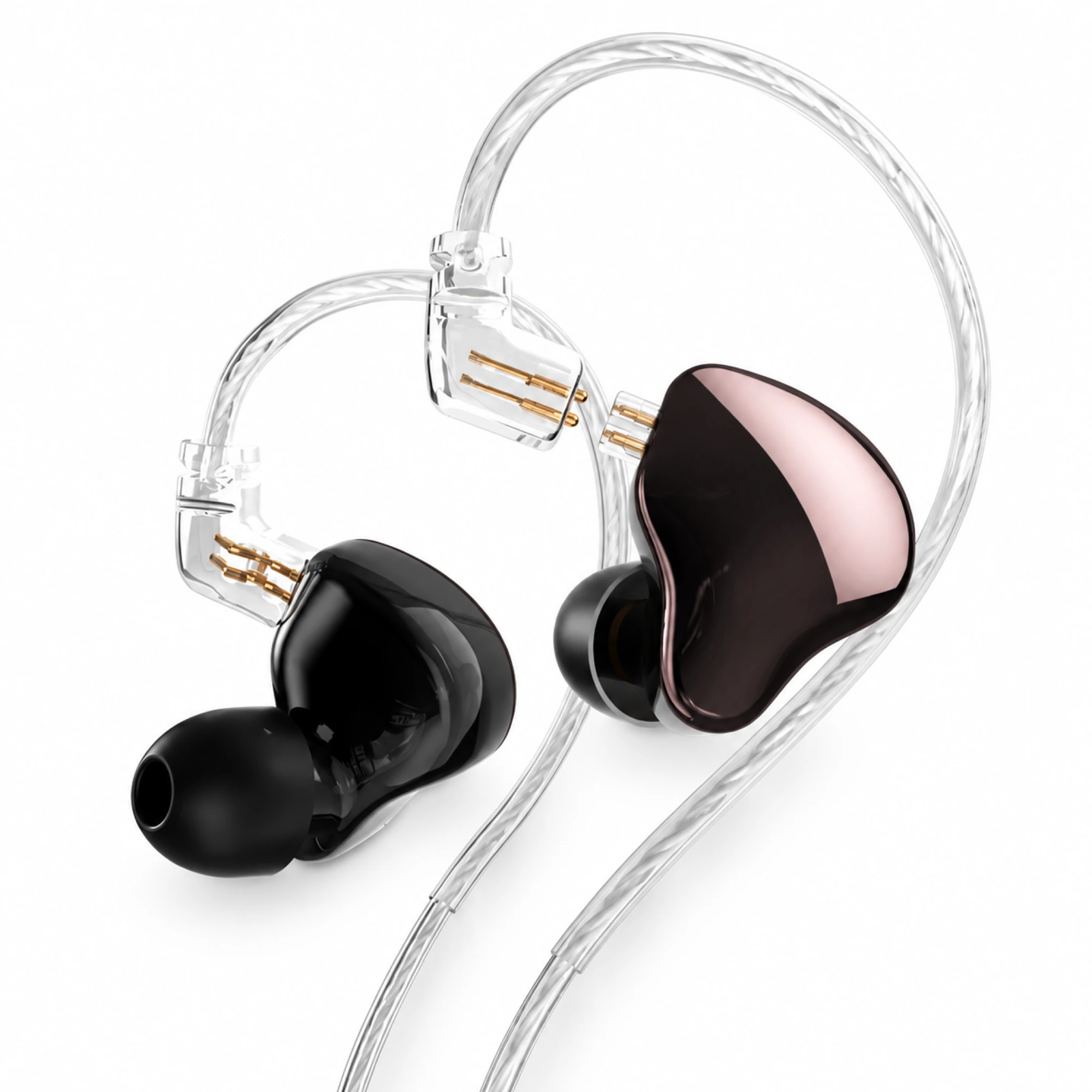 MN Rose-Metallic Detachable In-Ear Monitors
 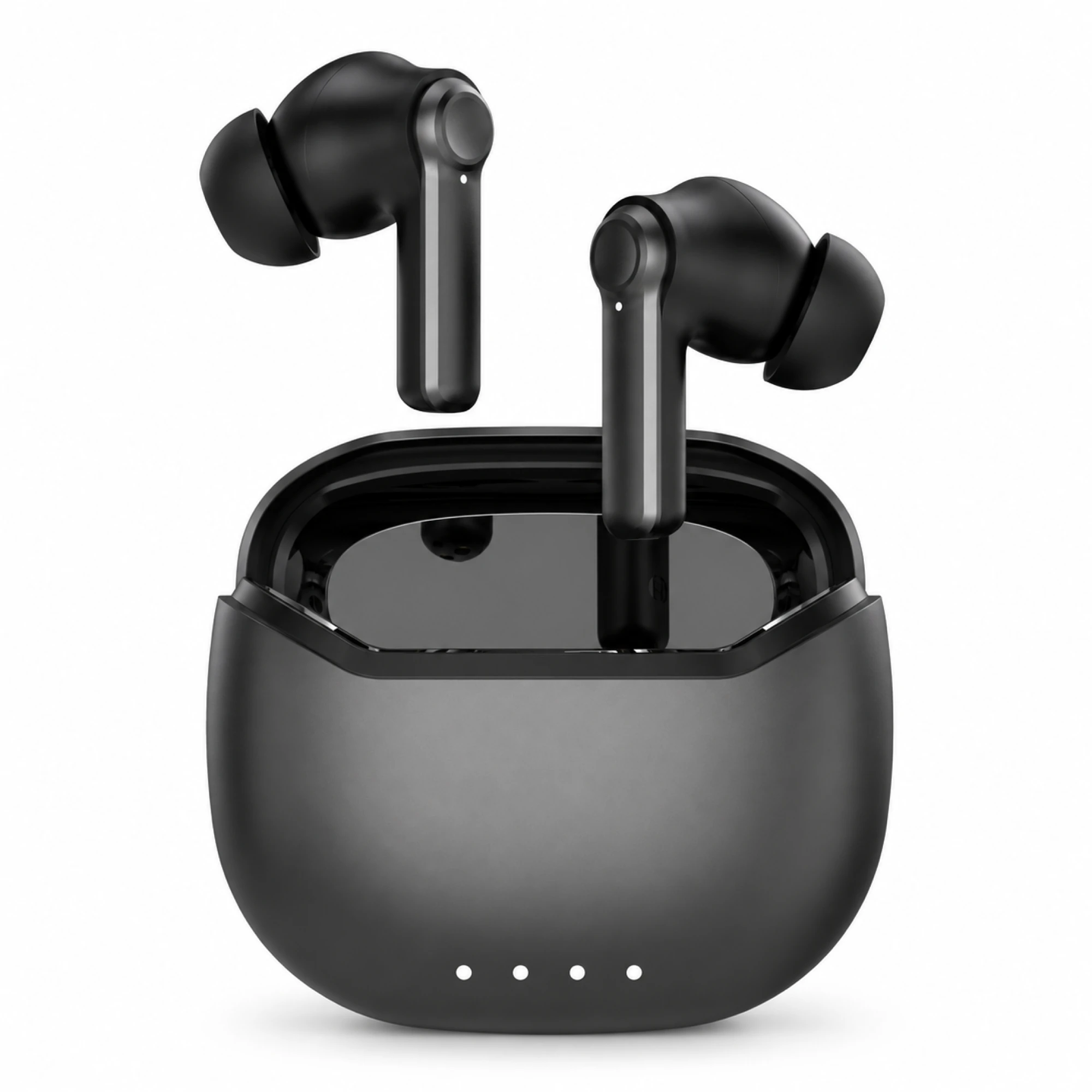 Black ANC Earbuds with Four-Indicator Case
Great earbuds for small ears are usually sold on the wrong measurement. Bud weight, shell volume and case size constrain your outer ear and your pocket. Whether a bud fits a small ear canal is decided by the nozzle the ear tip mounts on and how deep that tip sits. Sort out which one is failing before you shop.
Two different complaints hide behind one phrase
People asking for earbuds for little ears or earphones for tiny ears are describing at least two different complaints: an earbud that is physically too big for the outer ear, and a tip that is too wide for a narrow canal. A shortlist sorted by bud size cannot answer both.
Three separate structures are in play, and each is constrained by a different part of the product:
- The ear canal, the tube. Only the ear tip and the nozzle beneath it go in here.
- The outer ear, the bowl (concha) and the surrounding cartilage ridges. This is where the shell, the stem, a stabilising wing or a clip bridge sit.
- Your pocket: the charging case, which has nothing to do with either.
Someone shopping for small bud earphones because their canal aches after twenty minutes, and someone shopping because the shell sits proud of a shallow ear bowl, want opposite things. The first may be fine with a physically larger housing; the second may be fine with a deep-sealing tip.
Which published spec constrains which part of your ear
Most listings, including ours, publish some subset of the specs below. Each answers a different question.
| Spec you usually see | What it constrains | Tells you about canal fit? |
|---|---|---|
| Weight per earbud | Load on the outer ear, and pressure against a pillow | No |
| Housing or shell dimensions | Room needed in the ear bowl | No |
| Charging case dimensions | Pocket and bag | No |
| Stem length or stemless design | Clearance past hair, glasses arms and collars | No |
| Fit type: in-ear, semi-in-ear, open-fit, clip-on | Whether the canal is entered at all | Yes, but only coarsely |
| Ear-tip sizes included | The sealing diameter range available above the nozzle | Partly |
| Nozzle diameter and length | The narrowest part that enters, and how deep it seats | Yes, directly, and it is rarely published |
Notice how much of a typical spec sheet lands in the "no" column. That is the structural reason a compact earbud keeps disappointing people whose problem is a narrow canal: nearly every number on the sheet describes the outside of the ear.
The nozzle sets a floor that no smaller tip can undo
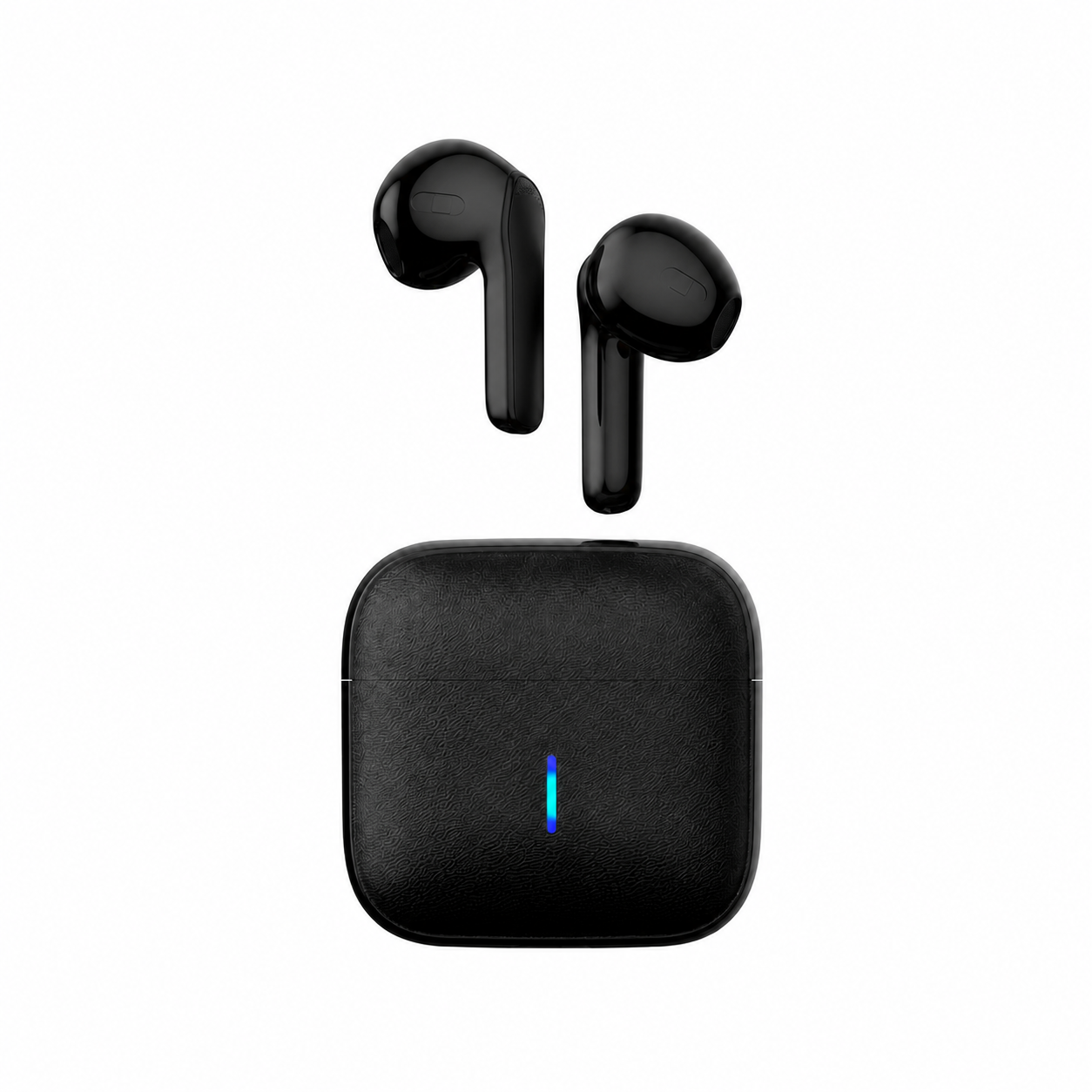
An ear tip is a sleeve. It slides over a rigid spout, the nozzle, and its wall wraps around that spout, so the narrowest thing entering your canal can never be narrower than the nozzle plus the silicone around it. Going down a tip size shrinks the sealing flange and leaves the core alone.
The practical consequence is unintuitive. An extra-small tip on a wide nozzle can present more material at the canal entrance than a medium tip on a slim one. "Comes with five tip sizes" is therefore no evidence of small-canal friendliness; it tells you about the range above the floor and nothing about where the floor sits. Nozzle length matters in the same way, because a longer spout seats the seal further in whichever tip you choose.
It is also why size-ladder troubleshooting sometimes stalls. If you have worked down to the smallest supplied tip and the fullness inside the canal has not changed, more tip experiments are unlikely to help. Our guide to choosing ear tip size without guessing covers the ladder; what no ladder can do is lower a floor set by the hardware.
A worked example from our own listings. The 2.4g Mini Sleeping Earbuds, $32.99 as the listing stands, publish 2.4 g per earbud, the only weight figure among the models in this article. Those 2.4 g buy less mass in the ear bowl and less pressure through a pillow, and the listing's curved ear wing is there to keep that light body from working loose. What the figure cannot change is the canal path: the same listing describes a tiny stemless in-ear fit with passive noise reduction from the seal, so a narrow canal meets a nozzle-plus-tip floor exactly as it would on a heavier bud. Light answers the outer-ear question and leaves the canal question open.
Canal-free does not automatically mean small-ear-friendly
The obvious move for a narrow canal is a design that never enters it, and it is usually the highest-yield change available. But those designs still have to grip somewhere, and that somewhere is the outer ear.
A clip-on bridges the rim of the ear and rests a pod in front of the opening. An ear-wing design braces against the bowl. Both trade canal contact for outer-ear contact. If your constraint was a shallow bowl or a short outer ear instead of a narrow tube, a clip can be the tighter fit of the two. Good earphones for small ears depend on which structure is short of room, which is why one shortlist cannot serve everyone with small ears.
There is an acoustic trade too. Designs that leave the canal open give up passive isolation, and our own open-fit listing says as much: for strong isolation in loud places, a sealed in-ear is the better tool. Semi-in-ear versus in-ear compares the two families in more detail.
Sort your own constraint in three questions
- Where does it fail? Fullness or ache felt inside the canal points at the tip and nozzle. Soreness on the cartilage ridge, a bud that sits proud, or one that works loose while you walk points at the outer ear. Bulk in a pocket is a case problem, nothing to do with the ear.
- Does the smallest supplied tip change anything? If dropping a size measurably reduces canal pressure, tips are still your variable. If it changes nothing, treat that as a signal you are at the nozzle floor and that a different earbud is the fix, whatever tips it ships with.
- Can you take the canal out of the equation? Before buying more accessories, test a semi-in-ear or open fit. If that removes the symptom entirely, you have identified your constraint.
Left and right often differ, and there is no rule that both ears land on the same tip size. Fit each side on its own. If the soreness is on the cartilage ridge instead, why earbuds hurt walks through the pressure points one by one.
A poor seal often gets compensated for with volume, so keep levels and session lengths reasonable however well a pair fits; WHO safe-listening guidance shortens the safe listening time sharply as level rises.
If a product causes pain, irritation, ringing or a noticeable hearing change, stop using it and seek qualified care.
Which structure each of our designs leans on
Being straight about this matters more than a confident recommendation would. Pages selling wireless earbuds for small ears, ours included, publish fit type and, in one case here, a per-earbud weight. They do not publish nozzle diameters or which ear-tip sizes ship in the box. Use fit type as the coarse sort, and treat the first twenty minutes of wear as the measurement the page could not give you.
Sorted by which structure they load:
- Enters the canal. Core White In-Ear Wireless Earbuds, $22.99 as the listing stands, are listed as in-ear with soft silicone ear tips in a compact stem-style shape. No nozzle diameter or tip-size set is stated.
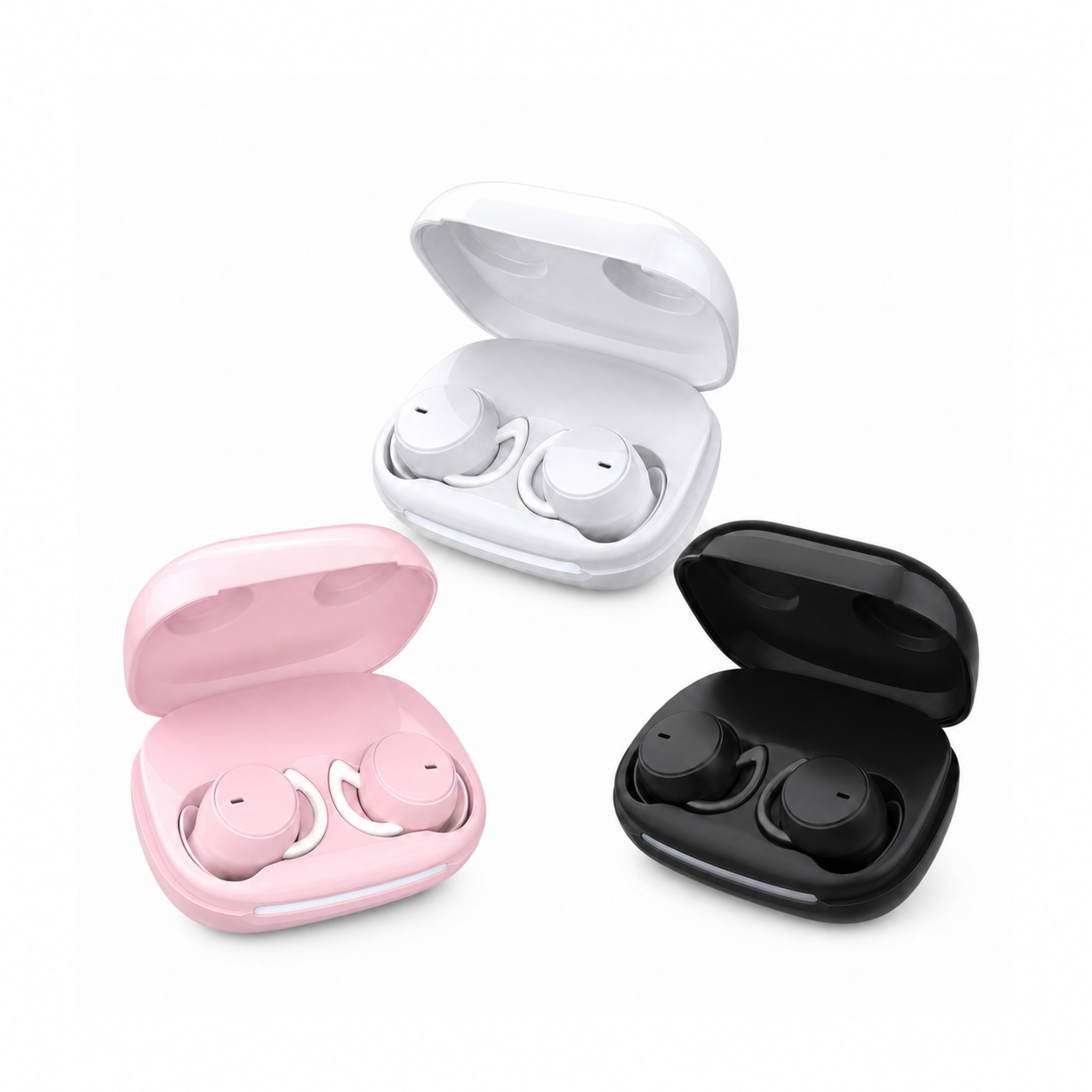
- Small housing, still in-ear. The 2.4g Mini Sleeping Earbuds from the worked example above: 2.4 g per earbud, a tiny stemless low-profile shape and a curved stabilising ear wing that braces in the ear bowl.
- Rests at the entrance. Our Semi-In-Ear Bluetooth Earbuds, $23.99 as the listing stands, are described as resting at the ear without a deep in-ear seal, and the Three-Color Open-Fit Wireless Earbuds sit at the entrance of the ear instead of sealing the canal with silicone tips.
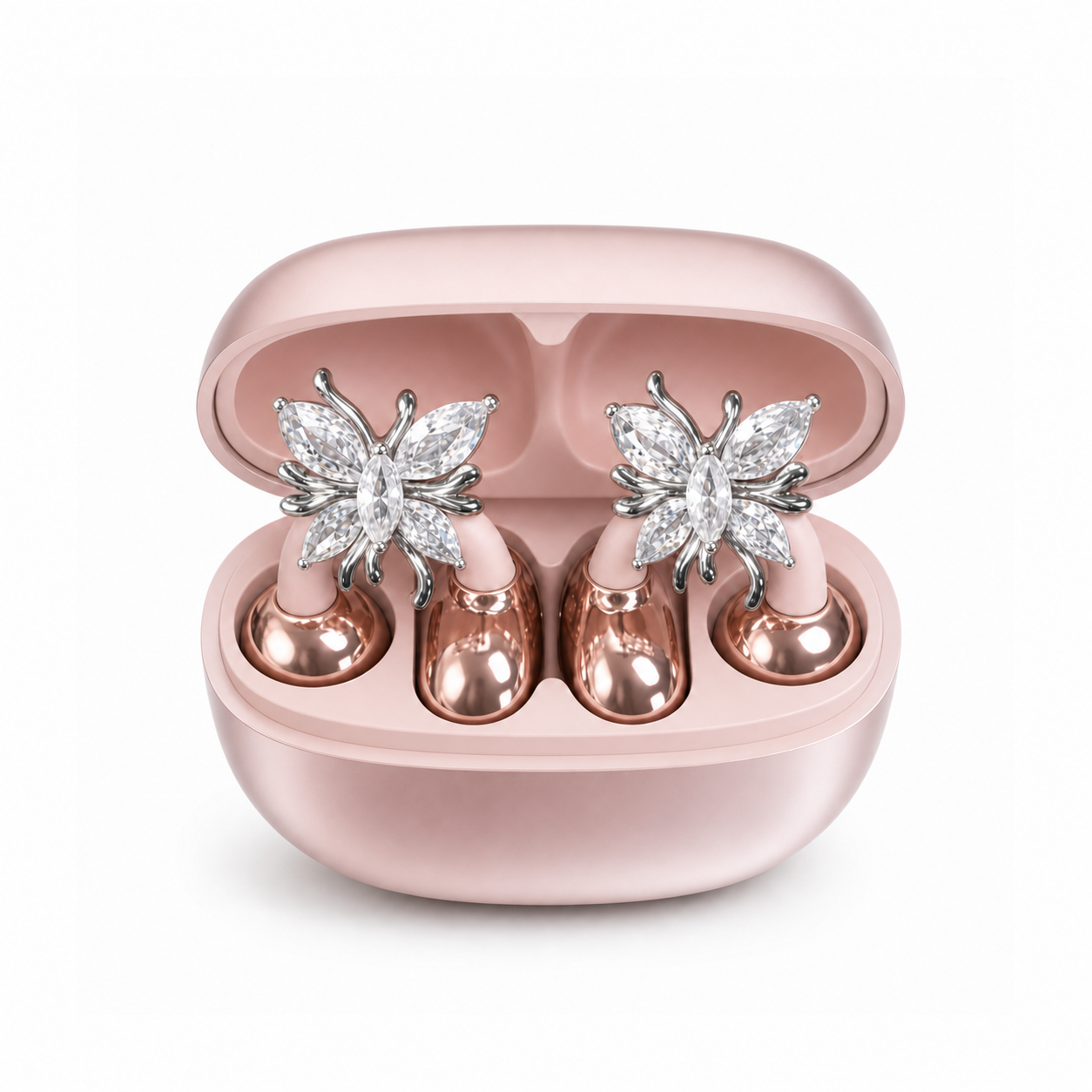
- Skips the canal entirely. The Butterfly Open-Ear Clip-On Wireless Earbuds, $36.99 as the listing stands, use a C-bridge that clips around the ear with the pod outside the canal and no in-ear silicone tip. Sealed and semi-sealed options sit in Everyday Wireless Earbuds.
None of that predicts comfort in your ear. It tells you which structure each design leans on.
Questions about fit in small ears
Do narrow canals and small outer ears need different earbuds?
Yes, because "small ears" covers at least two unrelated constraints. If the canal is narrow, designs that stay at the entrance or clip outside it generally have more room to work with. If the outer ear is small or shallow, a compact sealed in-ear can be more comfortable than a clip that has to brace on the ear.
How do I stop earbuds hurting small ears?
Locate the discomfort before shrinking the product. Canal pressure responds to tip size, insertion depth and, at its limit, a design that does not enter the canal; outer-ear soreness responds to shell shape and rotation. Stop using any pair that causes pain, numbness or irritation outlasting removal, and see a clinician if it persists.