Using a Bluetooth AUX Adapter for Car Stereo Jacks and Legacy Headphone Ports
Millions of vehicles and older stereo receivers rely on analog 3.5mm auxiliary jacks instead of built-in Bluetooth radios. As smartphones drop dedicated headphone jacks, swapping out a dependable factory head unit feels expensive and unnecessary. A compact bluetooth aux adapter bridges that gap by turning an analog line-in port into a wireless receiver, routing GPS directions, podcasts, and playlists straight through car speakers.
Getting good sound from an aux to bluetooth receiver comes down to three physical factors: clean digital-to-analog conversion, avoiding ground loop alternator hum while charging, and managing wireless latency.
How a Bluetooth AUX Adapter Works: DAC and Signal Conversion
Inside a bluetooth aux adapter, three core stages handle the workload: the RF antenna receiver, a digital-to-analog converter (DAC) circuit, and a miniature output preamplifier. When your phone streams audio over Bluetooth, data travels through the air as compressed digital packets using standard transmission codecs like SBC, AAC, or aptX.
The adapter receiver captures those incoming radio frequencies, extracts the bitstream, and sends it to the onboard DAC. That converter transforms 1s and 0s into smooth AC voltage waves that flow through the 3.5mm plug directly into your car stereo amplifier.
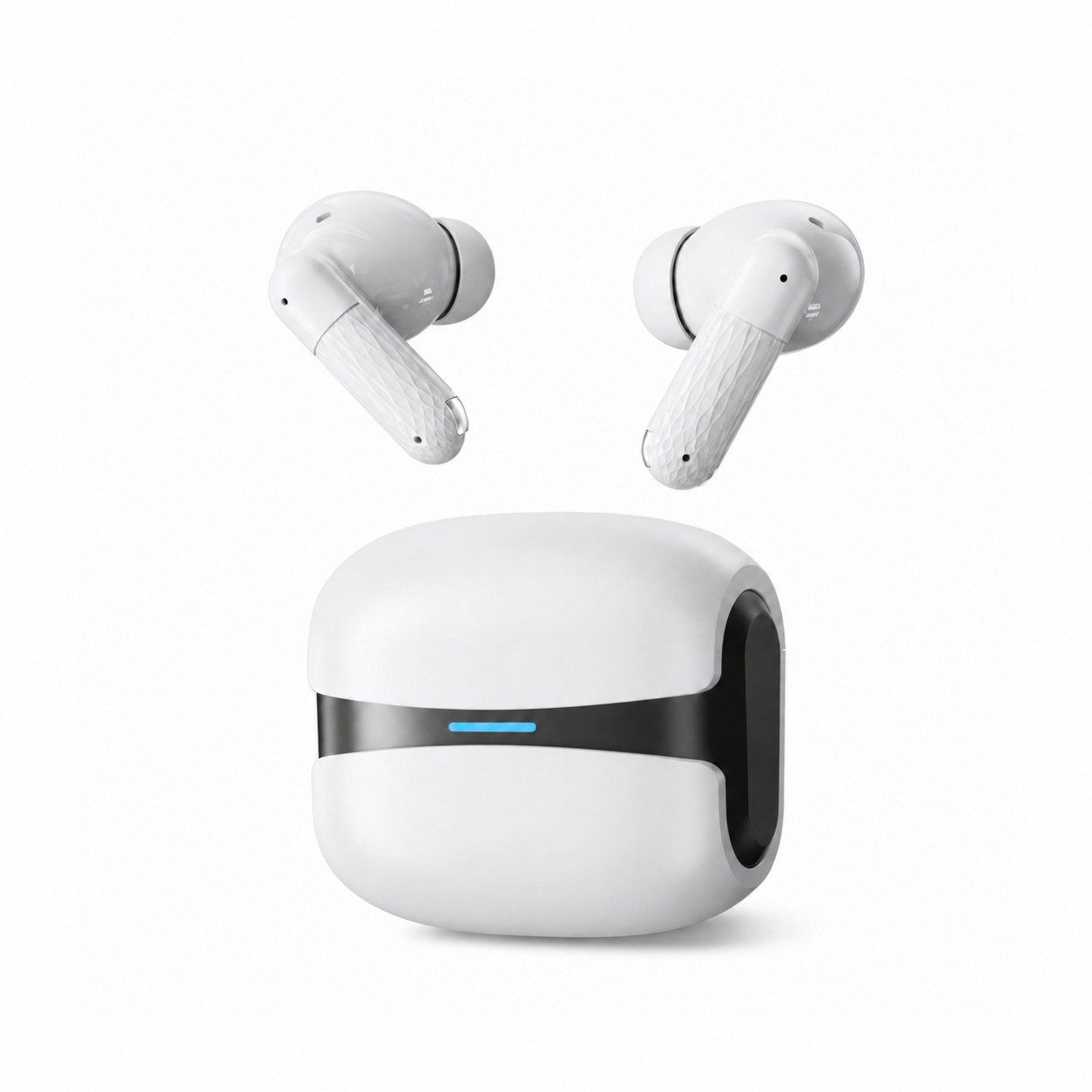
Because vehicle cabin acoustics quickly reveal poor components, decent adapters use low-noise DAC chips and clean output stages. For listening outside the car without dangling cables, dedicated hardware like the EARSOLE Cloud White Bluetooth 5.4 Wireless Earbuds with ENC Mic integrates wireless receivers and tuned micro-drivers into a single featherweight package. Meet EARSOLE Cloud White Bluetooth 5.4 earbuds with an ENC mic, CVC voice processing, IPX5 water resistance and low-latency mode for calls and gaming.
Eliminating Ground Loop Alternator Whine in Vehicles
When plugging a bluetooth adapter for car aux jacks into a dashboard charger, drivers often notice an annoying high-pitched buzz that climbs as the engine revs up. Drivers usually call this alternator whine—a persistent electrical pitch that rises and falls with vehicle acceleration.
Alternator whine happens when your Bluetooth adapter draws power from a 12V cigarette socket while sending audio into the AUX port. The car stereo and the 12V outlet connect to the vehicle metal frame at different points, creating tiny voltage imbalances along the ground line:
- Stray AC alternator ripple currents flow through the audio cable ground shield.
- The stereo amplifier detects this minute potential difference as an incoming audio signal.
- The car speakers output an audible engine-synchronized electrical buzzing or whining sound.
Plugging an inexpensive ground loop isolator between the adapter and the car jack breaks the shared chassis path with miniature 1:1 transformers, cutting out the hum while preserving full audio frequency response.
| Audio Connection Type | Power Source | Ground Loop Risk | Typical Audio Latency |
|---|---|---|---|
| Battery-Powered AUX Adapter | Internal Lithium Cell | Zero (Isolated) | 120 ms – 200 ms |
| USB-Powered AUX Adapter | Car 12V Socket | Moderate to High | 120 ms – 200 ms |
| Direct 3.5mm Wired Cable | Phone Jack / Dongle | Zero (Passive) | < 5 ms (Near Zero) |
| Native Bluetooth 5.4 Receiver | Vehicle Head Unit | Low (Engineered) | 40 ms – 80 ms |
Codec Selection, Bandwidth, and Audio Latency
Wireless sound quality depends heavily on which Bluetooth codec your phone and adapter negotiate. The standard Subband Codec (SBC) tops out around 328 kbps—plenty clear for navigation voice prompts and spoken word, but audibly constrained on intricate acoustic tracks.
If music clarity matters, look for receivers supporting AAC or aptX to avoid the compressed, tinny high frequencies common with basic SBC streams. Delay also counts during passenger video playback; basic codecs lag by 150 to 220 milliseconds, pulling lip movement noticeably out of sync, while low-latency modes keep lag under 50 milliseconds.
Drivers looking to compare mobile audio filtering with vehicle cabin acoustics can read our wind noise cancelling earbuds acoustic guide for in-depth microphone isolation tips.
Frequently Asked Questions
Does Bluetooth or AUX sound better?
Direct wired AUX connections generally provide superior audio fidelity compared to standard Bluetooth adapters because wired analog signals do not undergo lossy wireless compression codecs like SBC. However, modern Bluetooth adapters using advanced codecs like AAC or aptX deliver sound quality virtually indistinguishable from wired connections in standard car cabin listening environments.
Why does my Bluetooth car adapter buzz when accelerating?
The buzzing sound is caused by ground loop interference between the vehicle 12V charging socket and the stereo auxiliary input. Alternator AC ripple current travels along the audio ground shield. Installing an inline 3.5mm ground loop noise isolator permanently resolves this interference.
Can I leave my Bluetooth AUX adapter plugged in all the time?
If your vehicle 12V accessory port shuts off with the ignition, you can safely leave the adapter plugged in. If your car 12V socket remains continuously powered when the engine is off, unplug the adapter to prevent draining the vehicle starter battery over extended parking periods.