

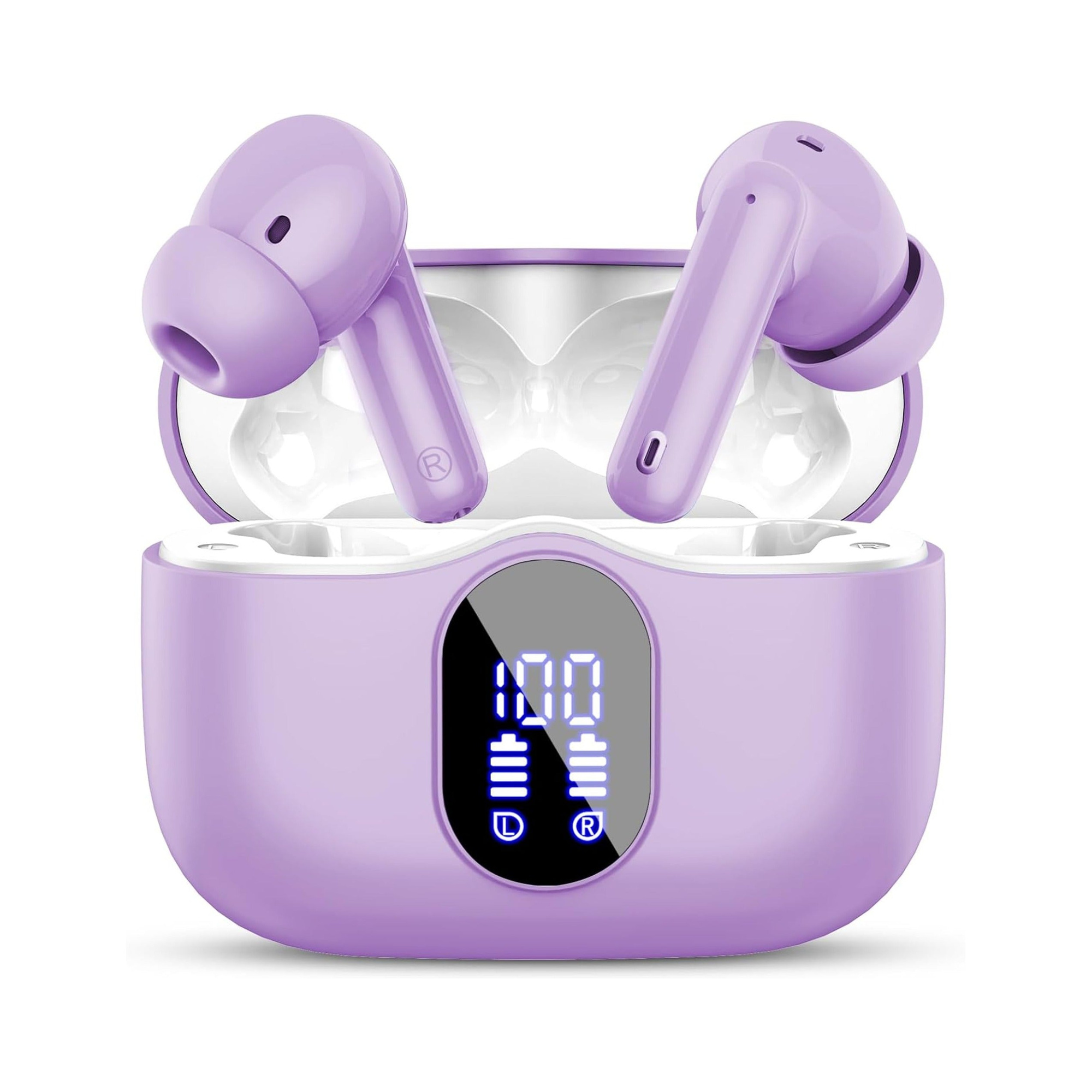
Bluetooth LE Audio Earbuds, the LC3 Codec, and Multi-Stream Isochronous Channels
For more than two decades, every pair of wireless headphones relied on the Bluetooth Classic (BR/EDR) radio and the aging SBC codec designed in the late 1990s. Bluetooth LE Audio earbuds represent a ground-up architectural rewrite of wireless sound, shifting audio streaming onto the Bluetooth Low Energy radio layer introduced in Bluetooth 5.2 and 5.3 specifications.
Instead of forcing one primary earbud to receive a compressed stereo stream and relay half of it across your head to the secondary earbud, LE Audio introduces Isochronous Channels (ISOC) and the Low Complexity Communications Codec (LC3). Together, those technologies deliver higher vocal and musical fidelity at half the bitrate, drop wireless gaming latency under 30 milliseconds, and unlock Auracast one-to-many public broadcasts.
How LC3 Outperforms SBC at Half the Bitrate
Traditional Bluetooth Classic uses the Subband Coding (SBC) codec at 328 kbps, which wastes bandwidth on masked frequencies and collapses into muffled 16 kHz mono whenever you join a voice call. The new mandatory LC3 codec uses modern psychoacoustic MDCT (Modified Discrete Cosine Transform) framing with 7.5 ms or 10 ms frame intervals, preserving richer harmonic detail at just 160 kbps than SBC achieves at 345 kbps.
That 50% bandwidth savings gives hardware engineers two powerful choices: they can shrink the lithium-ion cell inside the earbud to build lighter, flatter shells without sacrificing runtime, or they can run simultaneous high-resolution stereo playback alongside a 32 kHz Super-Wideband voice microphone channel so video calls never sound tinny again.
| Wireless Audio Metric | Bluetooth LE Audio (LC3) | Bluetooth Classic (SBC / AAC) | Proprietary 2.4 GHz USB Dongle | Everyday User Benefit |
|---|---|---|---|---|
| Standard Bitrate & Quality | 160 kbps (Transparent high fidelity) | 256 – 328 kbps (Moderate compression) | 300 – 500 kbps (Uncompressed PCM/LC3+) | Longer battery life with cleaner highs |
| Left/Right Topology | True Multi-Stream (Independent L & R) | Primary relay or snoop mirroring | Independent or dongle-relayed | Zero cross-head dropouts outdoors |
| End-to-End Audio Latency | 20 – 35 ms (Isochronous Channels) | 120 – 220 ms (A2DP buffer) | 15 – 25 ms | Lip-sync accuracy without a USB dongle |
| Broadcast Sharing | Native Auracast (Unlimited listeners) | Point-to-point (Max 1–2 headphones) | Single receiver only | Tap into airport TVs or gym screens |
Multi-Stream Isochronous Channels and Auracast Explained
Under the hood, LE Audio replaces the old asynchronous A2DP pipe with Connected Isochronous Streams (CIS). Your smartphone establishes two independent, time-synchronized data pipes—one directly to the left earbud and one directly to the right earbud—so both drivers fire within microseconds of each other without needing an inter-earbud relay link.
Broadcast Isochronous Streams (BIS) power Auracast, which lets a single transmitter—such as an airport gate monitor, university lecture hall, or living-room television—broadcast stereo audio to an unlimited number of LE Audio earbuds in range. Joining an Auracast stream works just like connecting to a guest Wi-Fi network from your phone’s Bluetooth menu or scanning a QR code on the venue display.
Why Low-Power Radio Architecture Matters for Overnight Sleep
Reducing radio transceiver current draw is especially critical when designing ultra-compact earpieces meant to be worn in bed. Because a side-sleeping earbud cannot house a thick 60 mAh battery without jutting out past the tragus, efficient Bluetooth 5.3 low-energy power management is what allows a wafer-thin shell to play through the night.
Flat, stemless earbuds for sleeping on your side, with a dynamic sleep-support mode and a starlight glow charging case. See the three colors at EARSOLE.
Pairing low-power wireless efficiency with a flush, stemless sleep earbud gives side sleepers an enclosure that disappears inside the concha bowl without lateral pillow pressure. Whether you stream calm bedtime audio or switch to onboard dynamic sleep-support mode, your ears rest free of bulky battery housings.
Checking Host OS Compatibility for LE Audio and LC3
Buying earbuds with a Bluetooth 5.3 or 5.4 logo on the box does not automatically mean they are streaming LC3; both the earbud chipset and your host smartphone or laptop must explicitly support the Bluetooth LE Audio profile stack. On Android 13, 14, and 15 flagships (such as Pixel and Galaxy S23/S24/S25 series), open your Bluetooth device details page and toggle on the LE Audio switch manually if it defaults to off for backward compatibility.
On Windows 11 (version 22H2 and newer), open Settings → Bluetooth & devices → Devices and verify that Use LE Audio when available is enabled alongside a compatible Intel AX210/BE200 or Qualcomm FastConnect Wi-Fi/Bluetooth card. If you ever need to sever a pairing link when your host phone is in another room, read our guide on how to disconnect Bluetooth earbuds without the phone.
Frequently Asked Questions
Is Bluetooth 5.3 the same thing as Bluetooth LE Audio?
Not automatically; Bluetooth 5.3 is the core specification version, and manufacturers can certify a Bluetooth 5.3 earbud using only legacy Classic A2DP audio unless the spec sheet explicitly lists LE Audio and the LC3 codec.
Why does enabling LE Audio on my Android phone sometimes disable multipoint connection?
Early firmware implementations of Connected Isochronous Streams (CIS) allocate dedicated radio timing slots to a single host device, so some earbuds require toggling back to Classic AAC/SBC mode if you want simultaneous dual-device multipoint switching.