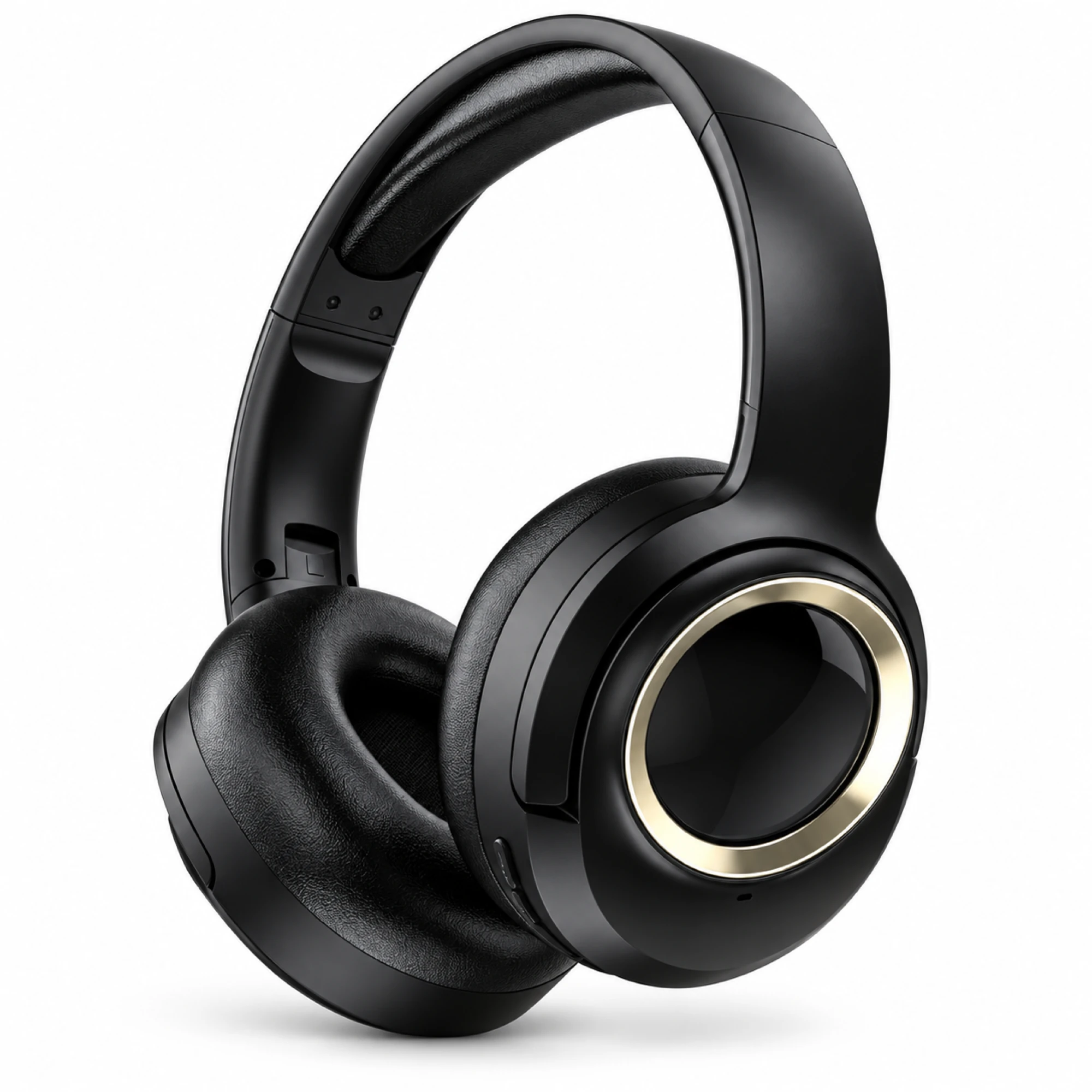
 MX-21 Black and Gold Wireless Headphones
 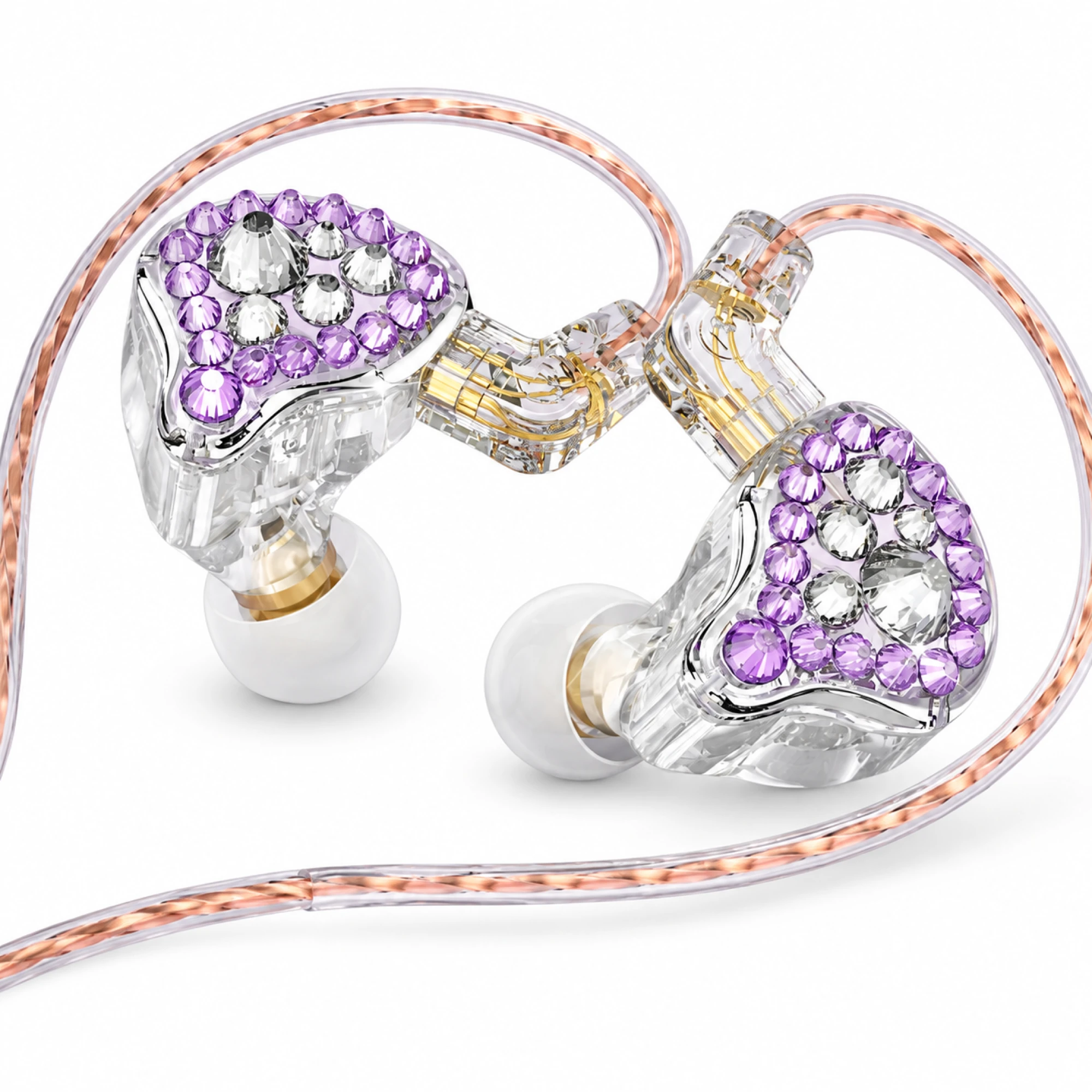 Q2 Pro Purple Crystal In-Ear Monitors
 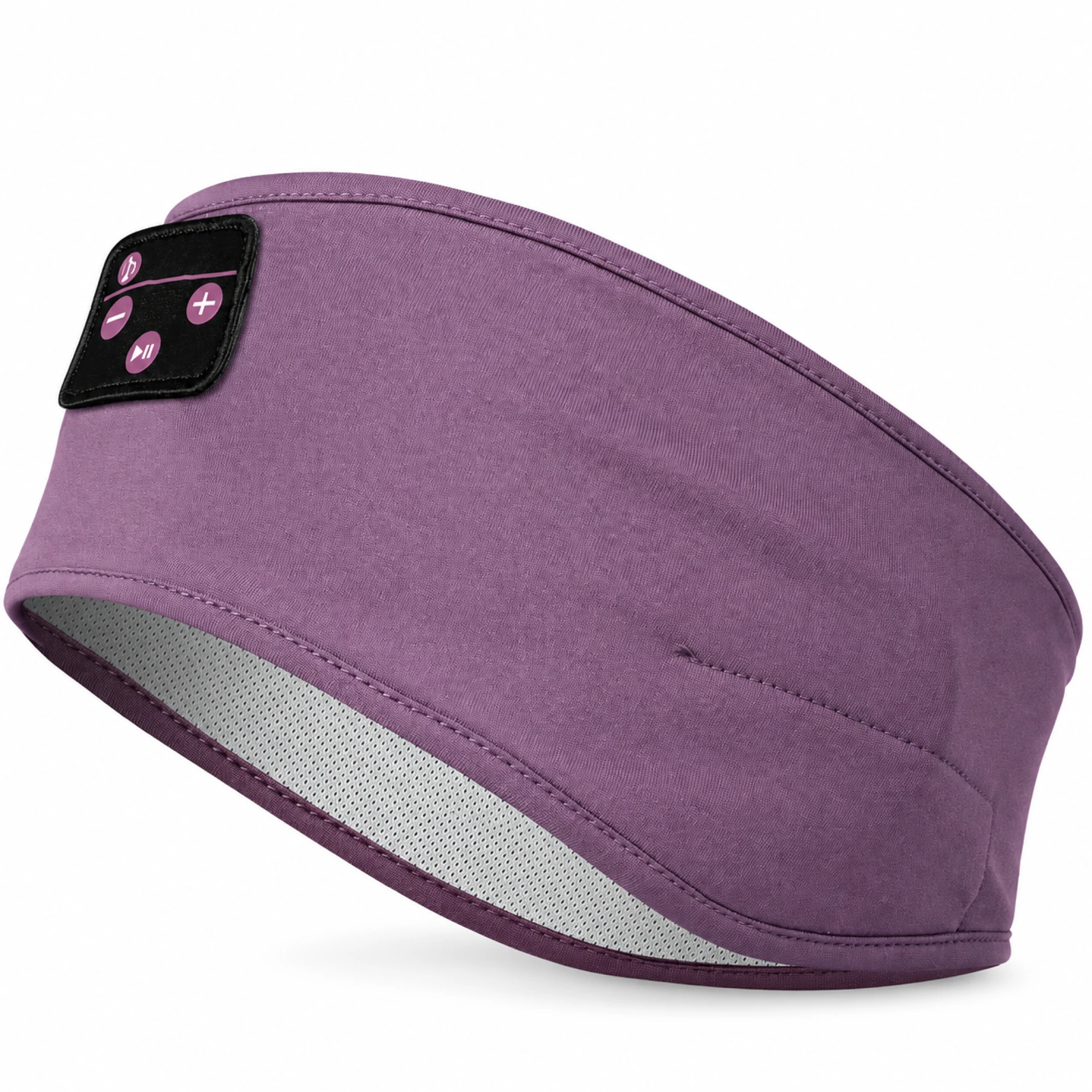 Purple Sleep Headband Headphones with Triangle Controls
 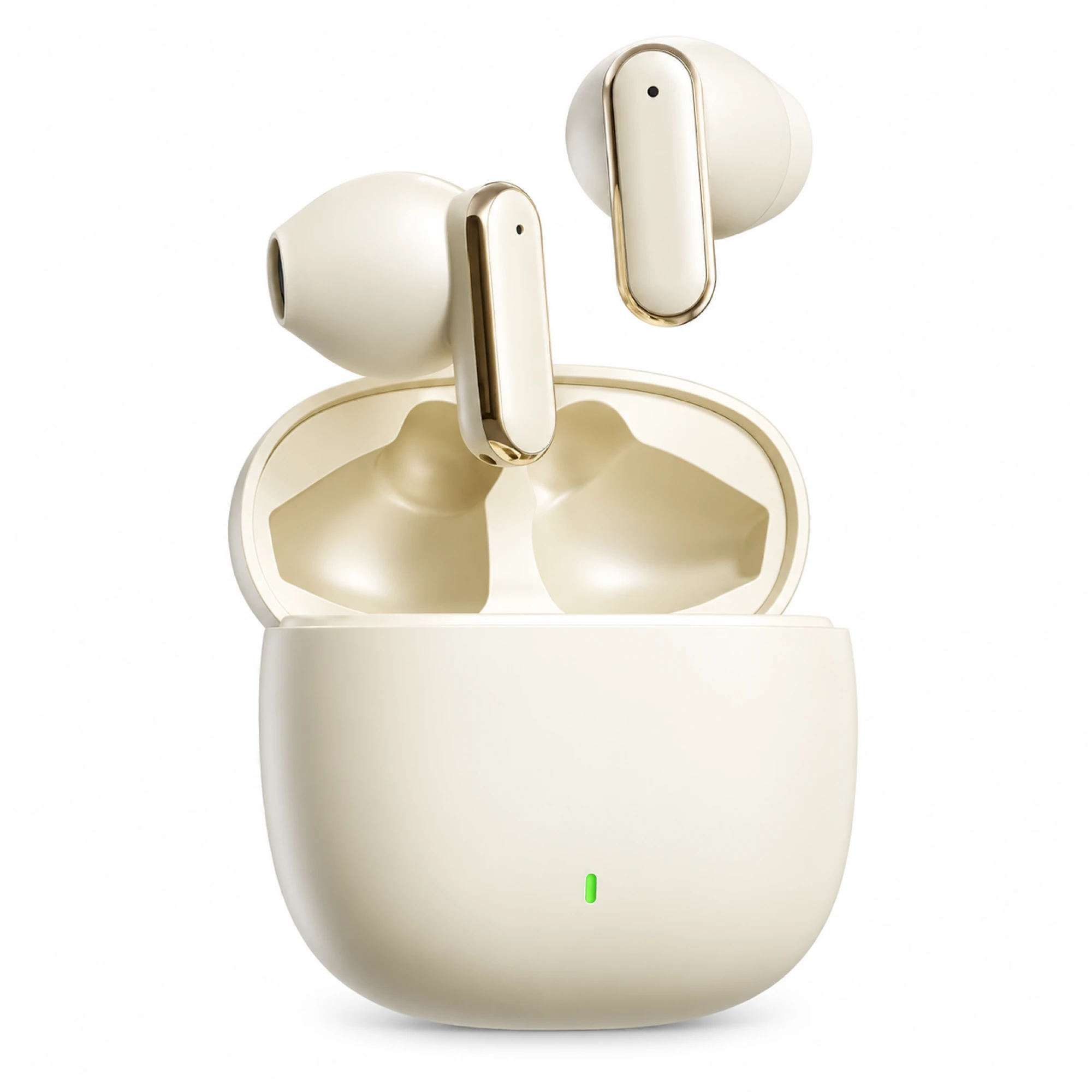 Cream Reflective-Stem Wireless Earbuds
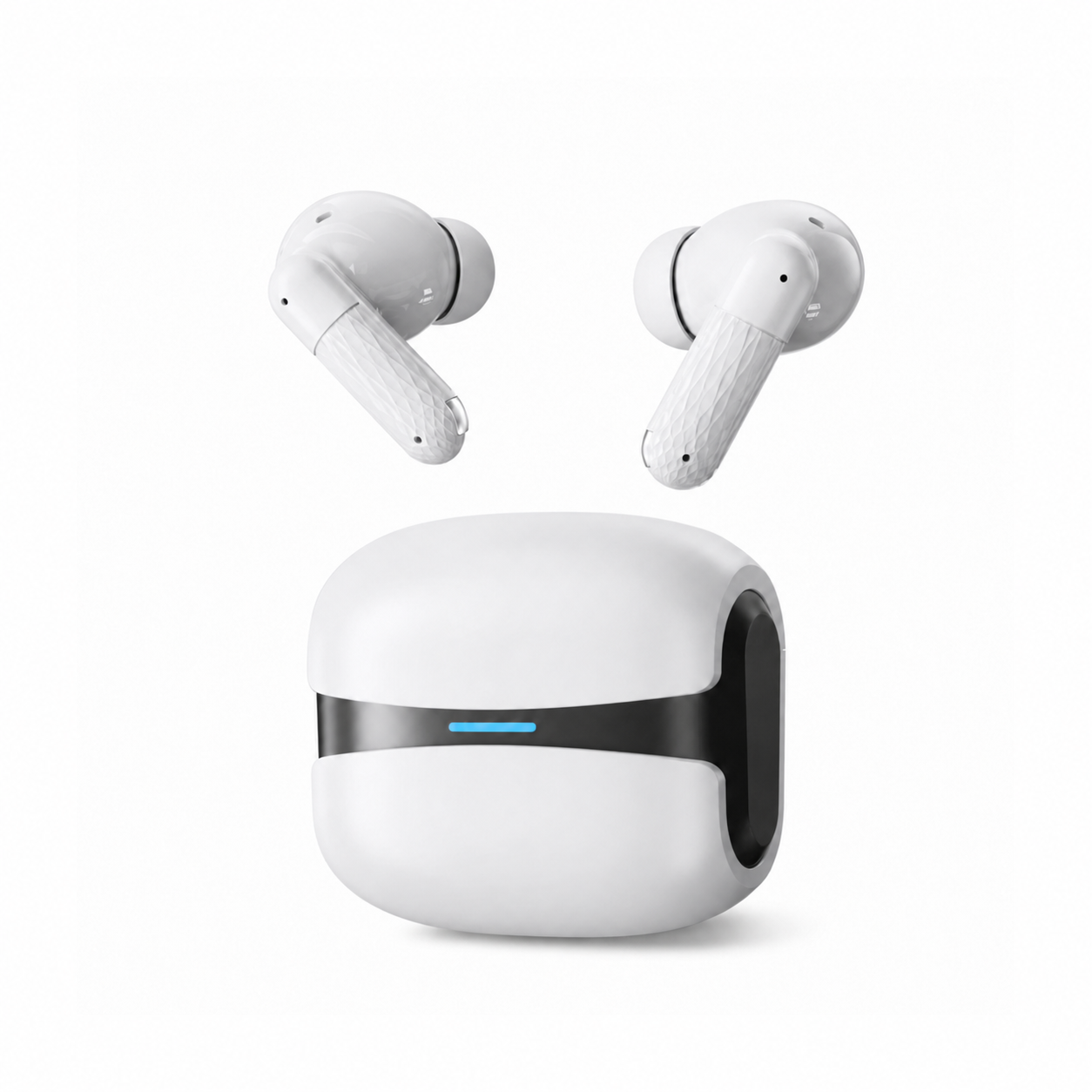
 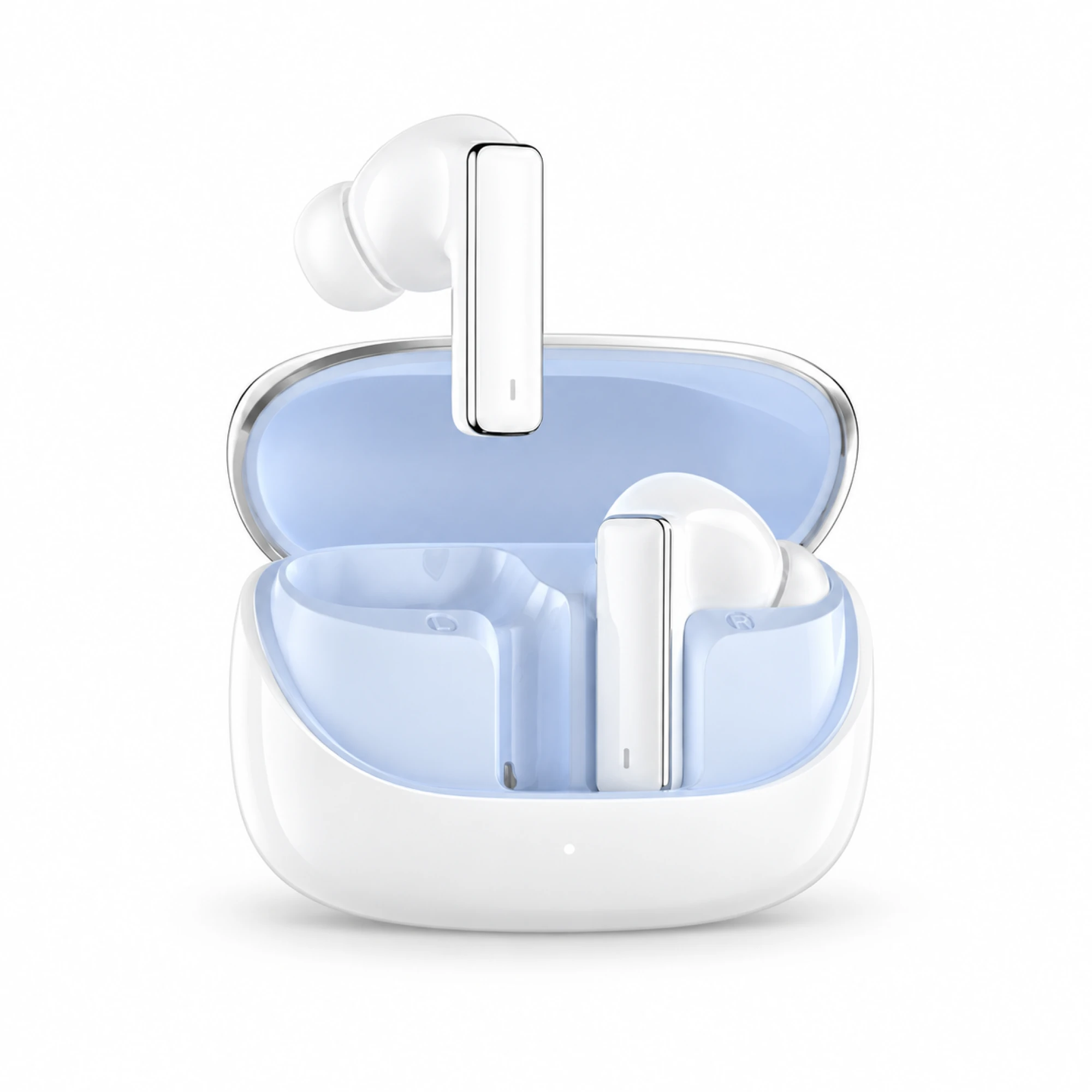 IN-01 White ANC Earbuds with Pale Blue Case Interior
 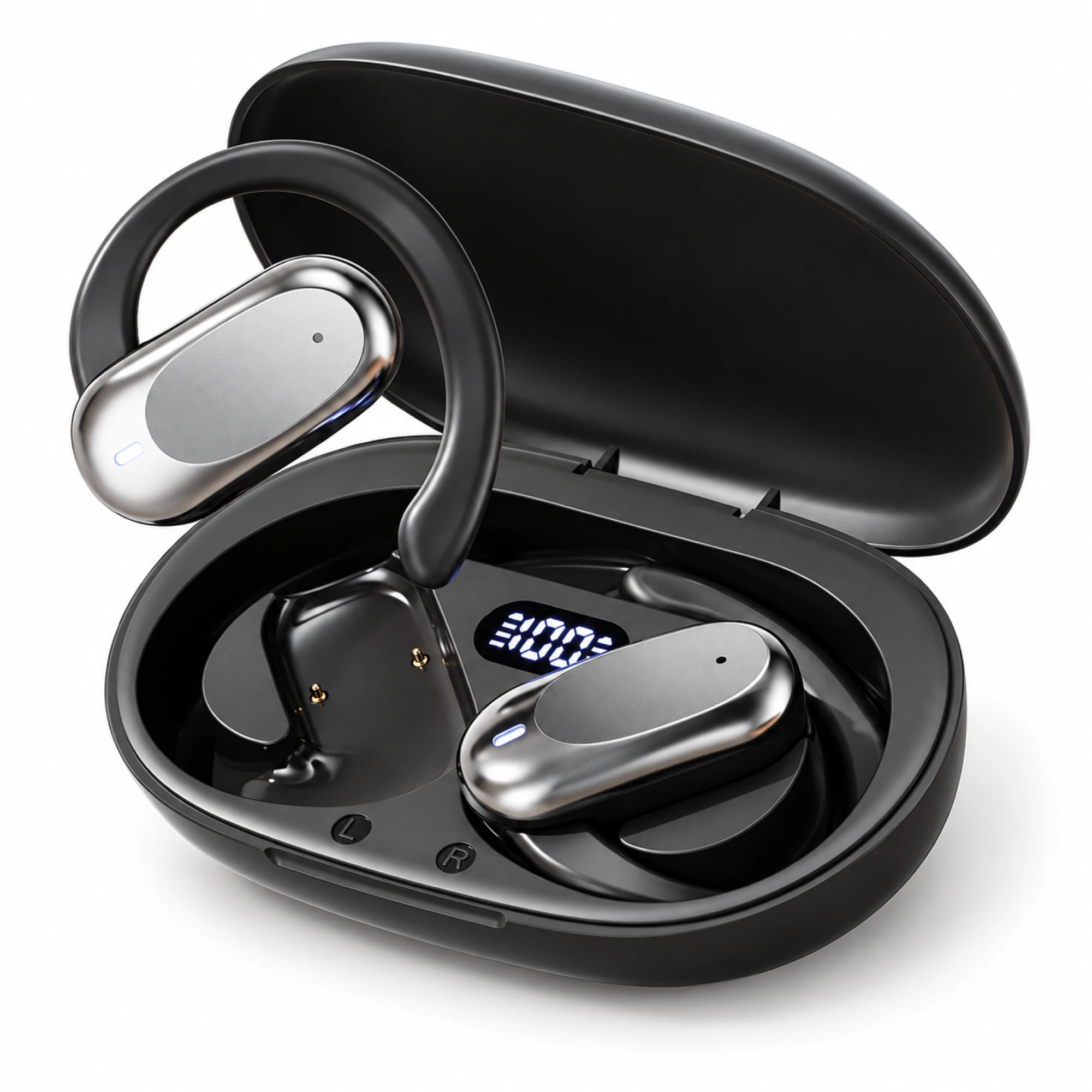 Silver Capsule Open-Ear Earbuds
 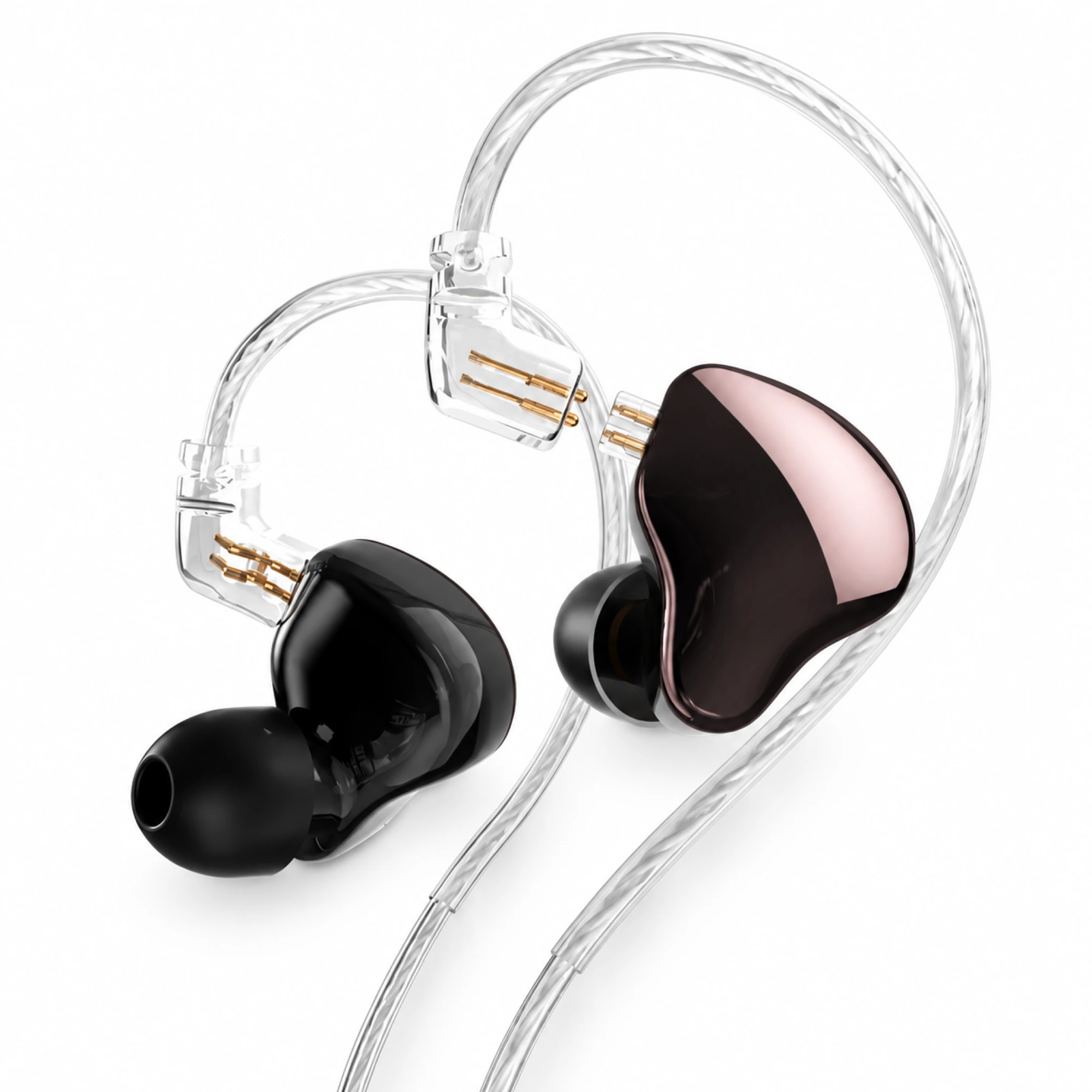 MN Rose-Metallic Detachable In-Ear Monitors
 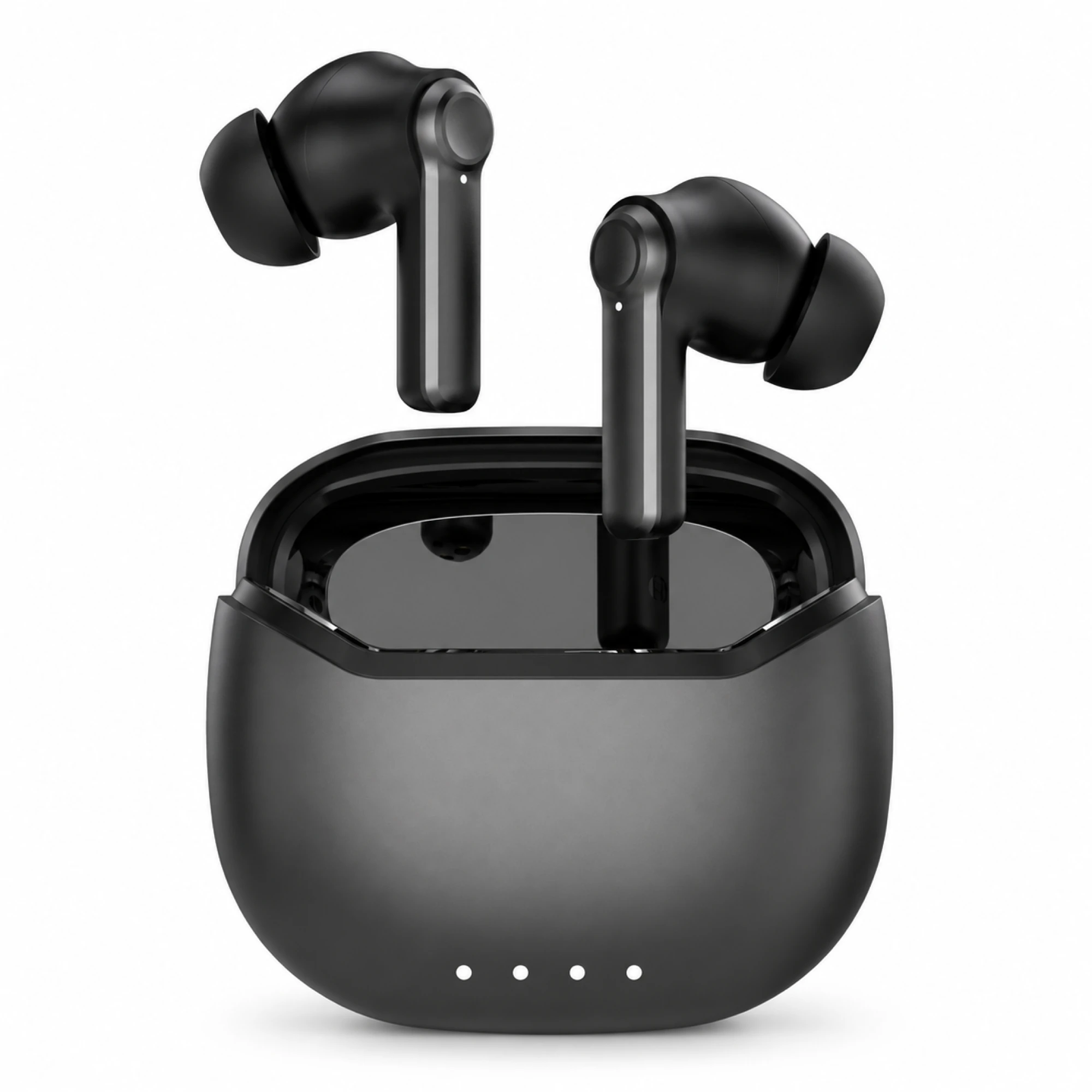 Black ANC Earbuds with Four-Indicator Case
Put our two product pages side by side and earbuds vs headphones stops being a sound question. The over-ear page promises up to 100 hours on a single charge. The in-ear page promises a case you take the buds out of and put them back into. Both are endurance claims, in two different units, and the shape sets the unit; the marketing does not.
The words first, then the only distinction we can source
Three words circle this decision: earbuds, earphones and headphones. They are not used consistently. We have not surveyed how Americans use them, so instead of ruling on the language, here is the only distinction we can actually source: our own two pages. One calls its fit type "ergonomic in-ear." The other calls itself over-ear and describes "ultra-soft protein leather ear cups." Whatever the words do elsewhere, those two lines are the fork in the road, and a comparison that opens with sound quality has already stepped past it.
Everything below follows from those two lines. They are also the reason the rest of this comparison keeps returning to the pages themselves instead of to a general claim about which shape is better: the pages are the only thing here we can quote.
Neither page answers "how long" in the same unit
This is the part worth slowing down for. The EARSOLE Over-Ear Wireless Headphones Series 127 page states "up to 100Hrs playtime on a single charge," and adds that "the fast charging tech lets you enjoy 10 hours of music with just a 5-minute charge." One number, one battery, one charge.
The EARSOLE Cloud White Bluetooth 5.4 Wireless Earbuds with ENC Mic page does not present a figure in that shape at all. Its story is the case: take the earbuds out, they pair fast, put them back, they charge. The unit is a cycle instead of a session.
That is not one page being more forthcoming than the other. Look at what each page says it ships with: the Series 127 comes with "a handy travel pouch for carrying this Bluetooth headset", which carries but does not charge, so its single-charge number has to carry the whole promise. The Cloud White page puts the case at the centre instead, because on that page the case is part of the product. Comparing 100 hours against a case-based design is comparing two different questions.
What each page claims about noise, and the words it uses
These two pages use different vocabulary here, and the difference is substantive rather than stylistic.
The Cloud White page lists "ENC call noise reduction with CVC voice processing," and its own FAQ spells out the limit: "ENC and CVC work on the microphone side, cleaning up your voice." That is about what the person on the call hears, and says nothing about what you hear.
The Series 127 page makes a listening-side claim instead, describing reduction of "up to 95% of ambient noise" and naming a subway, a car, or an aeroplane engine as the kind of sound in question. We are quoting the page's own phrasing; it does not use the term ANC, and we are not going to upgrade it to one.
So if you have been treating "noise cancelling" as a single feature that either exists or doesn't, these two pages are a useful correction: one of them is describing your microphone, the other is describing your ears.
Three time blocks instead of one winner
Instead of asking which form factor wins, take your own day and split it into the blocks where you actually listen. For each block, the question is whether it is continuous or interrupted.
| Your block | Which page's claim applies |
|---|---|
| Long and continuous: a flight, a shift, a drive | Single-charge endurance is the relevant line, and only the Series 127 page states one. Its page also mentions a 3.5 mm wired connection and an included 47.2-inch audio cable for a home stereo or plane entertainment system. |
| Short and repeated: commute legs, errands, calls between meetings | The case-based design is the relevant one; the Cloud White page's emphasis on taking the buds out and putting them back matches this rhythm. |
| Mostly talking, barely listening | Read the microphone line instead of the battery line. The Cloud White page is explicit that its ENC and CVC work on the microphone side. |
If two of your three blocks land in the same row, that is your answer, and the other rows are noise. If they split evenly, neither page is going to break the tie for you, and that is a real outcome, not a failure to decide.
There is one more line worth pulling out here, because it is the mirror image of the 100-hour claim. The Cloud White page's own FAQ says that if the earbuds ache after long sessions, "shorter listening blocks help more than forcing a deeper fit." Read that next to the Series 127 number and the two pages are describing the same axis from opposite ends: one is telling you how long the battery lasts before it stops you, the other is telling you that something else may stop you first. A single-charge figure is a ceiling on the hardware. It is not a prediction about your ears, and on that point the in-ear page says so itself, in its own FAQ.
One difference people expect here is only half-documented. The Cloud White page states that "no companion app is required for pairing on either iPhone or Android," and describes the first connection as happening in your phone's Bluetooth menu, "the same as any wireless accessory." The Series 127 page says nothing about apps in either direction: it neither requires one nor rules one out. So if you were weighing these two partly on setup friction or on which phone you carry, you have a clear answer for one of them and a blank for the other.
What these two pages leave blank
Being specific about the gaps matters more than filling them with guesses.
Neither page says anything about wearing either shape with glasses, under a hat, or in summer heat. We searched the full product descriptions for those terms and found nothing, so we are not going to describe how they feel in those situations. Neither page gives a weight in grams; the Series 127 page says "light weight" and describes a travel pouch and a foldable, adjustable build, which is a portability claim without a measurement. And neither page publishes an ear-tip size range.
On hearing and safety: this article does not cover whether one shape is better or worse for your ears, and our product pages are not a source for that. It is a medical question, and the place to take it is a clinician instead of a shop.
If you want the fuller checklist we use when reading any spec sheet, the wireless earbuds buying guide walks through it line by line. If the choice you are actually making is between two in-ear shapes instead of in-ear versus over-ear, semi-in-ear vs in-ear is the closer comparison, and over-ear headsets covers the cup side in more detail. The rest of the range sits in everyday wireless earbuds.