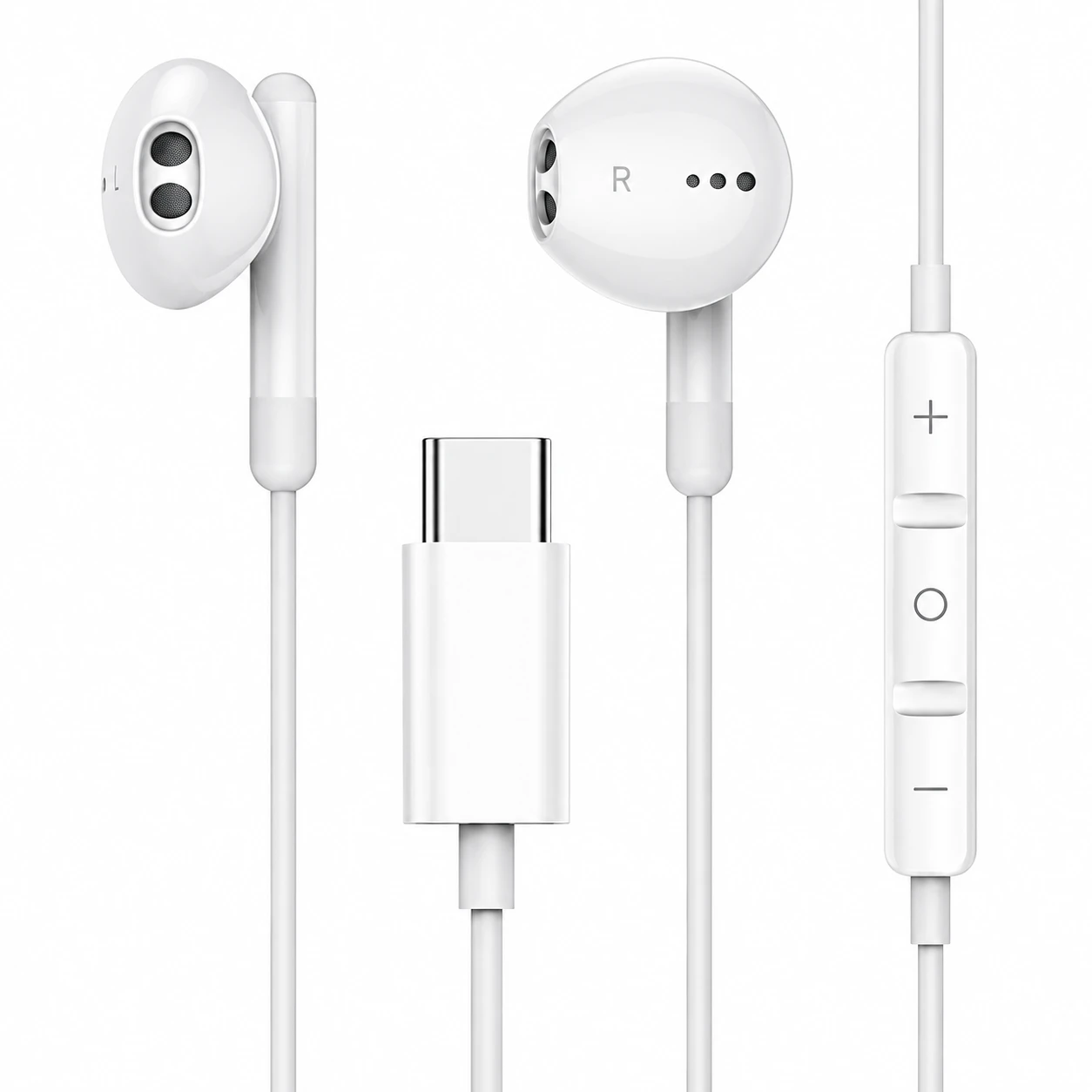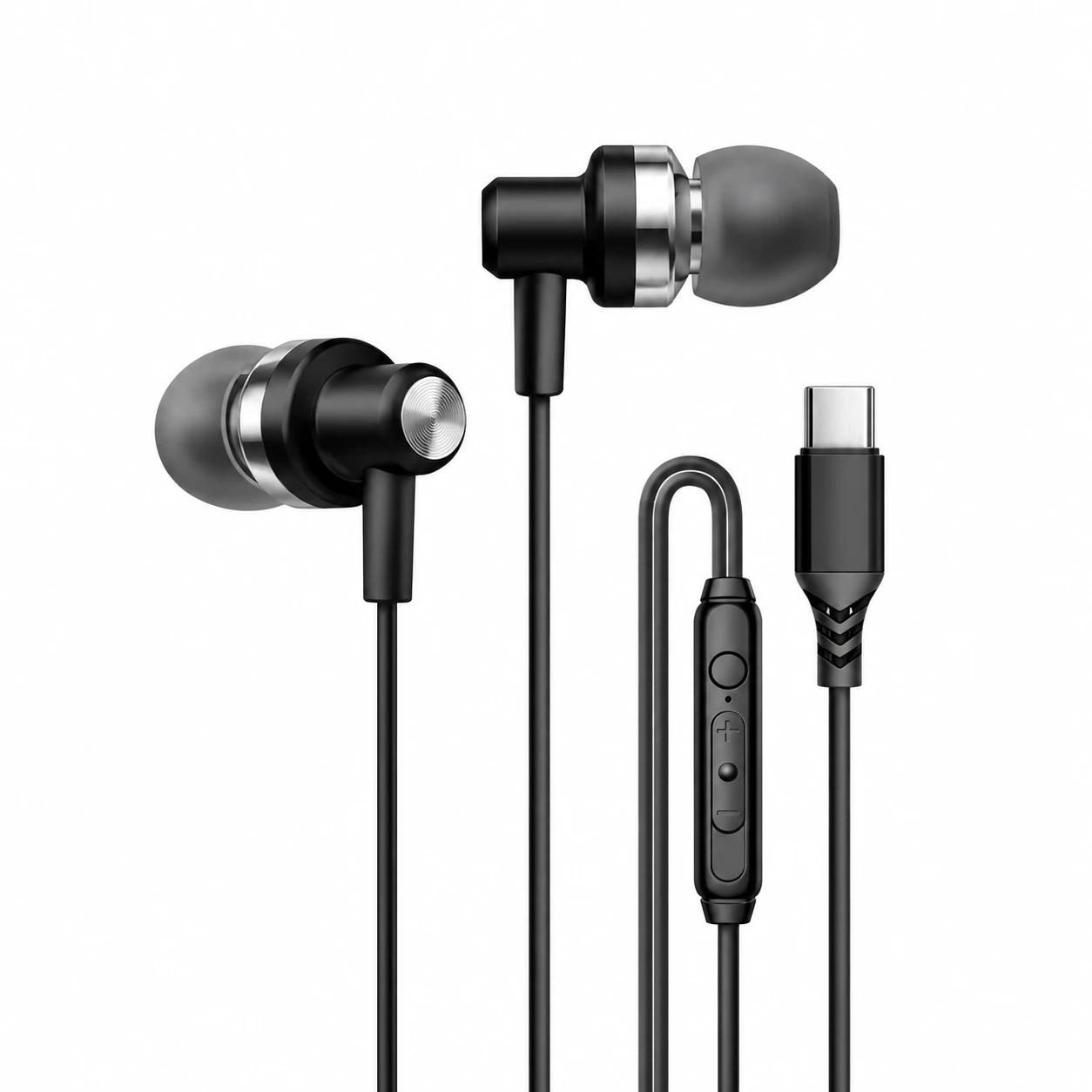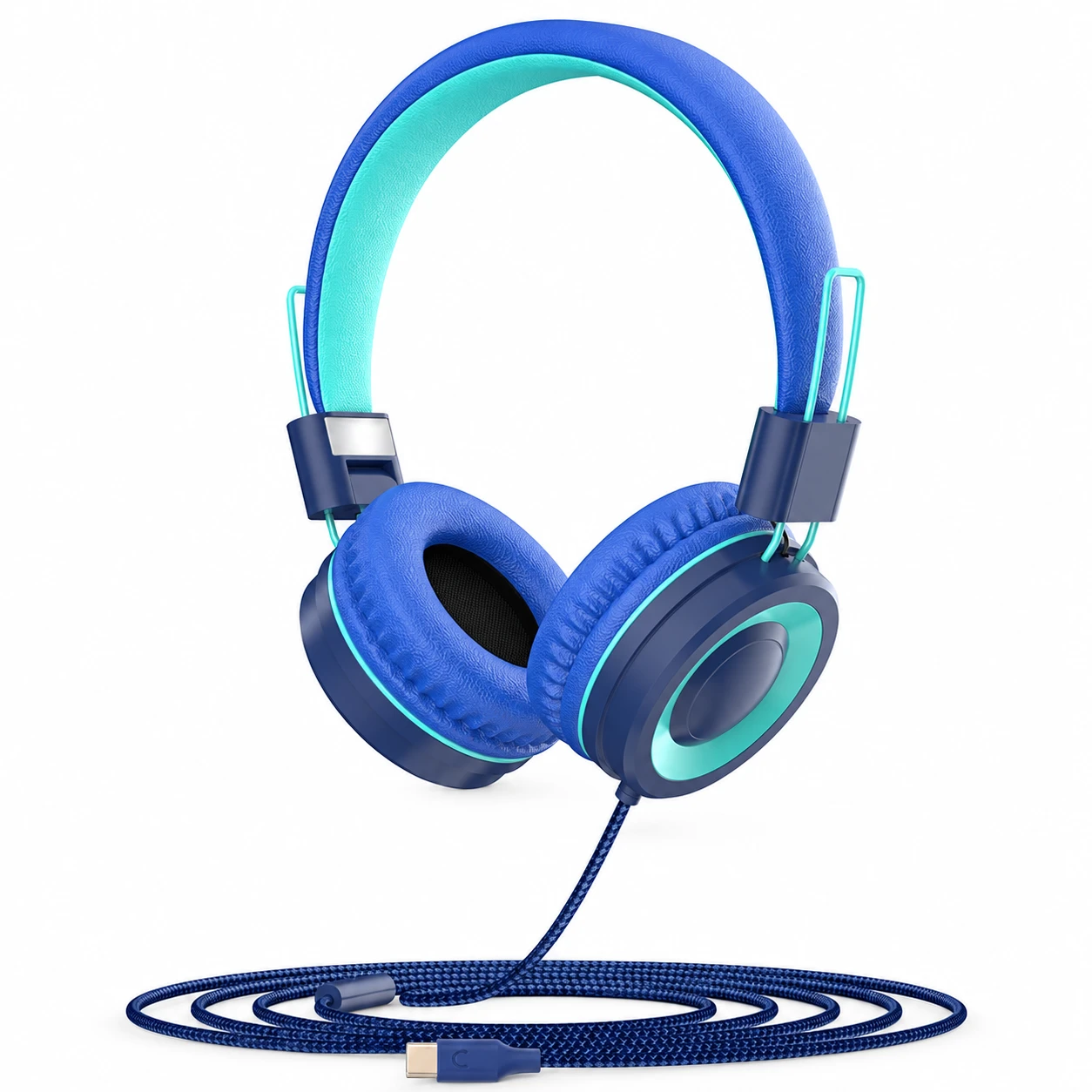
USB-C Wired Earbuds With Noise Cancelling Powered Directly From Host VBUS
Legacy 3.5 mm noise-cancelling earphones required a bulky inline battery module near the plug because an analog TRS jack only carries millivolt speaker signals, never a dedicated DC power rail. USB-C wired earbuds with noise cancelling eliminate that rechargeable inline brick by tapping directly into the 5 V VBUS pin of your smartphone, tablet, or laptop USB-C receptacle to power both an integrated DAC/ADC codec and a real-time Active Noise Cancellation (ANC) DSP.
Because the noise-cancelling microphones and anti-phase amplifier draw power continuously from the host device, there is no battery inside the cable to charge or degrade over time. However, that architecture introduces USB Audio Class 2.0 enumeration rules, slight host battery drain, and physical cable microphonics that buyers need to understand before plugging in.
How USB-C VBUS Powers Battery-Free Active Noise Cancellation
Inside the metal shell of an active USB-C connector sits a miniature system-on-chip combining a USB interface controller, a 24-bit/96 kHz digital-to-analog converter, and a low-power feedforward/feedback ANC processor. When you insert the plug into a phone or laptop, the CC1/CC2 configuration pins negotiate a standard USB sink role, drawing roughly 15 to 35 milliamps at 5 V (75 to 175 milliwatts) from the host VBUS rail.
That steady DC supply biases the outward-facing MEMS microphones embedded in each earbud housing and runs the phase-inversion filters that cancel low-frequency cabin drone between 50 Hz and 600 Hz. Since the audio signal travels digitally from the host operating system all the way to the plug’s DAC, electromagnetic interference from laptop power supplies cannot induce hum upstream of the converter.
| Architectural Feature | USB-C Wired ANC Earbuds | 3.5 mm Wired ANC Earbuds | True Wireless ANC Earbuds | Practical Impact |
|---|---|---|---|---|
| ANC Power Source | Host 5 V USB VBUS rail (15–35 mA) | Inline lithium-ion battery module | Internal earbud cell (30–55 mAh) | USB-C never needs separate charging |
| Signal Path & Latency | Uncompressed USB Audio (< 2 ms) | Pure analog voltage (0 ms) | Bluetooth codec buffer (80–200 ms) | Zero lip-sync lag on video edits |
| Host Battery Draw | ~2% to 4% phone battery per hour | Negligible (< 0.2% per hour) | Minimal BLE/A2DP radio overhead | Noticeable on older phone batteries |
| Mechanical Noise | High cord rub (cable microphonics) | Moderate to high cord rub | Zero cable friction noise | Shirt collar rub bypasses ANC DSP |
Managing Cable Microphonics and USB Enumeration Quirks
While feedforward ANC microphones cancel steady external turbine rumble effectively, they cannot stop structure-borne mechanical thumps traveling up the copper tether itself. Every time a braided or TPE jacket brushes against a zipper or winter coat collar, vibrations conduct directly through the strain relief into your occluded ear canal—an effect known as cable microphonics.
Routing the wire behind your outer ear (over-ear loop style) and securing the Y-split cinch slider under your chin reduces cord-rub noise by more than half. If the ANC toggle button on the inline remote stops responding after a phone sleep cycle, unplug and flip the USB-C connector to force a fresh USB Audio Class handshake with the host kernel.
Why Tethered Cables Fail When You Roll Onto Your Side in Bed
Cabled USB-C earphones work reliably at an office desk or on a commuter train, but bringing a tethered cord into bed creates an immediate tangle hazard and yanks the plug sideways inside your phone’s charging port whenever you shift position. Even worse, rigid inline strain reliefs jut out past the tragus and press painfully against your ear cartilage on a pillow.
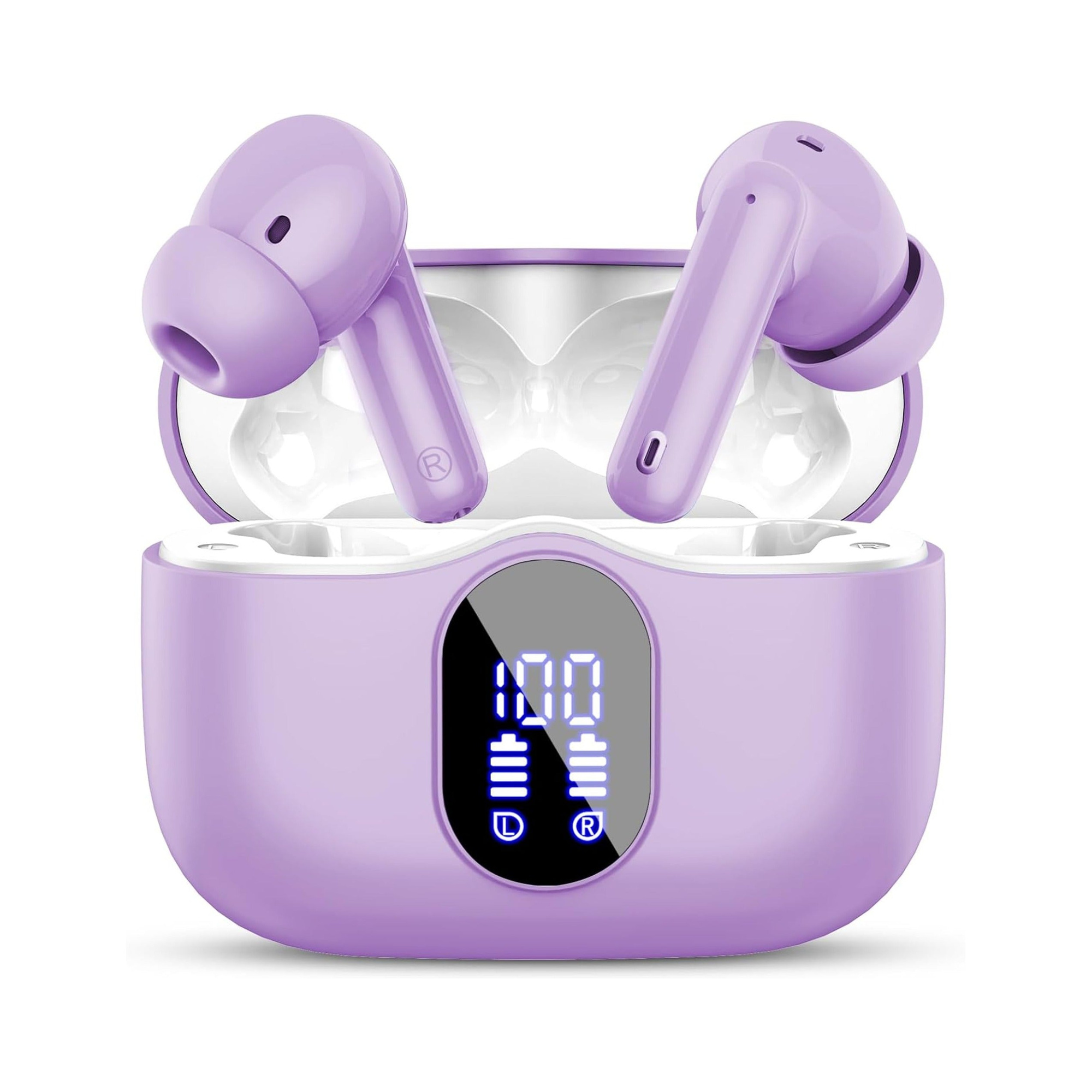
Flat, stemless earbuds for sleeping on your side, with a dynamic sleep-support mode and a starlight glow charging case. See the three colors at EARSOLE.
Unplugging your daytime USB-C cord and switching to a wireless, flush-bodied sleep earbud frees you from bedside cable tension and protects your smartphone USB port from mechanical strain. The soft, low-profile silicone shell sits recessed inside the concha bowl so side sleepers rest comfortably all night.
Pre-Purchase Compatibility Checklist for Smartphones and Laptops
Before buying USB-C ANC earbuds, verify that the model contains an active digital DAC chip rather than relying on passive USB-C Analog Audio Adapter Accessory Mode. Phones and laptops from Apple, Samsung, and Google dropped analog pin passthrough years ago, meaning passive analog USB-C cords produce total silence when plugged in.
If you frequently take video conference calls on a laptop while keeping your handset topped up, read our engineering guide on USB-C wired headphones with an inline microphone to avoid sample-rate conflicts across desktop operating systems.
Frequently Asked Questions
How much smartphone battery do USB-C noise-cancelling earbuds drain?
Drawing 20 to 35 milliamps from the 5 V VBUS rail consumes roughly 100 to 175 milliwatts, which translates to about 2% to 4% of a typical 4,500 mAh smartphone battery per hour of continuous ANC listening.
Why do my USB-C ANC earbuds make a faint popping sound when I unlock my phone?
When a smartphone wakes from deep standby, the operating system briefly re-initializes the 5 V VBUS power rail and USB Audio Class clock, which can produce a soft capacitor charge pop as the onboard DAC and ANC amplifier unmute.