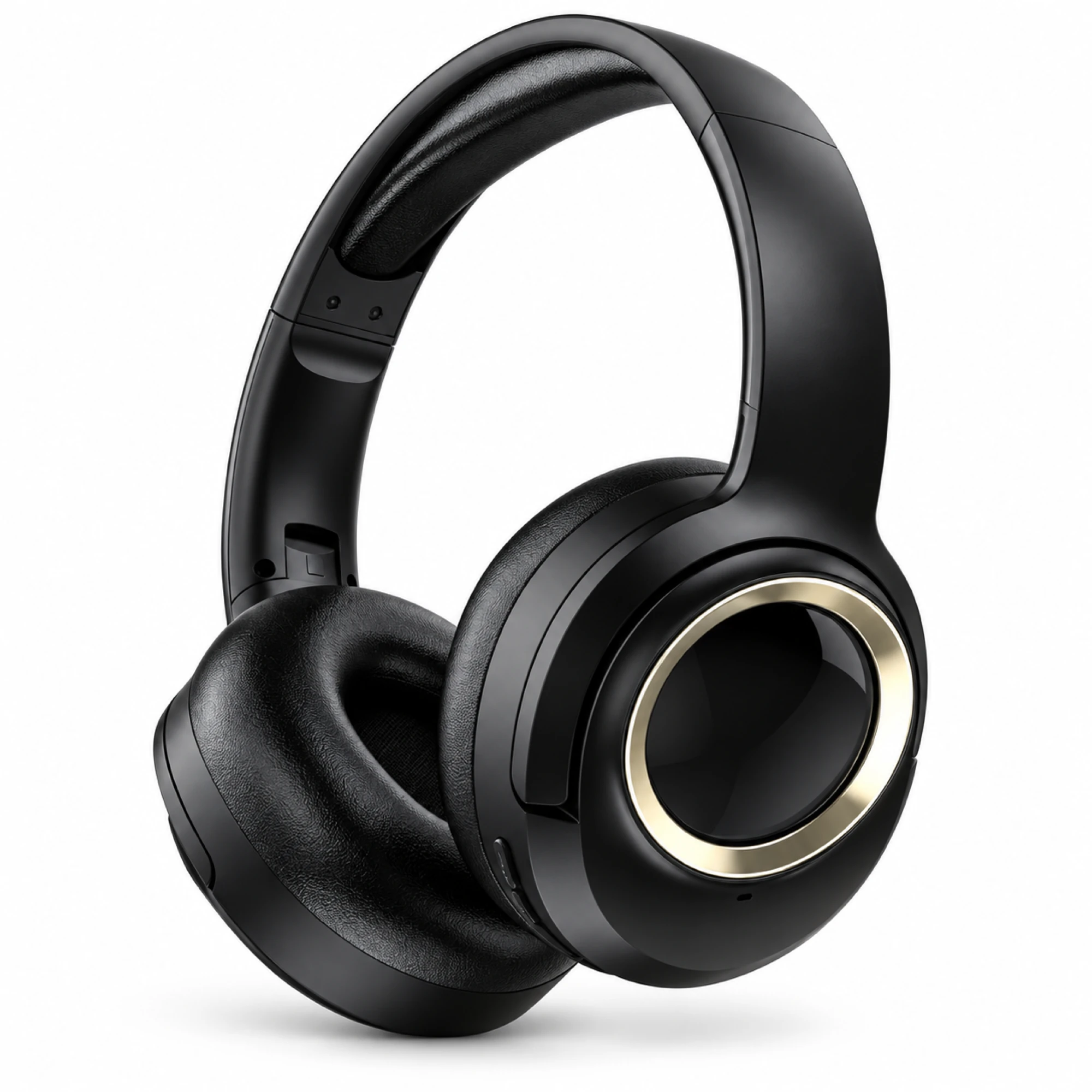
 MX-21 Black and Gold Wireless Headphones
 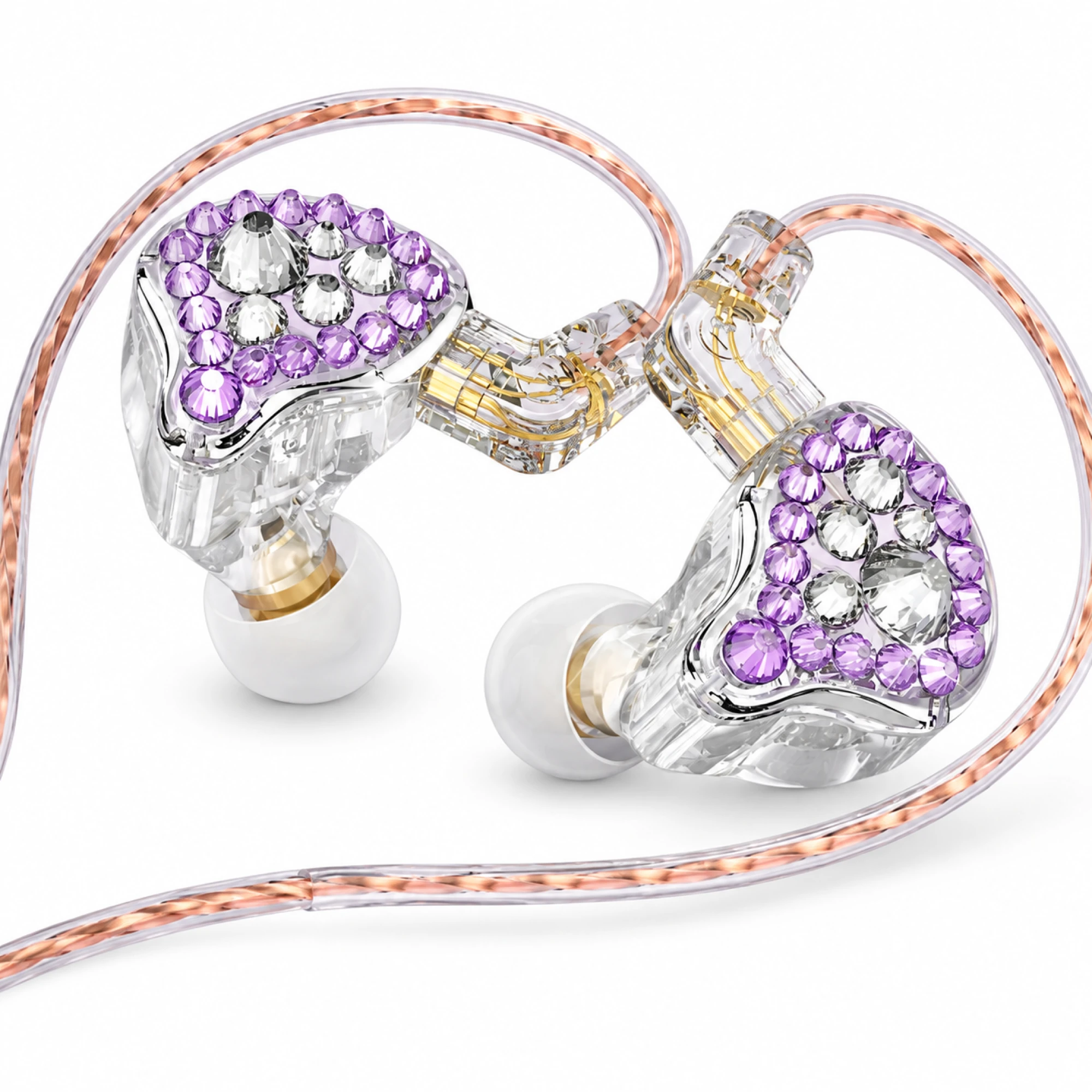 Q2 Pro Purple Crystal In-Ear Monitors
 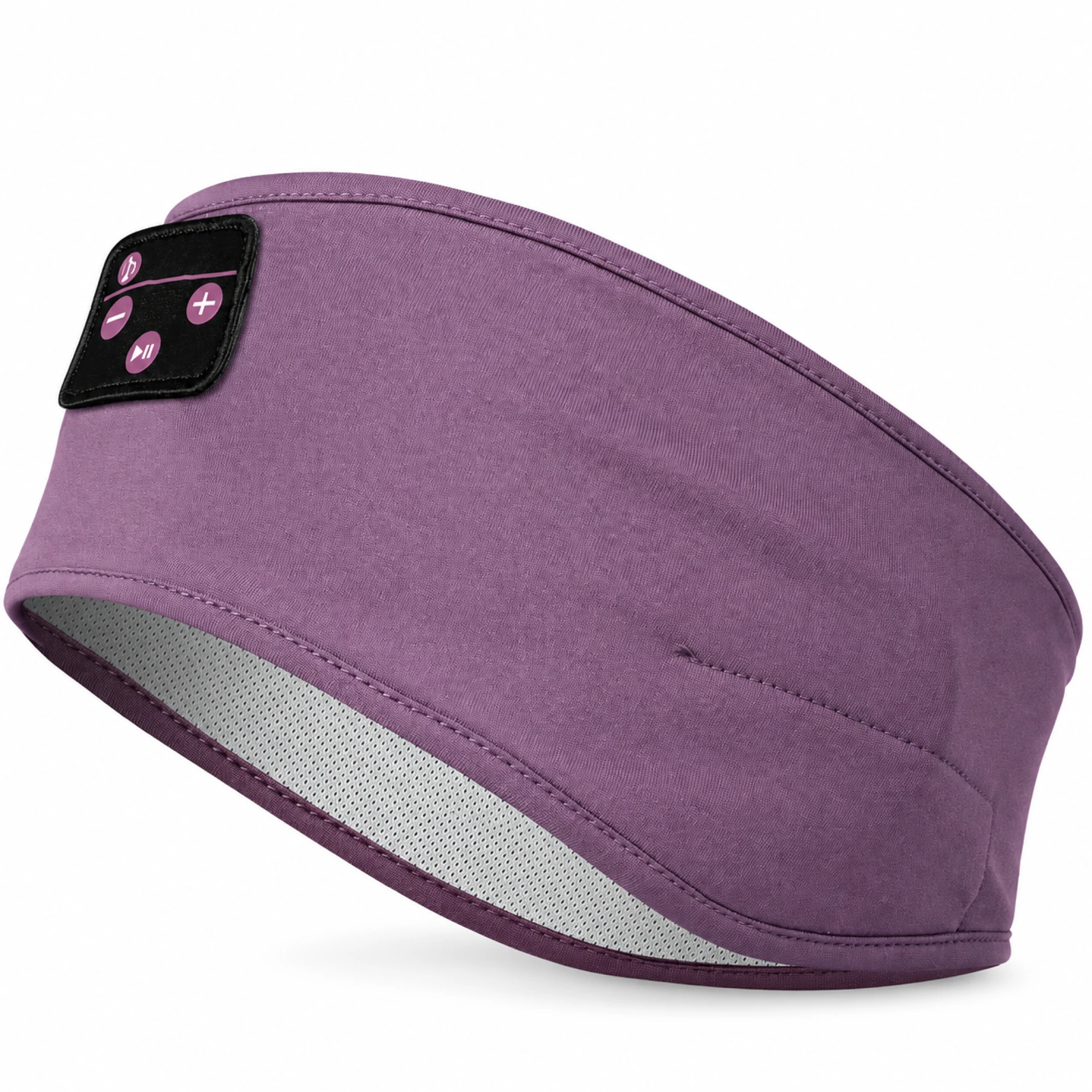 Purple Sleep Headband Headphones with Triangle Controls
 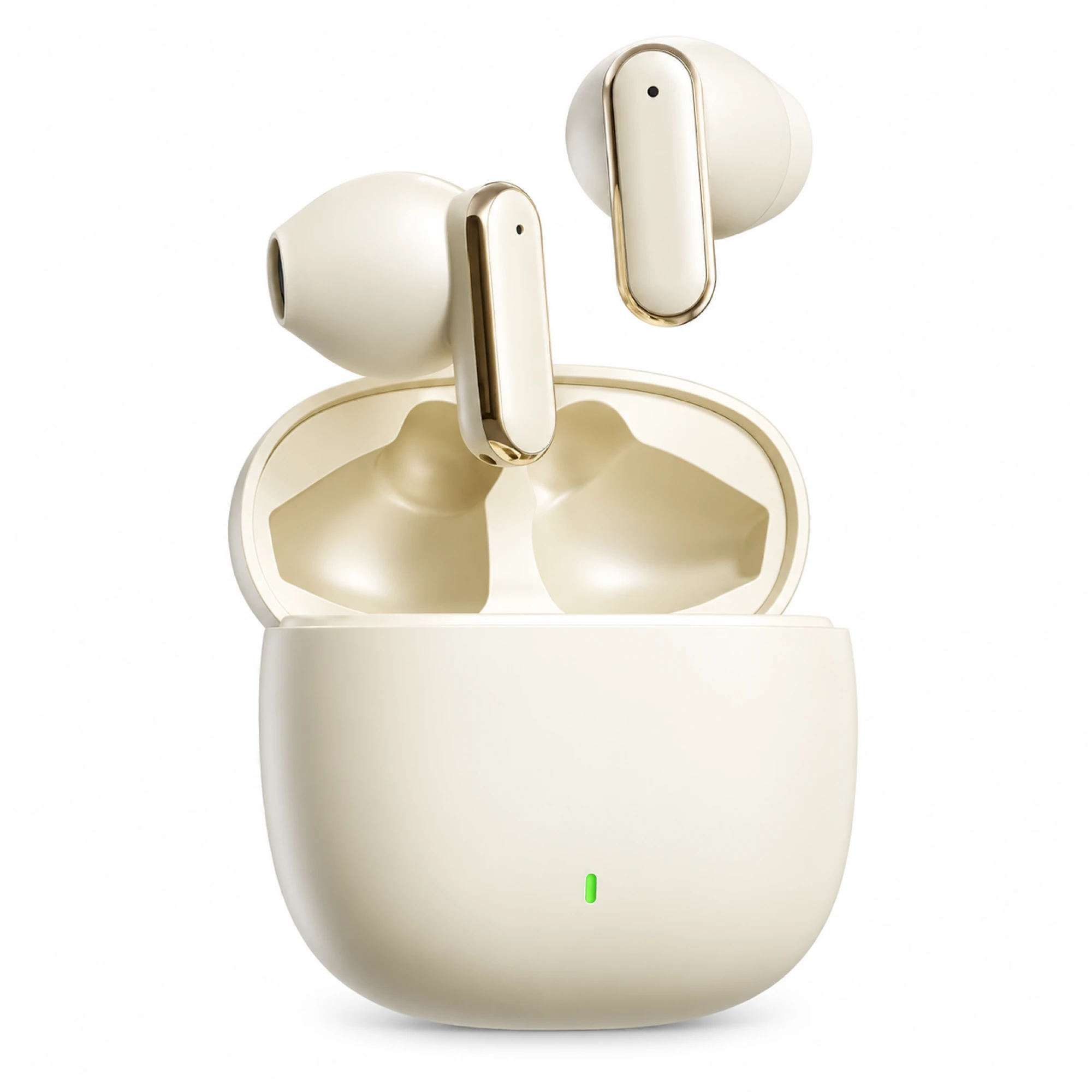 Cream Reflective-Stem Wireless Earbuds
 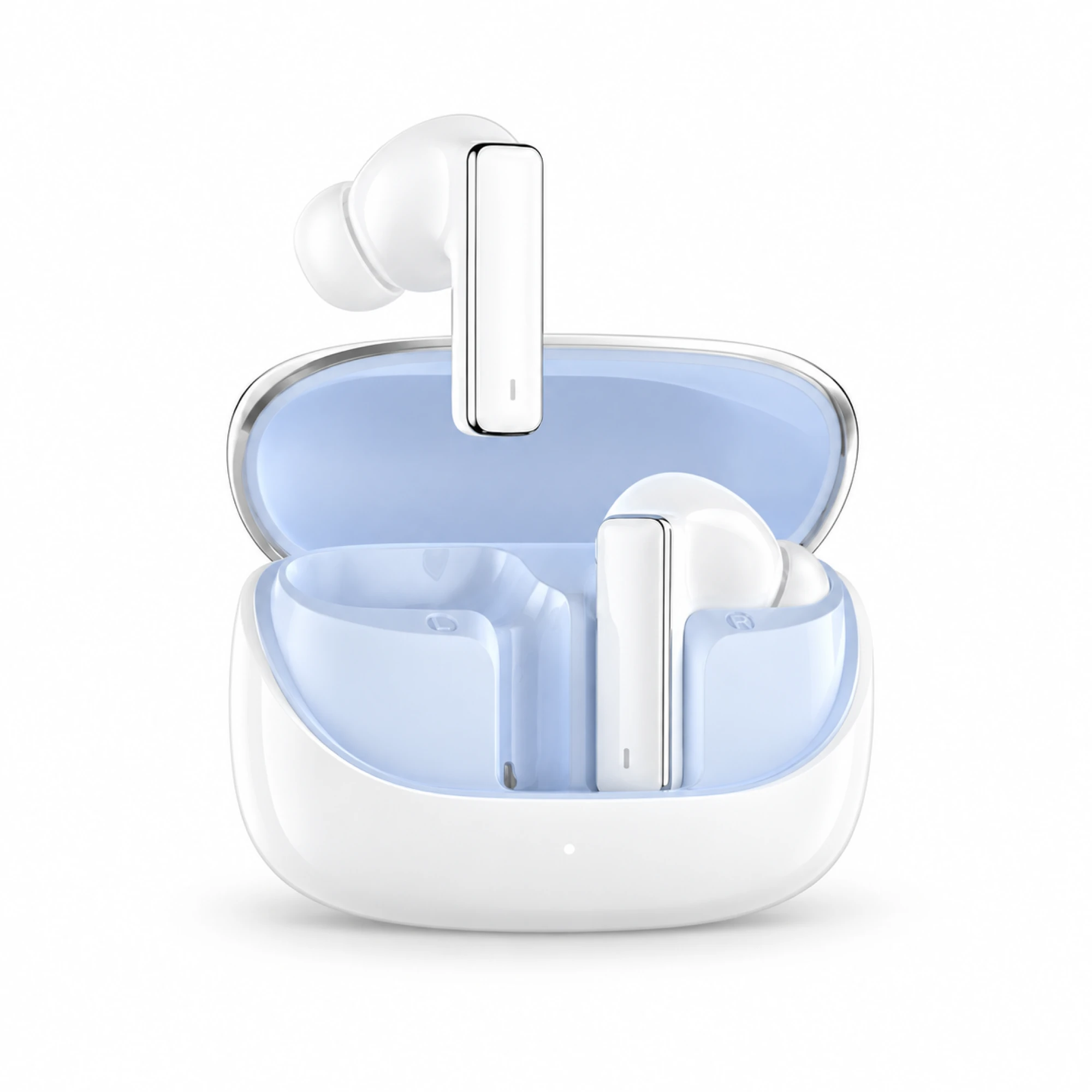 IN-01 White ANC Earbuds with Pale Blue Case Interior
 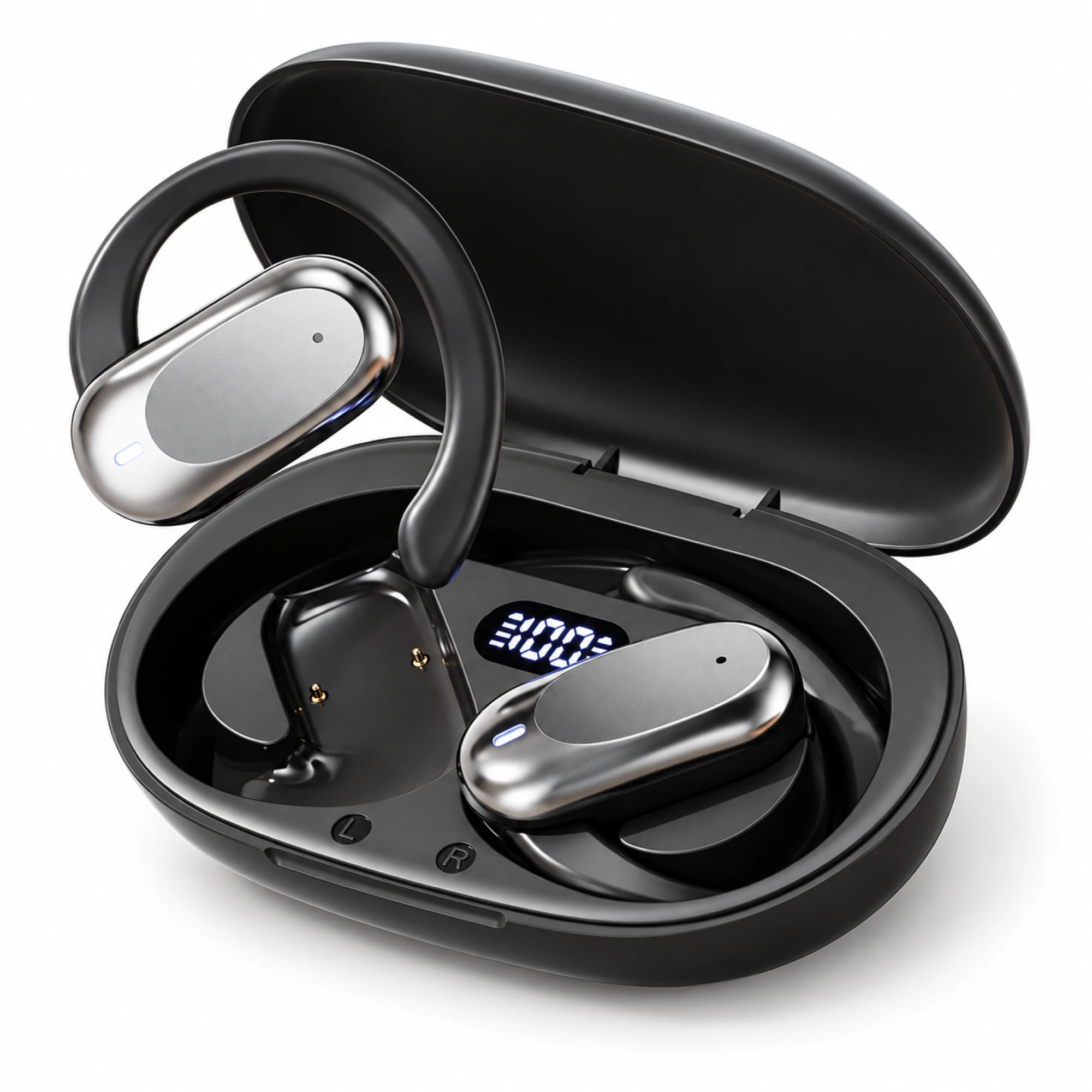 Silver Capsule Open-Ear Earbuds
 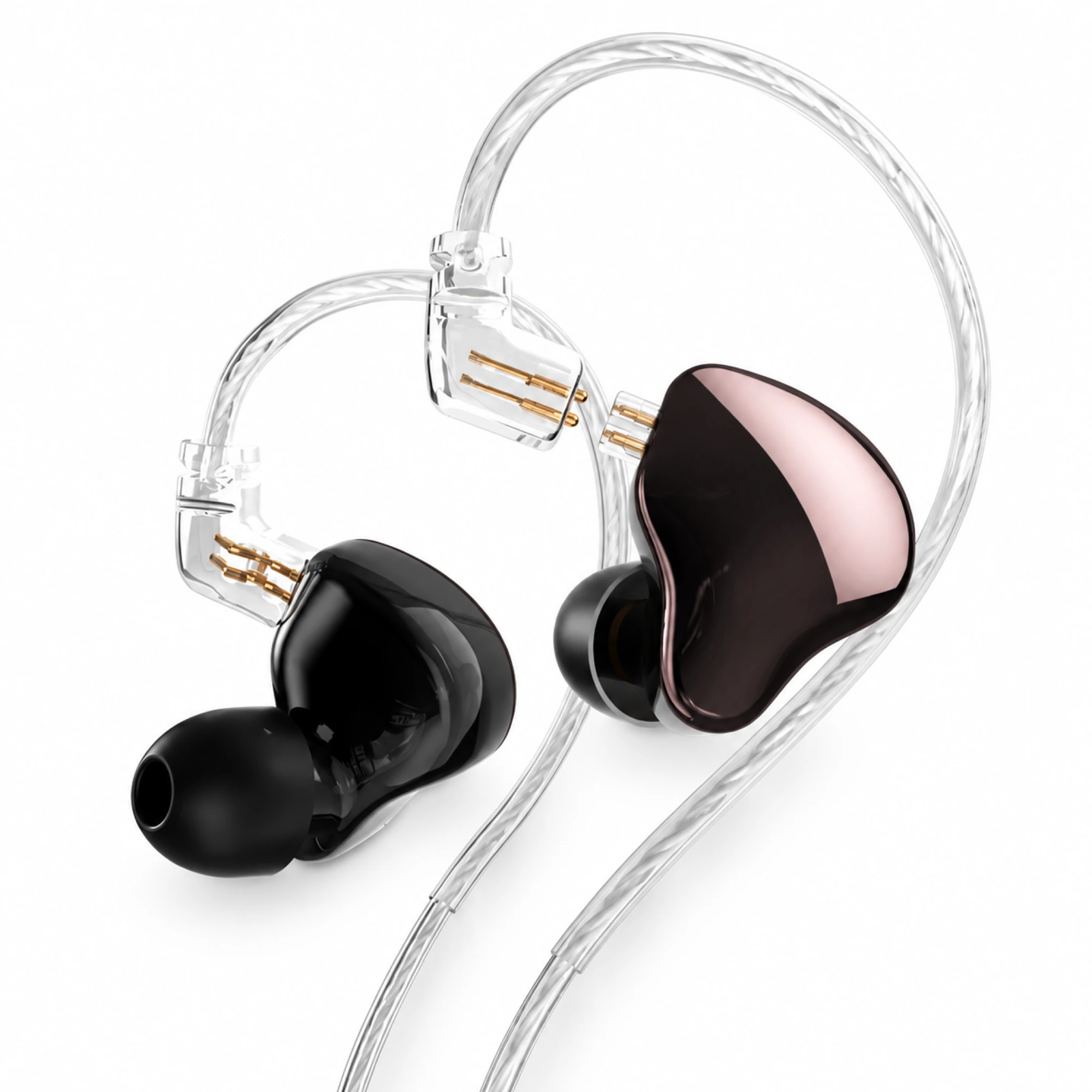 MN Rose-Metallic Detachable In-Ear Monitors
 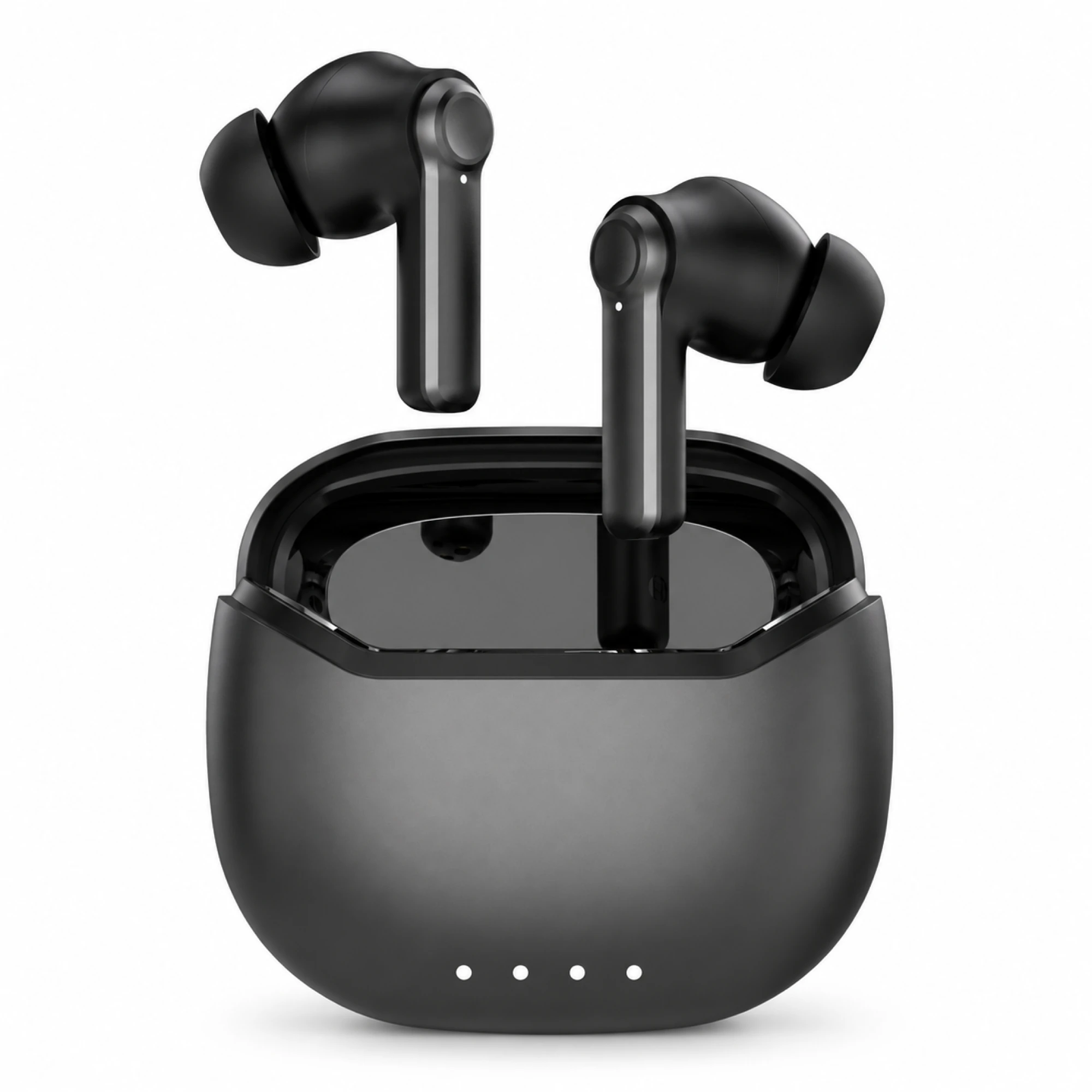 Black ANC Earbuds with Four-Indicator Case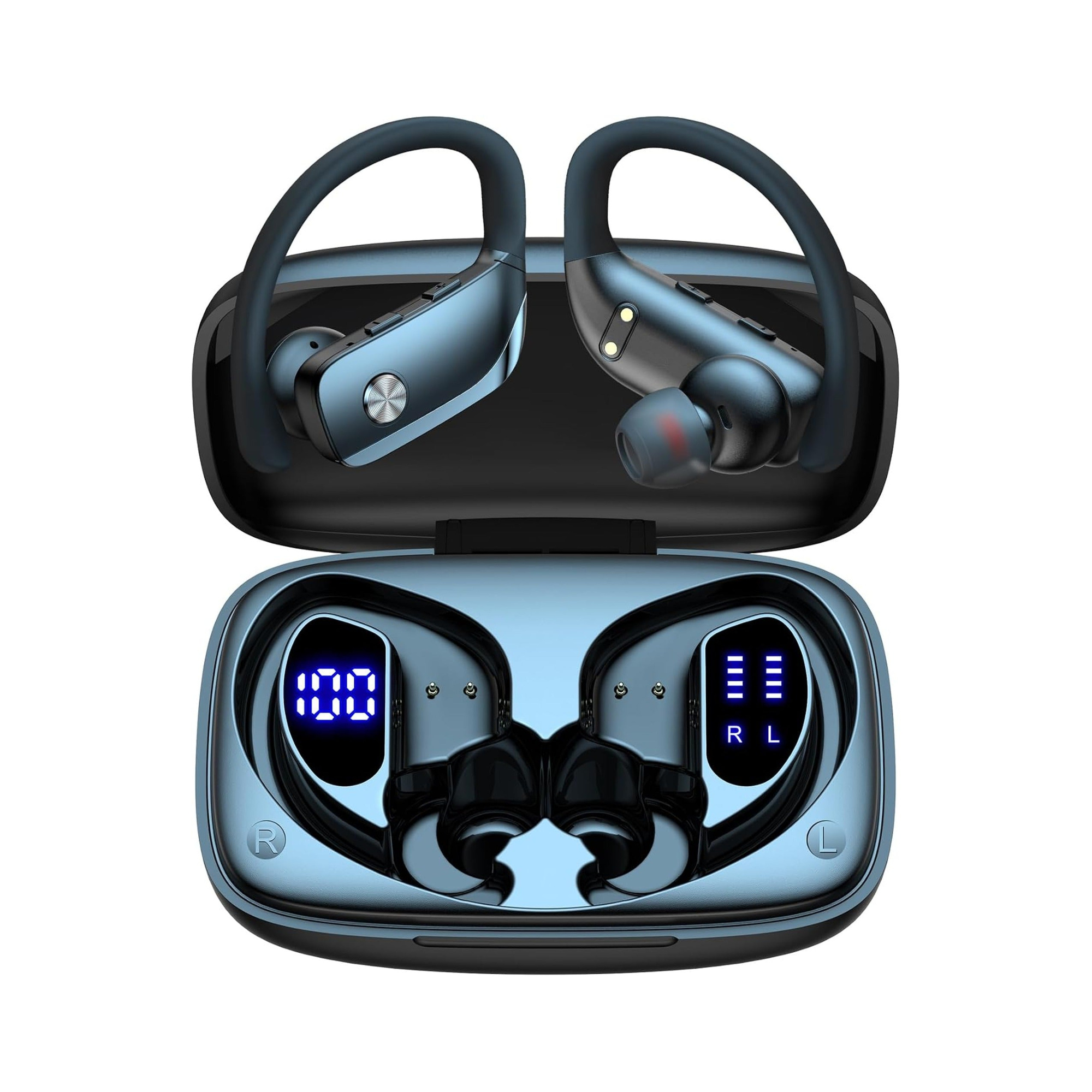
The best headphones for working out in a gym are the pair that survives four things a treadmill test never applies: a room saturated with competing 2.4 GHz radio, a phone left on a bench instead of on your body, a drop from ear height onto rubber over concrete, and equipment shared with forty strangers. Fit matters, but it is rarely what fails first.
What a gym does that a run does not
Running is a fit problem: impact and sweat working an earbud loose, which our running fit test guide already covers. A gym fails headphones in ways that have nothing to do with how well they sit in your ear.
- Radio congestion. Dozens of phones, watches, mics, machine consoles and Wi-Fi points share one band. Keep the source device close and unobstructed, and expect worse at peak hours.
- The phone leaves your body. It goes on the bench or the floor while you lift. Put it on the same side as the primary earbud, above floor level.
- Drops onto a hard floor. Buds come out at head height with chalky or sweaty hands. Ear hooks and clip-on arms need a deliberate two-finger removal.
- Shared surfaces. You grip a bar, touch your ear, then reseat the bud. That one is a cleaning habit, not a better product.
None of these appear on a specification sheet, which is why two pairs that measure identically can behave very differently over a training block.
The weights room and the cardio deck want opposite things
Asking for the best gym headphones as one category hides a real split. Strength work and steady cardio put close to opposite demands on a pair.
| Weights and machines | Cardio deck and classes | |
|---|---|---|
| Session shape | Short efforts, long rests, constant pausing | Continuous playback for 30–60 minutes |
| Where the phone is | On a bench or the floor, several metres away | In a machine cradle or armband, close by |
| Body position | Often lying supine against a bench pad | Upright, nothing touching the ears |
| Awareness needed | High: a spotter, a rack queue, someone crossing your lift path | Moderate, since you are stationary on a machine |
| Design that suits it | Secure open-ear or ear-hook, easy controls, nothing that presses on a bench | Anything that seals well and holds under motion |
If you lift, the features that matter most are usually awareness and a control you can hit reliably with a chalked thumb. If you do steady cardio, isolation and uninterrupted battery matter more. Choosing headphones for exercise is largely a question of which column describes your week.
Is on-ear or over-ear better under a bench?
Neither is ideal for barbell work, though both are fine standing up.
- Over-ear gives the best isolation and the most comfortable long-session clamp, but the cups collide with a bench pad the moment you lie back. On a flat or incline press, one cup typically gets pushed forward and breaks its seal.
- On-ear is lower profile against a pad, so it interferes less, but it puts clamping force directly on the outer ear cartilage and seals less well against gym noise.
- Both trap heat. Indoors, with no airflow, that becomes noticeable within about twenty minutes, and sweat then sits between pad and skin.
Over-ear generally wins for treadmill, bike, rower and stair work, where nothing touches your head. For anything performed lying down, a small in-ear or open-ear design is usually more practical even though it measures worse on isolation.
Why some athletes go back to wires or onboard storage
The idea that athletes are abandoning Bluetooth overstates things, but two real technical reasons sit underneath it.
Bluetooth operates in the 2.4 GHz ISM band, using 79 channels for Classic and 40 for Low Energy, per the Bluetooth SIG's technical overview. That band is shared with Wi-Fi, wireless microphones and a great many consumer devices. A busy gym at 6pm is one of the more crowded radio environments most people spend an hour in, and adaptive frequency hopping has less clean spectrum to move into. Dropouts there are often environmental instead of a fault with the headphones, and our guide on why earbuds keep disconnecting works through how to tell the two apart.
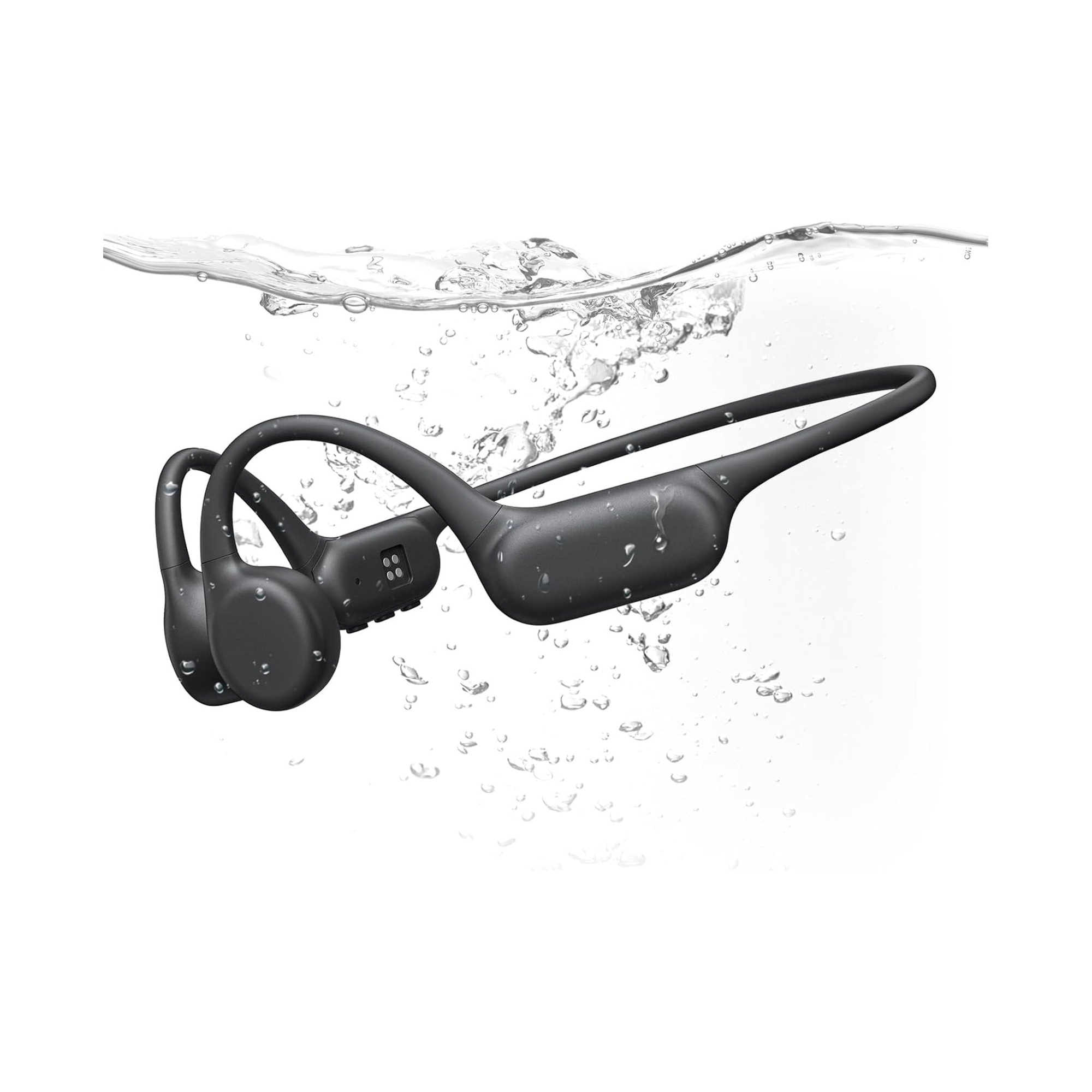
The second reason is water, which 2.4 GHz radio does not travel through usefully. That is why swimming headphones do not rely on a phone at all: our Waterproof Swimming Headphones at $36.99 list an IPX8 rating with submersion to two metres for one hour, plus 32 GB of internal MP3 storage. Swimmers moved to onboard storage because the physics required it.
Latency is almost never the gym problem; that matters for gaming and video sync, not music.
Range: your phone is not in your pocket
This is the most underrated difference between exercising with headphones outdoors and doing it in a weights room. Outside, the phone is strapped to you. Indoors it sits on a bench while you move around it, so your body becomes an obstacle in the radio path instead of a mount for the transmitter. Most true wireless pairs also designate one earbud as the primary receiver, so which side the phone sits on changes the result. Our guide on earbuds cutting out with the phone in a pocket has a four-position test that works just as well on a gym bench.
A loud room quietly pushes your volume up
Gyms are loud, and the natural response is to raise the volume until your music wins. The WHO states that over 1 billion young adults are at risk of permanent, avoidable hearing loss due to unsafe listening practices, and lists safe listening in recreational settings among the strategies that reduce it; see its deafness and hearing loss fact sheet.
For anyone choosing headphones for fitness use, that creates a real trade-off:
- A sealed or noise-cancelling design lowers the background floor, so you can listen at a lower absolute volume and still hear detail.
- An open-ear design keeps you aware of the room, safer around moving plates and shared equipment, but you will tend to run it louder to compete with gym noise.
- Neither is universally correct. Pick for your own risk: awareness on one side, hearing exposure on the other.
If you go the noise-cancelling route, our ANC versus ENC explainer covers which of the two acronyms on the box affects what you hear.
Shared bars, shared sweat
The sequence that matters is grip the bar, finish the set, reseat the earbud. Whatever was on the knurling is now in your ear canal. Sealed tips make this worse than open-ear designs, because they push material inward and hold it there under a warm, humid seal.
The fix is boring and it works: wipe the tips after every session, weekly is too late, and let them dry before the case closes. Our earbud cleaning guide covers the method.
Which of our pairs suits a gym floor
It is worth being clear about which of our own products is wrong for this. Everything below is what the listings state.
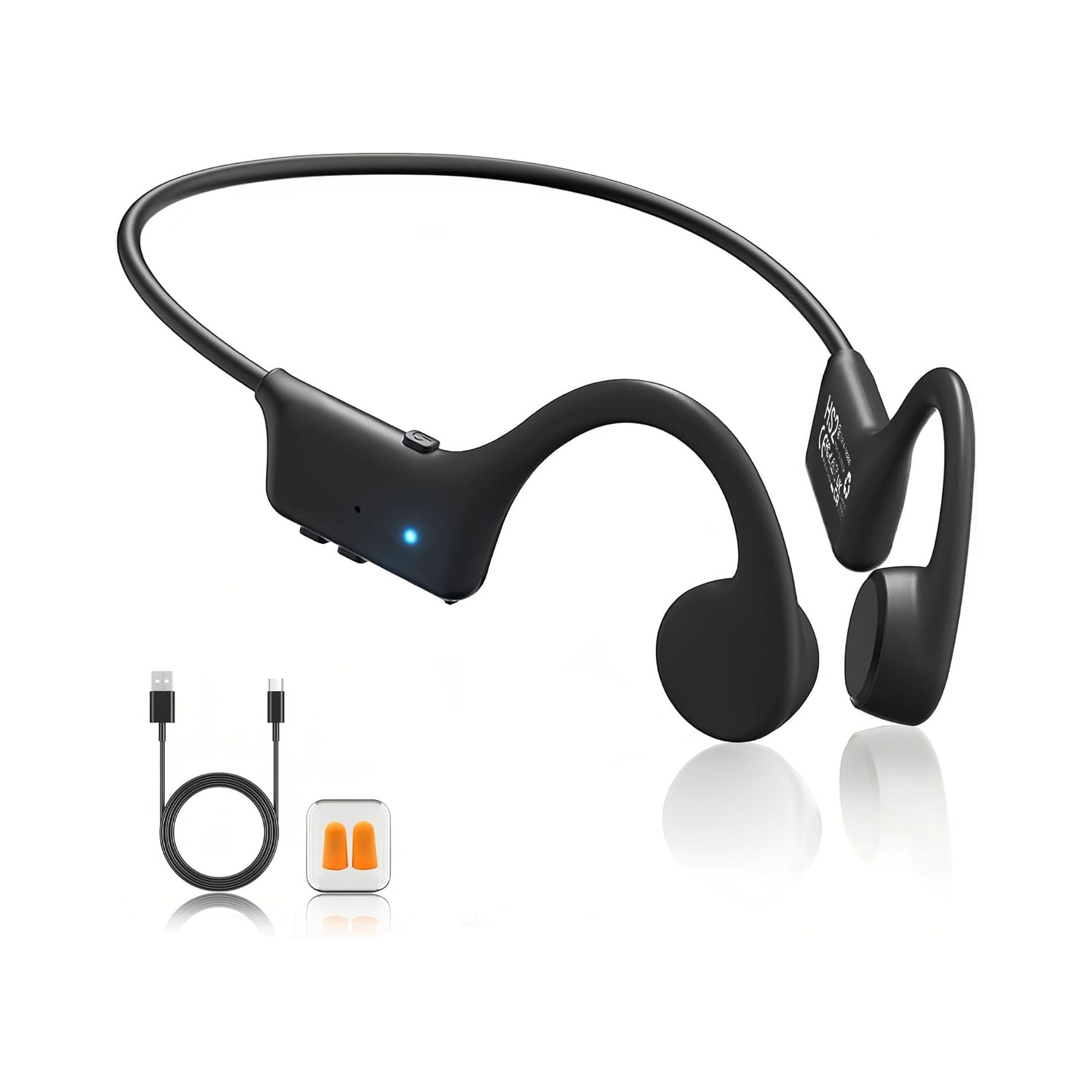
The Sport Ear-Hook Wireless Earbuds at $28.99 list 8 hours per earbud, 80 hours with the case, a dual LED display, and a sweat- and dust-resistant build with no IP figure given. The hook makes them the most drop-resistant thing we sell, which suits mixed sessions. The Bone Conduction Open-Ear Sport Headphones at $39.99 list IP54 water resistance, up to 12 hours of playtime and USB-C fast charging, and they leave the ear canal open, which is the right call in a weights room. The Waterproof Swimming Headphones above are the only pair we list for the pool.
Two of ours are the wrong tool here. Our over-ear Series 127 lists no water or sweat rating at all, so it belongs on cardio machines and nowhere near a bench. The open-ear clip-on with the LED case states in its own listing that it is not water-resistant and advises skipping heavy-sweat workouts. To browse further, the everyday wireless range holds all of these, and our IP ratings guide explains what those two digits certify.
Questions lifters ask about earbuds in the gym
What type of headphones are best for the gym?
For weights, a secure open-ear or ear-hook design generally works best, because you stay aware of the room and nothing presses against a bench pad. For cardio machines, a sealed in-ear or over-ear pair is usually better, since isolation lets you listen at a lower volume for the same perceived loudness.
Is on ear or over ear better for working out?
Over-ear generally wins for upright cardio, with better isolation and a more comfortable clamp. On-ear interferes less when you lie back on a bench, but presses on the outer ear and seals worse. Both trap heat indoors, so neither is ideal for long sessions in a warm room.
Why do my earbuds cut out only at the gym?
Two causes usually stack. Your phone is on a bench several metres away with your body between it and the primary earbud, and the room is full of devices sharing the 2.4 GHz band. Move the phone to the same side as the primary bud and off the floor before you assume the earbuds are faulty.
Do swimmers really need onboard MP3 storage?
In the water, yes. 2.4 GHz radio does not travel usefully through water, so a phone at the poolside cannot keep a link to a headset under the surface. Models built for swimming carry the music inside the headset instead, which is why our swimming pair lists 32 GB of storage.
Pick for the room you train in
Decide whether you are buying for the weights room or the cardio deck first, because the two want different designs. Then check the three things a spec sheet skips: where your phone sits during a set, whether the listing states any sweat rating at all, and whether you will clean them. Those decide whether a pair that looks right on paper survives your gym in practice.